
If your car dies while driving, a failing alternator could be the reason. You may notice dim headlights, warning lights on the dashboard, weak electrical accessories, or unusual whining or grinding sounds before the vehicle shuts off. These signs can quickly lead to an unexpected breakdown, so it is important to pull over safely and have the issue checked as soon as possible. Scheduling Alternator Repair in Queen Creek, AZ can help confirm the problem and keep your vehicle running reliably.
Key Takeaways
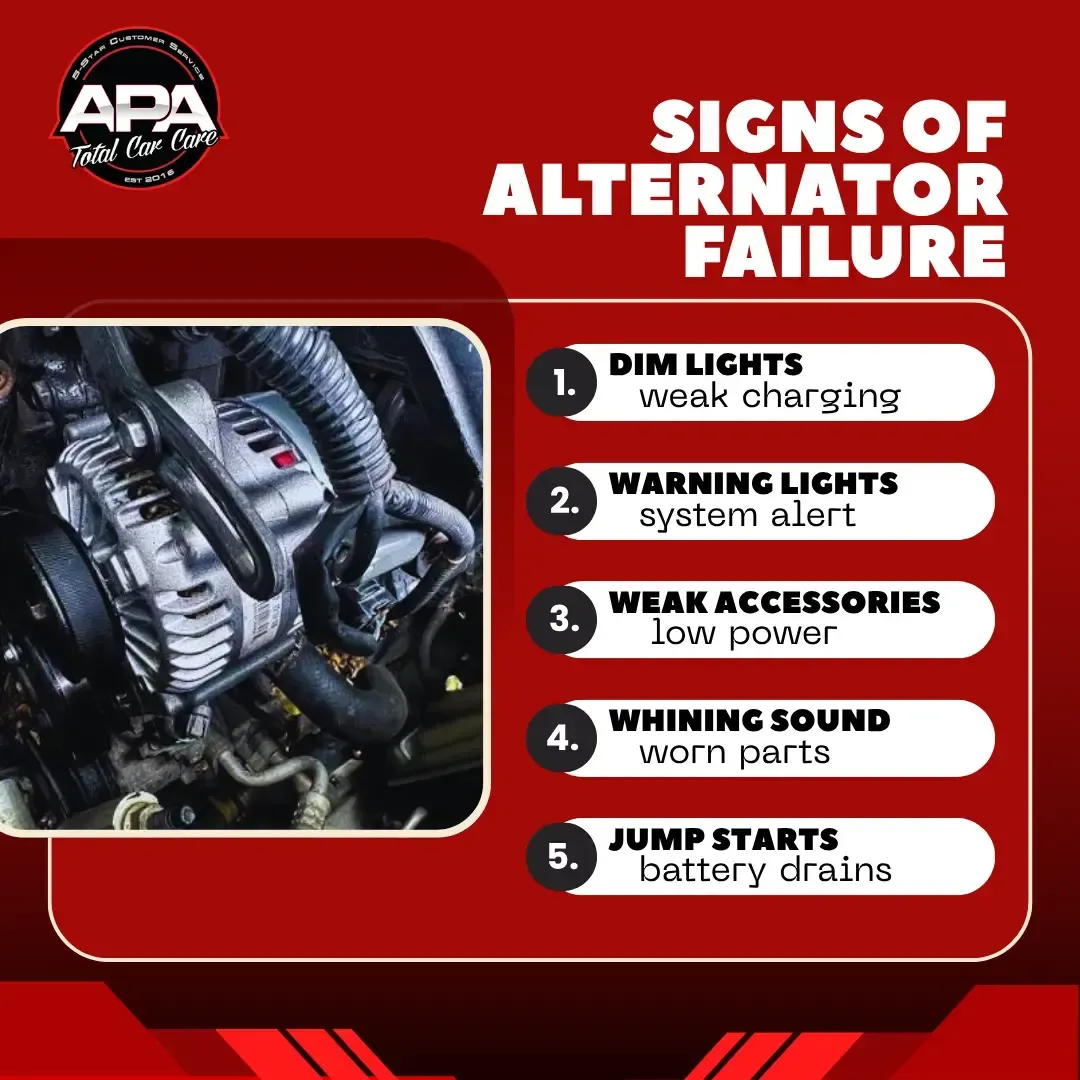
- Dim or flickering headlights and dashboard lights indicate insufficient power, signaling potential alternator failure.
- Warning lights illuminated on the dashboard can be a sign of electrical issues related to the alternator.
- Weak performance of electrical components, like power windows, may suggest the alternator is struggling to meet demands.
- Unusual noises, such as whining or grinding, can indicate wear on the alternator.
- Frequent battery jump-starts might point to alternator problems needing immediate attention.
Why a Bad Alternator Can Make a Car Die While Driving
If your alternator fails, it can cut power to your car while you're driving, leaving you stranded. Relying on battery power alone isn't enough to keep your vehicle running for long. Understanding how this charging system works can help you avoid unexpected breakdowns.
How Charging System Failure Can Cut Power While the Engine Is Running
When your alternator starts to fail, it can lead to a sudden loss of power while you’re driving. This often happens when the charging system can't keep up with the electrical demands of your vehicle. You might notice bad alternator symptoms like dimming lights, strange noises, or warning lights on your dashboard. If these signs appear, it's important to address them as soon as possible. Ignoring them could result in your car dying while driving, leaving you stranded. To avoid this, consider professional charging system testing in Queen Creek, AZ. A certified mechanic can pinpoint the issue and guarantee your vehicle’s electrical system operates smoothly, preventing unexpected power loss during your travels.
Why Battery Power Alone Cannot Keep the Car Going for Long
A failing alternator can drain your car's battery fast, leaving you stranded when you least expect it. While the battery provides the initial spark to start your engine, it’s the alternator that keeps everything running smoothly. If your alternator's not working, your car loses power while driving, and the battery can't recharge itself. Eventually, you'll be left with just a dead battery, unable to power the essential systems like lights and ignition. That is why you shouldn't rely solely on battery power; it’s only a temporary fix. If you suspect an issue, don’t hesitate to seek alternator repair in Queen Creek, AZ. Addressing problems right away can save you from unexpected breakdowns and costly repairs down the road.
Common Bad Alternator Symptoms
When your alternator starts to fail, you might notice dim lights or warning indicators lighting up on your dashboard. These symptoms often appear before a complete shutdown, signaling that something's off with your vehicle's electrical system. Staying alert to these signs can help you address the issue before it leads to bigger problems.
Dim Lights, Warning Lights, and Weak Electrical Performance
Dim lights, warning lights, and weak electrical performance are three essential indicators that your alternator might be failing. If you notice these symptoms, it’s necessary to take action as soon as possible. Here are some signs to watch for:
- Dim Lights: Your headlights or dashboard lights may flicker or appear weak.
- Warning Lights: The battery light on your dashboard may illuminate, signaling a problem.
- Weak Electrical Performance: Power windows or locks might respond sluggishly.
- Frequent Battery Issues: If you find yourself jumping your battery often, it could be related to alternator failure.
Ignoring these signs can lead to more significant problems down the road, so it's best to get your vehicle checked out as soon as possible.
How Bad Alternator Symptoms Often Start Before a Complete Shutdown
Before a complete alternator shutdown occurs, several symptoms often emerge, signaling that something’s amiss with your vehicle's electrical system. You might notice dimming headlights or flickering dashboard lights, which can indicate that your alternator isn't providing enough power. Additionally, if your car struggles to start or you hear unusual noises like whining or grinding, it’s essential to pay attention. You could also experience issues with your car's electrical components, like power windows or radio, functioning inconsistently. Ignoring these signs can lead to a total failure, leaving you stranded. Catching the symptoms fast means you can get your alternator checked and avoid more severe problems down the road. Don't wait for it to fail completely.
Car Loses Power While Driving? Watch for These Signs
If your car's power suddenly drops while you’re driving, it’s important to pay attention to warning signs like flickering dash lights or hard shifting. These indicators might mean your vehicle is struggling with its charging system. Don't ignore sudden stalling, as it could be a sign that testing is needed to pinpoint the issue.
Flickering Dash Lights, Hard Shifting, or Sudden Stalling
When your car starts showing signs like flickering dash lights, hard shifting, or sudden stalling, it’s essential to pay attention. These symptoms may indicate electrical issues related to your alternator. Ignoring them could lead to more severe problems. Here are some key signs to watch for:
- Flickering Dash Lights: If your dashboard lights dim or flicker, it could mean the alternator isn't supplying enough power.
- Hard Shifting: Difficulty in shifting gears may signal power loss affecting the transmission.
- Sudden Stalling: If your engine stops unexpectedly, it’s a serious concern.
- Unusual Noises: Listen for grinding or whining sounds, as these may indicate alternator wear.
Stay alert to these signs, and consider professional help if you notice them.
Why a Car That Dies While Driving May Need Charging System Testing
As your car loses power while driving, it’s important to recognize that this could signal a failing charging system. When the alternator struggles to keep the battery charged, it can lead to your vehicle stalling unexpectedly. If you notice warning lights on your dashboard or hear unusual sounds, don’t ignore them. Testing the charging system can pinpoint whether the alternator, battery, or related components are at fault. It's necessary to address these issues promptly, as a failing charging system can leave you stranded. Regular maintenance and early detection can save you time and money. If you suspect a problem, visit a trusted mechanic to guarantee your vehicle remains reliable and safe on the road.
What to Do If Your Car Stalls on the Road
If your car stalls while you're on the road, staying calm is key to handling the situation safely. First, try to steer your vehicle to a safe spot, away from traffic. Quick diagnosis is essential, as ignoring the issue could lead to more significant problems down the line.
How to Respond Safely if Power Drops While Driving
Experiencing a power drop while driving can be unsettling, but knowing how to respond can keep you safe. Here’s what to do:
- Stay Calm: Take a deep breath and focus on controlling the vehicle.
- Pull Over Safely: Use your turn signal to switch lanes and find a safe spot to stop, away from traffic.
- Turn on Hazard Lights: Activate your hazards to alert other drivers that you’re having trouble.
- Assess the Situation: Once stopped, check for any warning lights or unusual sounds. If you can, restart the engine to see if the power returns.
If the issue persists, call for roadside assistance or a professional to avoid further complications.
Why Quick Diagnosis Matters Before the Problem Gets Worse
When your car stalls on the road, quick diagnosis is essential to prevent further damage and guarantee your safety. Ignoring the issue can lead to costly repairs in the future. You might think it’s just a minor inconvenience, but a failing alternator can affect your battery and other electrical components, risking your vehicle's overall performance. By identifying the problem as soon as possible, you can avoid being stranded and reduce the risk of accidents. Pull over safely, check your dashboard lights, and listen for unusual noises. If you suspect alternator trouble, don’t hesitate to call a professional. Trustworthy experts, like those at APA Total Car Care, can provide swift, reliable service, ensuring your car gets back on the road smoothly.
Why Professional Alternator Testing Matters
When your car shows signs of alternator trouble, getting professional testing in Queen Creek, AZ, is essential. This testing can pinpoint the real cause of your issues, helping you avoid repeated no-start or stall problems. Early repairs can save you time and hassle, ensuring your vehicle runs smoothly.
How Charging System Testing in Queen Creek, AZ, Finds the Real Cause
Understanding the importance of professional alternator testing can save you time and money. When your vehicle’s electrical system acts up, it’s essential to pinpoint the root cause. Here’s how charging system testing in Queen Creek, AZ, can help:
- Battery Health Check: Determines if your battery is holding a charge effectively.
- Voltage Output Assessment: Measures the alternator’s ability to produce adequate voltage.
- Load Testing: Simulates real driving conditions to guarantee the alternator meets demands.
- Connection Inspection: Identifies any faulty wiring or connections that could cause issues.
Why Early Alternator Repair Can Help Prevent Repeated No-start and Stall Problems
Early alternator repair can make all the difference in preventing frustrating no-start and stall issues. When your alternator struggles, it can lead to battery drain, leaving you stranded. By addressing problems right away, you not only avoid being left in a lurch but also save on potential costly repairs. A well-functioning alternator guarantees your vehicle's electrical components work efficiently, reducing the likelihood of sudden stalls. Additionally, professional testing can pinpoint underlying issues, allowing for timely fixes. When you choose to repair your alternator before symptoms worsen, you enhance your vehicle's reliability and peace of mind. Trusting experts like those at APA Total Car Care can help keep your car running smoothly and safely for the long haul.
Schedule Alternator Repair at APA Total Car Care in Queen Creek, AZ
If you suspect your vehicle's alternator is failing, scheduling a repair at APA Total Car Care in Queen Creek, AZ, is crucial for maintaining your car's performance. Our skilled mechanics are ready to diagnose and fix the issue promptly. Here’s why you should choose us:
- Expertise: Our certified technicians have extensive experience with alternator repairs.
- Same-Day Service: We prioritize your time with quick turnarounds.
- Family-Own Trust: Enjoy personalized service from a reputable local business.
- Comprehensive Care: We offer a wide range of services to keep your vehicle in peak condition.
Don’t let a faulty alternator jeopardize your safety. Visit APA Total Car Care today to guarantee your vehicle runs smoothly.
Frequently Asked Questions
How long does an alternator typically last?
An alternator typically lasts about 80,000 to 150,000 miles, but it can vary based on driving conditions and maintenance. Regular checks can help catch issues sooner, ensuring your vehicle runs smoothly for longer.
Can a bad alternator affect my car's battery?
Yes, a bad alternator can definitely affect your car's battery. If the alternator isn’t charging properly, your battery won’t receive enough power, leading to potential failure and leaving you stranded. Regular checks can prevent this.
What causes alternator failure in vehicles?
Nearly 40% of alternator failures stem from worn-out bearings. Alternator failure can be caused by electrical issues, belt wear, or overheating. Regular maintenance helps prevent these problems, ensuring your vehicle runs smoothly.
Is it safe to drive with a failing alternator?
No, it’s not safe to drive with a failing alternator. You risk losing electrical power, leading to stalling or other serious issues. It’s best to get it checked out before continuing to drive.
How Much does alternator replacement usually cost?
Alternator replacement usually costs between $300 and $800, depending on your vehicle's make and model. It’s best to get a quote from a trusted mechanic to guarantee you’re getting a fair price.
Conclusion
Alternator problems often show warning signs before the system fails completely. Staying alert to signs of alternator failure can save you from unexpected breakdowns and costly repairs. If you notice any symptoms like dimming lights or strange noises, don’t wait. Addressing these issues right away can keep you safe on the road. Pay attention to the warning signs and address problems before they become more serious.
