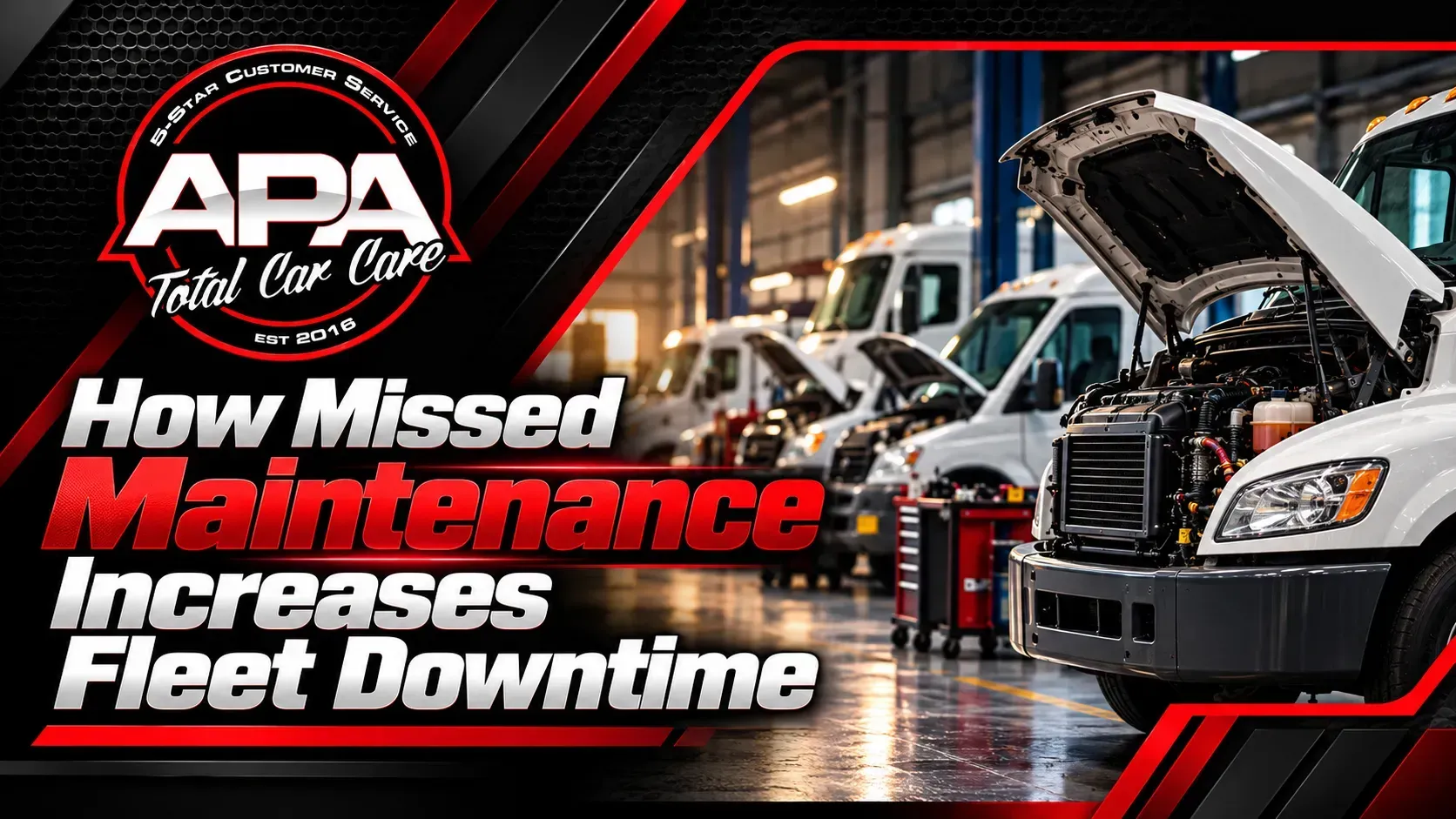
Fleet downtime often begins before a vehicle stops moving. An overdue inspection, fluid service, battery test, or wear item can turn a short planned visit into a roadside event with a larger repair scope. Our
fleet repair and preventive maintenance service helps Queen Creek businesses organize upkeep for cars, trucks, and vans around real operating needs.
Why Skipped Service Takes Vehicles Off the Road
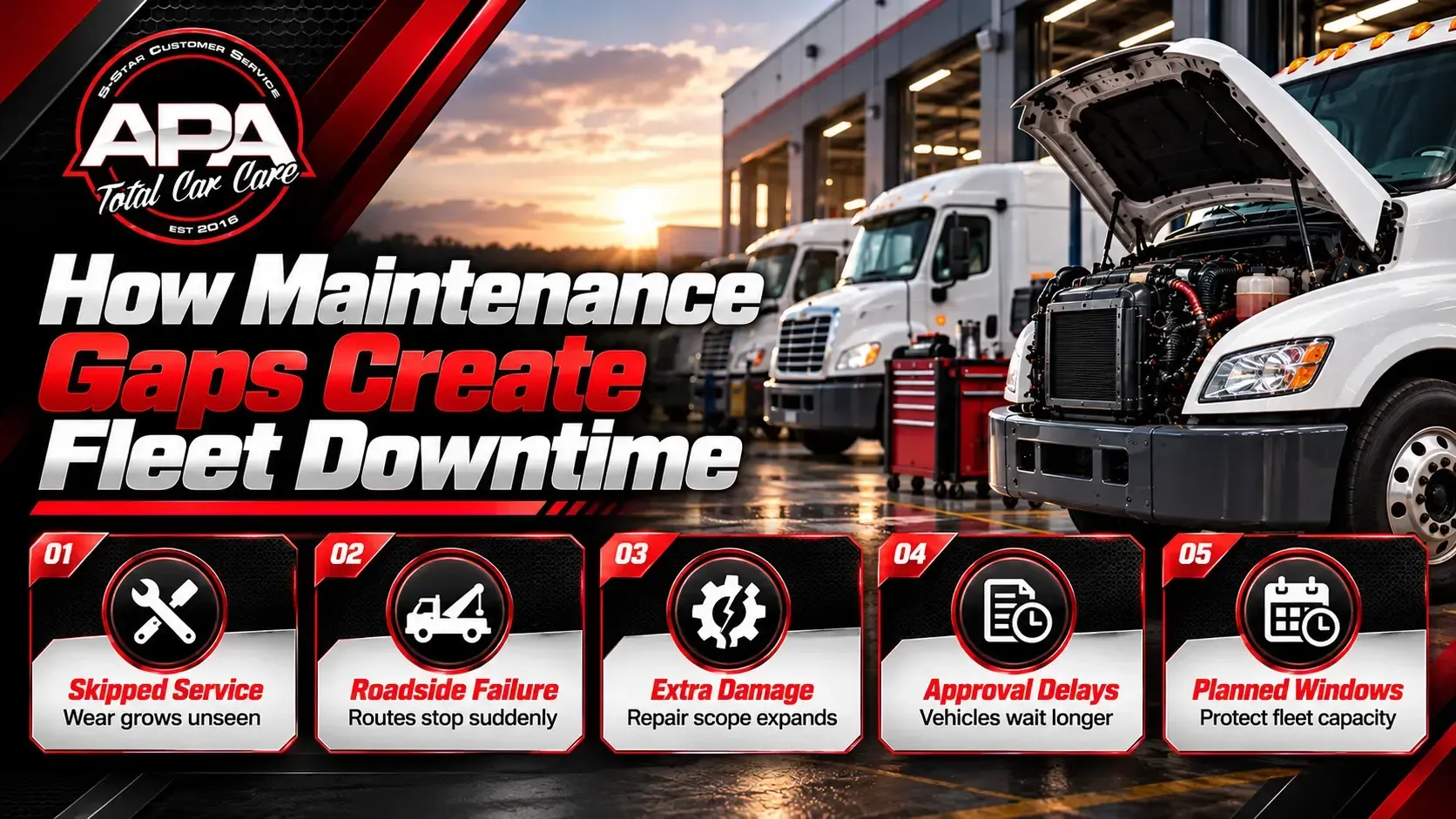
Missed fleet maintenance does more than postpone one appointment. It removes the chance to catch wear during a controlled service window. The decision then shifts to a less predictable time, often while the vehicle is on a route or job.
Small Wear Becomes a Roadside Event
A weak battery, low fluid level, worn belt, leaking hose, or thinning brake pad may be manageable when found early. If it is missed, the vehicle may fail to start, overheat, lose charging power, or develop a safety concern during the workday. One unavailable unit can force dispatch changes, missed appointments, rental costs, or overtime for another driver.
Secondary Damage Expands the Repair
Delayed maintenance can allow one worn part to affect related components. Overdue oil can increase engine wear, while an overheated engine or dragging brake can damage nearby parts. A larger repair usually means more diagnosis, more parts, and a longer time before the vehicle returns to service.
Unplanned Work Adds Scheduling and Approval Delays
Unplanned repairs also create administrative downtime. The fleet manager must confirm the complaint, authorize diagnosis, review the estimate, locate a replacement vehicle, and coordinate the driver's schedule. If parts are not available that day, the vehicle remains out of rotation even after the problem has been identified.
Where Queen Creek Fleets Lose Uptime
East Valley operating conditions can expose weak systems quickly. Heat, frequent stops, short trips, idling, cargo, towing, and mixed vehicle types all change how soon a fleet unit needs attention.
Heat Exposes Weak Cooling and Battery Systems
Arizona heat raises under-hood temperatures and increases demand on cooling and air-conditioning systems. It can also shorten battery life, especially when vehicles make short trips or spend time idling with accessories running. Planned battery testing and replacement can identify weak starting capacity before a morning route begins with a no-start.
Stop-and-Go Routes Accelerate Routine Wear
Repeated stops around Queen Creek, San Tan Valley, and East Mesa add brake cycles and reduce steady highway running. Short trips and idle time can also matter more than odometer miles alone. A scheduled oil and filter change should follow the vehicle manufacturer's guidance and account for severe-duty use when the manual defines it.
Mixed Fleets Drift Into Different Service Cycles
A sedan used for sales calls, a cargo van making local deliveries, and a pickup towing equipment should not share one generic interval sheet. Mileage, engine hours, load, idle time, age, and manufacturer requirements can differ. Our Ram repair and maintenance service is one example of vehicle-specific support for local trucks used in harder duty.
How to Build Maintenance Around Fleet Availability
Preventive fleet maintenance works best when the plan protects vehicle capacity. The goal is to know what is due, choose which units can be released, and combine sensible work before a breakdown decides for you.
Track Each Vehicle by Time, Mileage, and Duty Cycle
Build a commercial vehicle maintenance schedule for each unit, using the owner's manual as the base. Record dates, mileage, engine hours when available, completed work, open recommendations, and recurring concerns. Calendar reminders matter for low-mileage vehicles because fluids, batteries, rubber parts, and inspections can still age while the odometer moves slowly.
Combine Planned Work Into Controlled Service Windows
Group compatible maintenance and inspections when a vehicle is already available, then stagger appointments so the fleet retains enough working units. Avoid removing every similar vehicle at once. A planned window also gives managers time to approve priorities, arrange drivers, and order expected parts before the unit is committed to the shop.
Use Driver Reports and Inspections to Set Priorities
Drivers should report warning lights, leaks, noises, hard starts, temperature changes, brake feel, tire damage, and reduced performance as soon as they appear. Simple daily observations do not replace a technician's inspection, but they help the manager place the right vehicle at the front of the schedule. Digital inspection findings can then separate immediate needs from work that can be planned.
Although written for state agencies, Arizona's loss prevention program elements list maintenance programs, safety inspections, and motor vehicle safety as formal program components. Private fleets can apply the same planning principle by assigning responsibility, keeping records, and reviewing whether the schedule matches actual use. At APA Total Car Care, we provide documented findings and clear recommendations to support those decisions.
Takeaways
Missed maintenance increases fleet downtime by letting small wear become a roadside failure and raising the chance of related damage. It also adds scheduling, approval, and parts delays. Arizona heat, stop-and-go routes, idling, loads, and mixed vehicle use make a single fleet-wide interval less useful.
Track every unit by time, mileage, and duty cycle, stagger planned service windows, and use driver reports with documented inspections to set priorities. The result is not zero downtime, but more service time that can be planned instead of imposed by a breakdown.
Frequently Asked Questions
How does missed maintenance increase fleet downtime?
Missed maintenance increases fleet downtime by allowing predictable wear or fluid needs to develop into breakdowns and larger repairs. It also adds dispatch, approval, towing, rental, parts, and rescheduling delays that a planned visit may avoid.
What fleet maintenance should be tracked by mileage?
Fleet maintenance tied to mileage can include oil and filter service, tire rotation, brake inspection, and other manufacturer-listed items. The exact work and interval depend on the vehicle, powertrain, duty cycle, and maintenance schedule, so one mileage number should not be applied to every unit.
Should fleet maintenance be scheduled by time or mileage?
Fleet maintenance should usually be tracked by both time and mileage, with engine hours or duty cycle added when relevant. Follow the manufacturer's schedule and use whichever limit comes first when the manual specifies time-or-mileage intervals.
How can drivers help reduce unplanned downtime?
Drivers can help reduce unplanned downtime by reporting warning lights, leaks, noises, tire damage, temperature changes, starting trouble, and altered brake feel promptly. Consistent daily observations give the fleet manager time to schedule an inspection before the concern interrupts a route.
How often should a business review its fleet maintenance plan?
A business should review its fleet maintenance plan regularly and whenever routes, loads, vehicles, or operating conditions change. Monthly exception checks for overdue work and periodic reviews of breakdown history can show whether intervals and priorities still fit the fleet.
Plan Fleet Maintenance with APA Total Car Care
If overdue service, repeat warning lights, no-starts, overheating, tire wear, or unexpected repairs are disrupting your operation, contact our Queen Creek shop. We can help organize inspections and maintenance around vehicle priority and availability. Call
(480) 282-8300 or visit
22325 S Scotland Ct Ste 101, Queen Creek, AZ 85142 to discuss fleet maintenance in Queen Creek, AZ.
