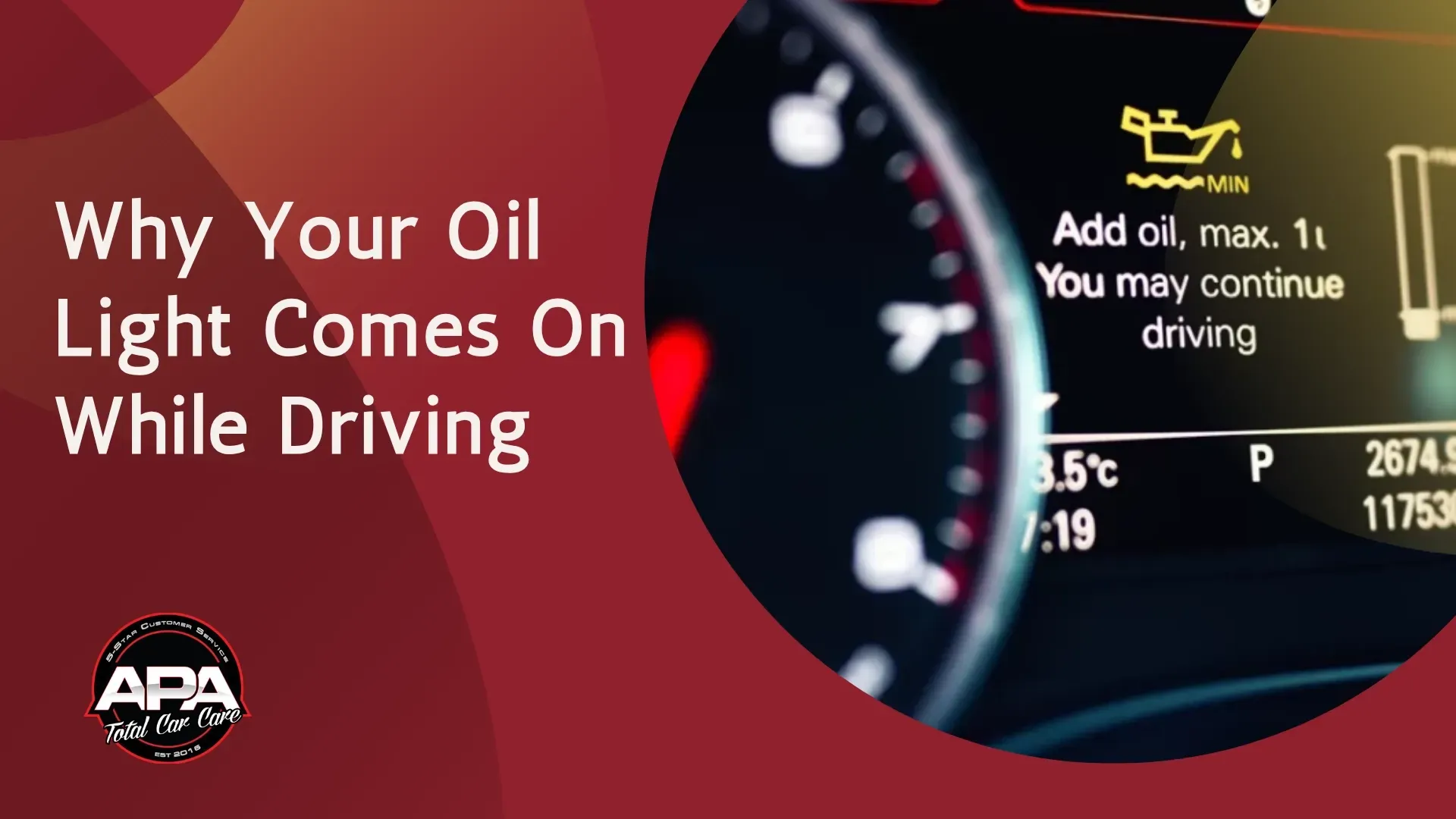
When your oil light comes on while driving, it is a warning sign you should take seriously. Low oil levels, leaks, a faulty oil pump, or a clogged filter can all cause oil pressure to drop and put your engine at risk. If this happens, pull over safely and turn off the engine to help prevent damage. Scheduling an
Oil Change in Queen Creek, AZ can help keep your engine properly lubricated and catch small issues before they turn into costly repairs.
Key Takeaways
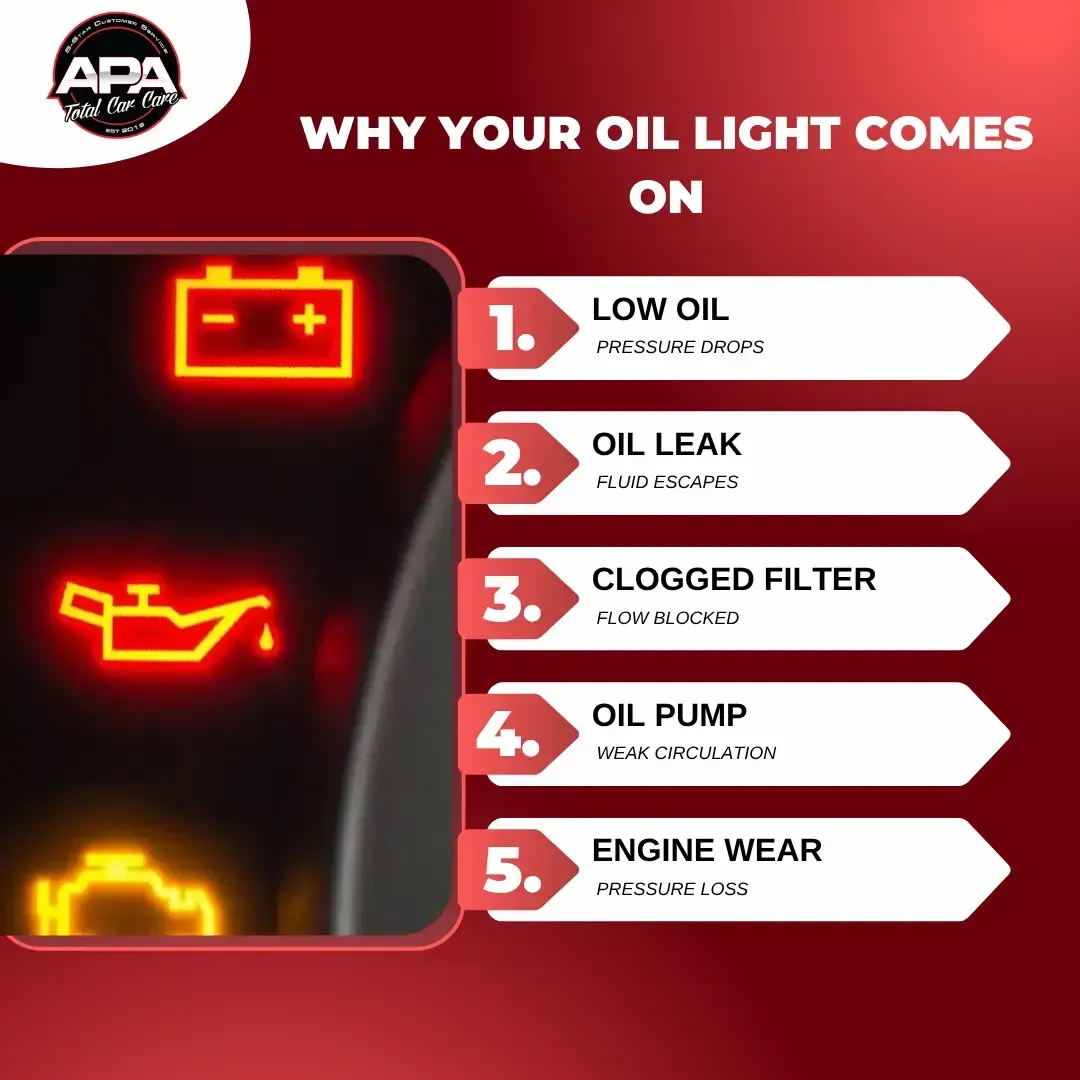
- The oil light may activate due to low oil levels, indicating a need for an immediate oil check or refill.
- Oil leaks can significantly reduce oil pressure, triggering the warning light while driving.
- A malfunctioning oil pump can lead to insufficient oil circulation, causing the oil light to illuminate.
- A clogged oil filter restricts oil flow, which can also result in the oil light turning on.
- Internal engine wear may create pressure issues, prompting the oil warning light to alert you while driving.
What the Oil Light Means
When your oil light comes on while you're driving, it usually means that your oil pressure has dropped. This warning isn't something you should ignore, as low oil pressure can lead to serious engine damage. Understanding what the oil light means is essential for keeping your vehicle running smoothly.
Oil Light Comes on While Driving Because Oil Pressure Dropped
If your oil light comes on while driving, it often means your engine's oil pressure has dropped, signaling a potentially serious issue. Ignoring this can lead to considerable engine damage. Here are some reasons why this might happen:
- Low oil level: Insufficient oil can cause pressure to drop.
- Oil leaks: Leaks can greatly decrease oil pressure.
- Oil pump failure: A malfunctioning pump can’t circulate oil effectively.
- Clogged oil filter: A blocked filter restricts oil flow, leading to pressure issues.
If you're experiencing a low oil pressure warning light, it’s essential to seek an oil pressure diagnosis in Queen Creek, AZ. Addressing this promptly can save you from costly repairs and keep your engine running smoothly.
Why a Low Oil Pressure Warning Light Should Not Be Ignored
Although the oil light may seem like just another warning, it’s a critical indicator of your engine's health. Ignoring a low oil pressure warning can lead to severe engine damage, which might cost you thousands in repairs. If you notice the light flickering, check for engine oil leak symptoms like puddles under your vehicle or a burning smell. Don’t wait for the situation to worsen; schedule an oil change in Queen Creek, AZ, to guarantee your engine remains well-lubricated. Regular maintenance can prevent issues, keeping your car running smoothly. Remember, addressing these warnings promptly not only prolongs your engine's life but also enhances your driving safety.
Common Causes of the Oil Warning Light
When your oil light comes on, it’s often due to low oil levels, worn oil, or even an engine oil leak. You might also face pressure issues caused by faulty sensors or internal engine wear. Understanding these common causes can help you address the problem before it escalates.
Low Oil Level, Worn Oil, or Engine Oil Leak Symptoms
Low oil levels, worn oil, or engine oil leaks can trigger your oil warning light, signaling a potential problem with your vehicle. Ignoring this warning can lead to serious engine damage. Here are some symptoms to watch for:
- Decrease in engine performance**: You might notice your car struggling to accelerate.
- Unusual noises: Knocking or ticking sounds can indicate insufficient lubrication.
- Oil spots: Puddles under your vehicle can signal a leak.
- Burning oil smell: You may detect a strong odor if oil is seeping onto hot engine parts.
If you encounter any of these signs, it’s essential to check your oil levels and consult a professional mechanic to prevent further issues.
Why Pressure Problems Can Come from Sensors or Internal Engine Wear
Pressure problems that trigger your oil warning light can stem from faulty sensors or internal engine wear. If your oil pressure sensor is malfunctioning, it may send incorrect signals to your dashboard, causing the light to illuminate even when oil levels are fine. Meanwhile, internal engine wear, like worn bearings or damaged oil pumps, can lead to insufficient oil pressure, making it essential to address these issues promptly. Ignoring the warning can result in serious engine damage. Regular maintenance and inspections can help catch these problems fast. If your oil light comes on, don’t hesitate to get it checked out; it could save you from costly repairs in the future.
What to Do Right Away
When your oil light comes on, you need to act fast. Pull over and shut off the engine to prevent serious damage. Continuing to drive can lead to costly repairs, so it’s essential to address the issue immediately.
When to Pull Over and Shut the Engine Off
If you notice your oil light illuminating on the dashboard, it’s vital to act swiftly. Ignoring this warning can lead to severe engine problems. Here’s when you should pull over and shut the engine off:
- You hear unusual noises, like knocking or grinding.
- The oil pressure gauge drops considerably.
- You notice a burning oil smell or smoke.
- The oil light stays on after starting the engine.
When you encounter any of these signs, find a safe place to stop immediately. Turn off the engine to prevent further damage. It’s essential to assess the situation or call for assistance. This quick response can save you from costly repairs and keep your vehicle running smoothly.
Why Continuing to Drive Can Lead to Engine Damage
Continuing to drive with the oil light on not only risks immediate engine performance but can also lead to catastrophic damage over time. When your oil light illuminates, it often indicates low oil pressure or insufficient oil levels, which means your engine isn't getting the lubrication it needs. Without proper lubrication, metal components can grind against each other, leading to overheating, increased friction, and ultimately, engine failure. Ignoring this warning can result in costly repairs or even a complete engine replacement. If you find yourself in this situation, it's essential to pull over, turn off the engine, and check your oil levels. Don’t gamble with your vehicle’s health; addressing the issue promptly can save you from serious trouble down the road.
How the Problem Is Diagnosed
When your oil light comes on, the diagnosis starts with accurate testing. Technicians will check your oil level, look for leaks, and assess the pressure along with other related components. This thorough approach guarantees your vehicle gets the right solution without any guesswork.
Oil Pressure Diagnosis in Queen Creek, AZ, Starts with Testing, Not Guessing
To guarantee accurate oil pressure diagnosis in Queen Creek, AZ, it’s essential to rely on thorough testing rather than mere guesswork. This approach helps pinpoint the exact issue with your vehicle's oil system. Here are some key steps involved in the process:
- Checking oil levels to verify they’re within the recommended range.
- Inspecting for leaks that could affect oil pressure.
- Testing the oil pressure with a gauge to measure actual performance.
- Evaluating the oil pump to confirm it's functioning properly.
How Technicians Check Oil Level, Leaks, Pressure, and Related Components
Technicians start the diagnosis by checking your oil level, ensuring it's within the recommended range. If it's low, they’ll fill it up and look for potential leaks. They’ll inspect the oil filter, oil pan, and any visible hoses for signs of leakage. Next, they check oil pressure using a gauge, which helps identify if the oil pump is functioning properly. If the pressure's too low, it could indicate a serious issue. Additionally, they examine related components like the oil pressure sending unit and the engine itself for any abnormal sounds or irregularities. By thoroughly evaluating these elements, technicians can pinpoint the cause of your oil light activation and recommend the right solutions.
Schedule Oil Pressure Diagnosis at APA Total Car Care in Queen Creek, AZ
If your oil light has come on, it’s vital to act right away to avoid potential engine damage. At APA Total Car Care in Queen Creek, AZ, we’re here to help you diagnose and resolve any oil pressure issues. Our certified mechanics use advanced tools to guarantee your vehicle runs smoothly.
Here’s what you can expect when you schedule your oil pressure diagnosis with us:
- Thorough oil level checks
- Leak detection and repair
- Pressure testing for accuracy
- Recommendations for preventive maintenance
Don’t wait until it’s too late. Trust our family-owned shop, recognized as a Carfax Top Shop, to keep your vehicle in peak condition. Contact us today to book your appointment and drive with confidence.
Frequently Asked Questions
Can I drive my car with the oil light on?
You shouldn’t drive your car with the oil light on. It indicates low oil pressure or insufficient oil, leading to severe engine damage. Pull over and check your oil level immediately.
How often should I check my oil level?
Your engine thrives on oil; check it every month or before long trips. Keeping an eye on your oil level helps guarantee your vehicle runs smoothly, avoiding costly repairs down the road.
What type of oil should I use in my vehicle?
You should use the oil type recommended in your owner’s manual, typically synthetic or conventional. It guarantees peak performance and protects your engine. Regularly checking and changing it keeps your vehicle running smoothly.
How long can I wait to address the oil light issue?
You shouldn’t wait long to address the oil light issue and check it within a few days. Ignoring it can lead to serious engine damage, costing you more in repairs down the line.
Will an Oil change fix the oil light problem?
Yes, an oil change can fix the oil light problem if it’s indicating low oil levels or dirty oil. However, if the light persists, you should have your vehicle checked for other issues.
Conclusion
In the hustle of life, the oil light flickering on your dashboard can feel like a minor annoyance, but it’s really a signal for urgent attention. Just as a small crack in a window can lead to a storm inside your home, ignoring that warning can release chaos under your hood. Taking action now can save you from costly repairs later. Stay aware, get that oil checked, and keep your ride smooth and reliable on the road ahead.
