2-Wheel vs 4-Wheel Alignment: Which One Does Your Vehicle Need?
Discover More On:
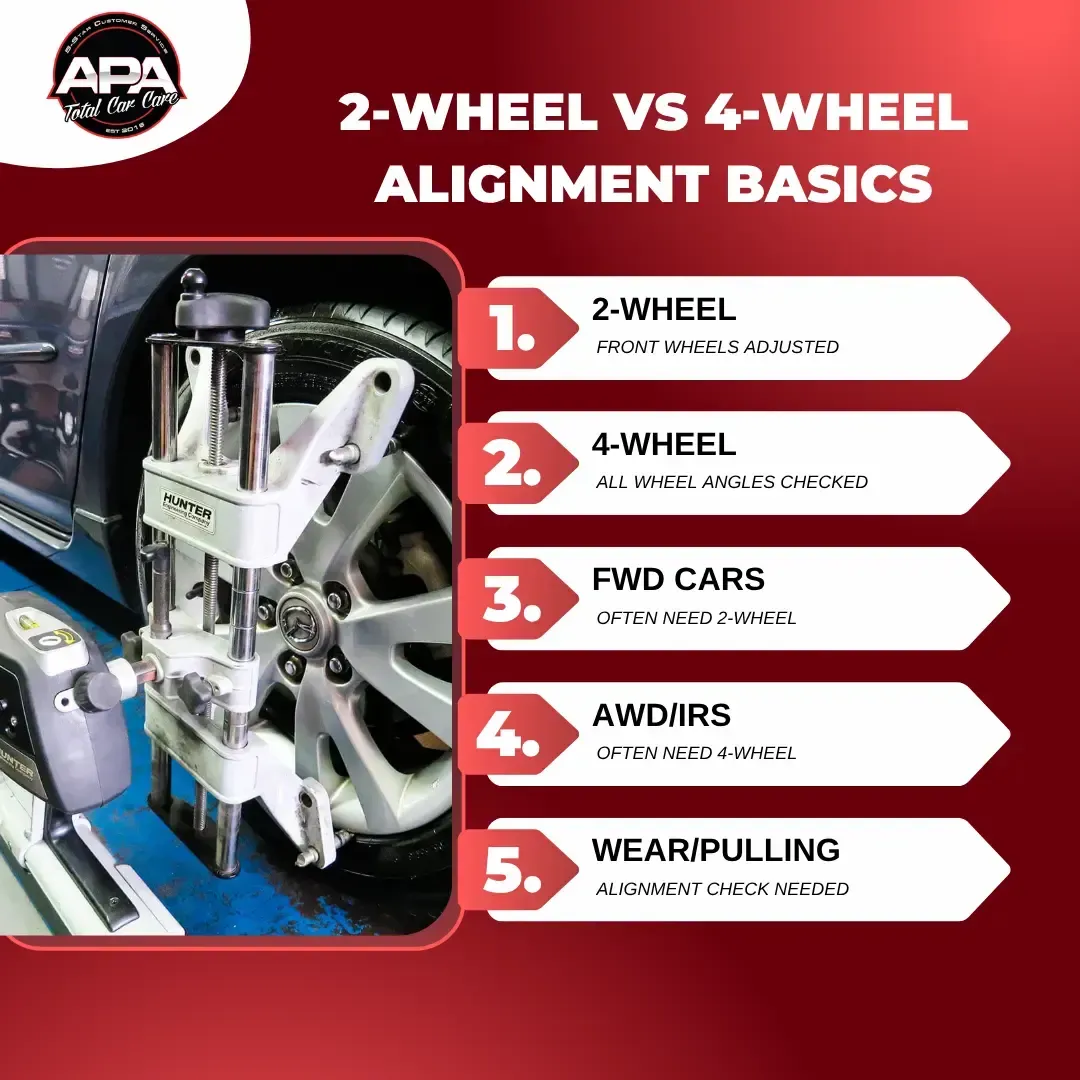
When deciding between 2-wheel and 4-wheel alignment, it’s important to think about your vehicle’s drivetrain, suspension, and overall handling needs. Front-wheel-drive cars usually only need a 2-wheel alignment, which adjusts the front wheels. Vehicles with independent rear suspension, all-wheel drive, or larger frames often benefit more from a 4-wheel alignment because it improves stability, steering control, and tire longevity. Scheduling regular Tire Rotation and Alignment in Queen Creek, AZ can also help your tires wear evenly and keep your vehicle performing at its best.
Key Takeaways
- Drivetrain Type: Front-wheel-drive vehicles typically need 2-wheel alignment, while those with independent rear suspensions require 4-wheel alignment for optimal performance.
- Suspension Setup: Heavily loaded or larger vehicles benefit from 4-wheel alignment to enhance stability and handling.
- Signs of Misalignment: Look for pulling to one side, uneven tire wear, or off-center steering, which indicate a need for alignment.
- Regular Maintenance: Schedule regular alignment checks to prevent costly repairs, improve fuel efficiency, and extend tire life.
- Professional Equipment: Advanced alignment systems provide precise measurements, ensuring optimal vehicle performance and addressing underlying suspension issues.
What Is the Difference Between 2-Wheel vs 4-Wheel Alignment?
When it comes to alignment, you might wonder what sets 2-wheel apart from 4-wheel. 2-wheel alignment focuses on the front wheels, ensuring they’re aligned correctly for steering and handling. On the other hand, 4-wheel alignment checks all four wheels, which is essential for overall stability and tire wear.
How 2-wheel alignment focuses on the front wheels
Two-wheel alignment primarily focuses on the front wheels of your vehicle, guaranteeing they are perfectly aligned for ideal handling and tire wear. This service is vital for maintaining your vehicle's stability, especially if you notice:
- Uneven tire wear
- Your car is pulling to one side
- A crooked steering wheel
If you're wondering, "which wheel alignment does my car need?" a 2 wheel alignment service in Queen Creek, Arizona, is often enough for front-wheel drive vehicles. Regular checks can prevent costly repairs down the line and improve safety. Keep an eye out for signs your vehicle needs an alignment check to guarantee a smooth and safe driving experience. Don’t wait until it’s too late—schedule your alignment today!
Why 4-wheel alignment checks all four wheel angles
While a 2-wheel alignment focuses solely on the front wheels, a 4-wheel alignment checks all four wheel angles, ensuring thorough adjustments for both the front and rear wheels. This extensive approach is vital, especially for vehicles with independent rear suspensions. By addressing all four wheels, you can improve handling, tire wear, and overall safety. If you’re in Queen Creek, AZ, opting for a 4-wheel alignment means you’re investing in your vehicle’s longevity and performance. It helps maintain proper alignment, which can enhance fuel efficiency and reduce unnecessary strain on your tires. Ultimately, understanding the differences in 2 wheel vs 4 wheel alignment allows you to make an informed decision for your vehicle’s specific needs.
Which Wheel Alignment Does My Car Need?
Figuring out which wheel alignment your car needs depends on its drivetrain and suspension design. The type of vehicle you drive also plays a vital role in determining the right alignment service. Let’s break down how these factors influence your alignment choice.
Why drivetrain and suspension design affect the answer
Understanding which wheel alignment your car needs depends on its drivetrain and suspension design. Different designs can greatly influence whether you need a 2-wheel or 4-wheel alignment. Here are three key factors to take into account:
- Drivetrain Type: Front-wheel-drive vehicles usually require 2-wheel alignment, while all-wheel-drive models often need 4-wheel alignment for peak performance.
- Suspension Setup: Vehicles with independent rear suspension may benefit more from 4-wheel alignment to guarantee even tire wear.
- Load Distribution: If your vehicle frequently carries heavy loads, a 4-wheel alignment can help maintain stability and handling.
How vehicle type helps determine the right alignment service
Choosing the right wheel alignment for your vehicle isn’t just about preference; it’s vital for maintaining ideal performance and safety. Your vehicle type plays a significant role in determining whether you need a 2-wheel or 4-wheel alignment. If you drive a front-wheel-drive car, a 2-wheel alignment often suffices, focusing on the front wheels. However, if you have an all-wheel-drive or luxury vehicle, a 4-wheel alignment is typically necessary for balanced handling and tire longevity. Additionally, larger vehicles like trucks and SUVs may require specialized alignment services due to their weight and suspension setups. Understanding your vehicle's specifications helps guarantee you get the right service, ultimately enhancing your driving experience and extending tire life.
Signs Your Vehicle Needs an Alignment Check
If your vehicle's pulling to one side or you notice uneven tire wear, it might be time for an alignment check. An off-center steering wheel or vibrations while driving can also signal alignment issues. Catching these signs early can save you from more serious problems down the road.
Pulling, uneven tire wear, and an off-center steering wheel
Pulling to one side, uneven tire wear, and an off-center steering wheel are clear indicators that your vehicle might need an alignment check. If you notice these signs, it’s essential to address them promptly to avoid further issues. Here are three things to watch for:
- Pulling to One Side: If your car drifts left or right when you’re driving straight, it’s a strong sign of misalignment.
- Uneven Tire Wear: Check your tires for irregular wear patterns; this can lead to premature tire replacement.
- Off-Center Steering Wheel: If your steering wheel isn’t centered when driving straight, it’s another indicator that your alignment needs attention.
Don’t ignore these signs; getting an alignment check can save you money and improve your vehicle's performance.
When vibration or poor handling points to alignment issues
Experiencing vibration or poor handling can be just as telling as the signs of pulling, uneven tire wear, and an off-center steering wheel. If your vehicle shakes while driving or feels loose and unresponsive, it’s a strong indication that your alignment might be off. These symptoms often stem from misalignment, leading to uneven tire wear and reduced handling performance. Ignoring these issues can result in further damage, not just to your tires but also to suspension components. Regular alignment checks can help you maintain a smoother ride and prolong the life of your tires. If you notice these symptoms, it’s time to schedule an alignment check at a trusted auto repair shop to keep your vehicle running smoothly.
When a 2-Wheel Alignment May Be the Right Choice
When you notice uneven front tire wear or your steering pulls to one side, a 2-wheel alignment might be just what you need. Some vehicles only require a front-end adjustment, making this option both practical and efficient. Understanding when to choose a 2-wheel service can save you time and money while keeping your ride smooth.
Why some vehicles only need front-end adjustment
While many vehicles benefit from a full 4-wheel alignment, some only require a front-end adjustment due to their design and driving conditions. Here are a few reasons why a 2-wheel alignment might be sufficient for your vehicle:
- Front-Wheel Drive: If your vehicle primarily uses front wheels for power and steering, a front-end alignment is often all you need.
- Solid Rear Axle: Vehicles with a solid rear axle, like trucks, usually maintain alignment stability, making a front-only adjustment effective.
- Limited Adjustability: Some older models or simpler designs may not have adjustable rear alignment settings, rendering a 4-wheel alignment unnecessary.
In these cases, opting for a front-end adjustment can save you time and money while keeping your vehicle in peak condition.
When front tire wear and steering pull suggest a 2-wheel service
A noticeable wear pattern on your front tires or a persistent steering pull can indicate that a 2-wheel alignment might be the best service for your vehicle. When your tires show uneven wear, it often means the front wheels are misaligned, affecting handling and safety. If you find yourself constantly correcting the steering to stay straight, that’s another sign your front end needs attention.
In these cases, a 2-wheel alignment focuses specifically on the front tires, which are essential for steering and control. Addressing these issues promptly can save you from more significant problems down the road, like costly tire replacements or suspension damage. Make sure to consult with a trusted mechanic to determine the best course of action for your vehicle.
When a 4-Wheel Alignment Makes More Sense
When you're considering alignment options, a 4-wheel alignment often makes more sense for modern vehicles. This type of alignment takes into account the rear wheel angles, which can greatly impact your tire life and overall handling. If you want to guarantee your car drives smoothly and efficiently, it’s worth exploring this option.
Why 4-wheel alignment is often recommended for modern vehicles
Given that most modern vehicles are designed with advanced suspension systems, a 4-wheel alignment often makes more sense than a 2-wheel alignment. Here’s why you should consider it:
- Improved Handling: A 4-wheel alignment guarantees all wheels are aligned, which enhances handling and steering response.
- Tire Longevity: It helps distribute tire wear evenly, extending the life of your tires and saving you money in the long run.
- Enhanced Safety: Proper alignment reduces the risk of accidents by improving stability and control, especially during sudden maneuvers.
Investing in a 4-wheel alignment can lead to a smoother ride and better performance, making it a smart choice for your vehicle's health.
How rear wheel angles can affect tire life and handling
Proper alignment isn’t just about the front wheels; rear wheel angles play a significant role in overall vehicle performance, too. If your rear wheels are misaligned, it can lead to uneven tire wear, reducing their lifespan. You might notice your tires wearing more on one side, which can make replacements costly. Additionally, improper rear alignment can affect handling, making your vehicle feel unstable during turns or when driving straight. This can compromise your safety and driving experience. By opting for a 4-wheel alignment, you guarantee that all wheels are properly aligned, promoting even tire wear and better handling. If you want your vehicle to perform at its best, paying attention to rear wheel angles is essential.
Why Professional Alignment Equipment Matters
When it comes to alignment, professional equipment makes a big difference. With precise measurements, you'll notice improved tire wear and better drivability. Plus, advanced systems can help pinpoint any related suspension issues before they become major problems.
How precise measurements improve tire wear and drivability
While you might not think about it often, precision in wheel alignment can greatly impact your vehicle's performance. Proper alignment guarantees your tires wear evenly, enhancing their lifespan and saving you money. With accurate measurements, you’ll notice improved drivability, making your rides smoother and more controlled. Here are three key benefits of precise wheel alignment:
- Extended Tire Life: Reduced uneven wear means you won’t have to replace tires as frequently.
- Improved Fuel Efficiency**: Proper alignment minimizes rolling resistance, helping you save on gas.
- Enhanced Safety: Better handling and stability reduce the risk of accidents.
Investing in professional alignment equipment can make all the difference in achieving these benefits for your vehicle.
Why advanced alignment systems help identify related suspension issues
Advanced alignment systems play an essential role in diagnosing underlying suspension issues, ensuring your vehicle performs at its best. These high-tech tools provide precise measurements that go beyond simple alignment checks, helping to pinpoint problems like worn-out components or misaligned parts. When you use advanced equipment, it can reveal issues that might otherwise go unnoticed, saving you from costly repairs down the line.
Schedule 2-Wheel or 4-Wheel Alignment at APA Total Car Care in Queen Creek, AZ
Get your vehicle handling smoothly by scheduling a 2-wheel or 4-wheel alignment at APA Total Car Care in Queen Creek, AZ. Our certified mechanics use advanced technology to guarantee your alignment is spot on, enhancing your driving experience. Here’s what you’ll gain by choosing us:
- Improved Tire Life: Proper alignment reduces uneven wear, extending the life of your tires.
- Better Fuel Efficiency: A well-aligned vehicle requires less energy to drive, saving you money at the pump.
- Enhanced Safety: Correct alignment improves vehicle stability, making your rides safer for you and your passengers.
Don’t wait—visit us at 22325 S Scotland Ct, Ste 101, and experience the difference a proper alignment can make!
Frequently Asked Questions
How Often Should I Get My Alignment Checked?
You should get your alignment checked every 6,000 miles or during routine maintenance. If you notice uneven tire wear or your vehicle pulling to one side, it's time to have it assessed sooner.
Can Misalignment Affect Tire Lifespan?
Yes, misalignment can greatly shorten your tire lifespan, causing uneven wear and reduced traction. It’s crucial to address alignment issues promptly to guarantee safety, enhance performance, and maximize the life of your tires.
What Are the Costs Associated With Wheel Alignment?
Wheel alignment costs typically range from $75 to $100 for two-wheel alignment and $100 to $150 for four-wheel alignment. Prices may vary based on your vehicle's make, model, and any additional services needed.
Does Alignment Impact Fuel Efficiency?
Yes, alignment greatly impacts fuel efficiency. When your wheels aren't aligned, your vehicle works harder, using more fuel. Keeping your alignment in check can lead to better gas mileage and save you money in the long run.
Can I Drive With a Misaligned Vehicle?
Can you really drive safely with a misaligned vehicle? While you might think it's okay, it can lead to uneven tire wear and handling issues. It's best to address alignment problems promptly for your safety.
Conclusion
To sum up, knowing whether your vehicle needs a 2-wheel or 4-wheel alignment can greatly impact its performance and safety. Did you know that proper wheel alignment can improve fuel efficiency by up to 10%? By keeping your wheels aligned, you not only enhance your driving experience but also save money at the pump. So, don’t ignore those signs—schedule your alignment check at APA Total Car Care in Queen Creek, AZ, to keep your ride smooth and safe!
