How Often Should You Change Oil in an Old Car?
Discover More On:
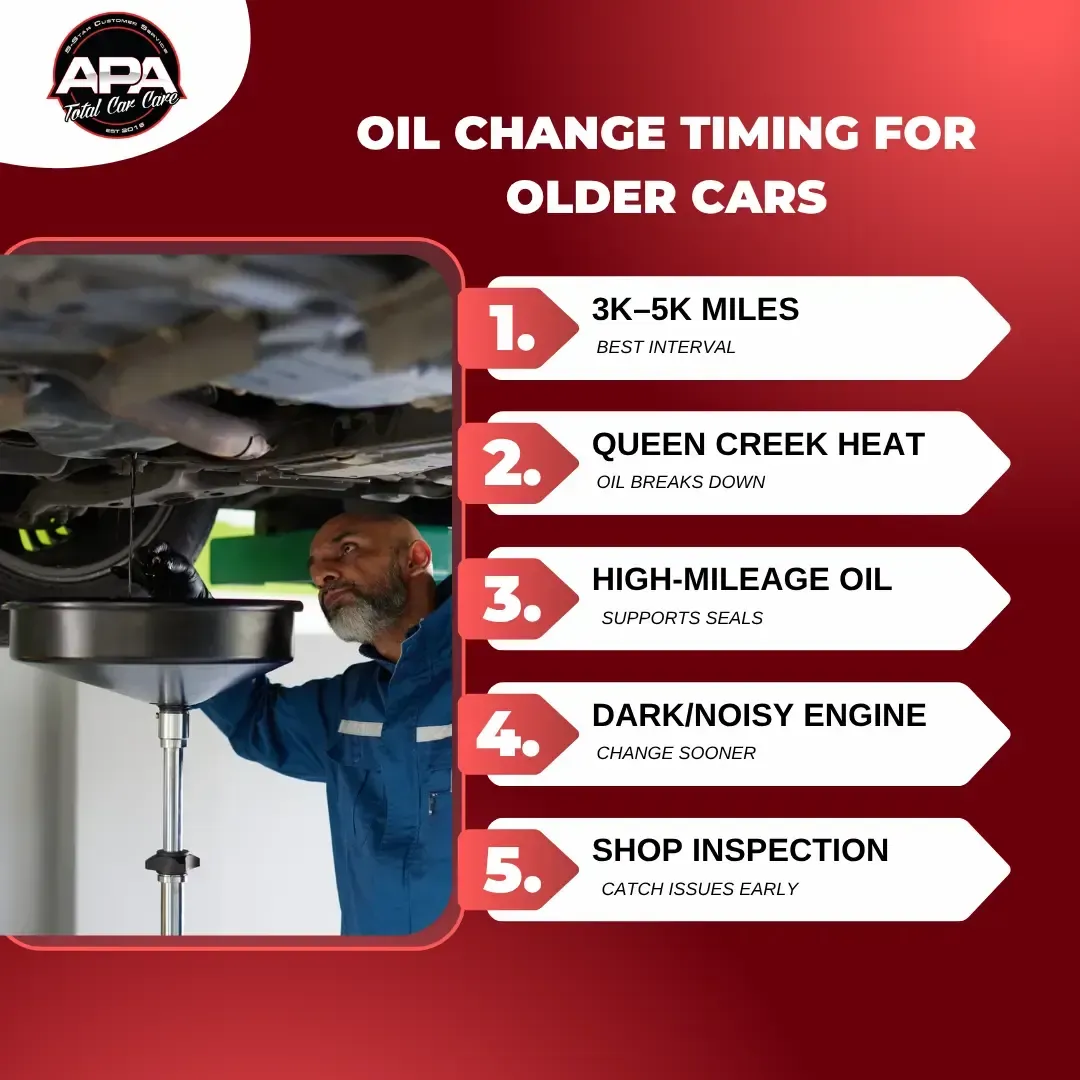
If you own an older car, scheduling an Oil Change in Queen Creek, AZ every 3,000 to 5,000 miles is a smart way to protect your engine. This is especially important if your vehicle is over 10 years old, has high mileage, or deals with Queen Creek’s extreme heat, which can break oil down faster. Regular oil changes help maintain performance, prevent engine wear, and catch oil problems before they turn into costly repairs.
Key Takeaways
- Change oil every 3,000 to 5,000 miles for cars over 10 years old or with high mileage, depending on condition and driving habits.
- In extreme heat areas like Queen Creek, AZ, more frequent oil changes are necessary to combat faster oil breakdown.
- Look for signs like dark oil, unusual noises, or rough performance to determine if an early oil change is needed.
- Use high-mileage oils with additives to minimize leaks and wear in older engines, ensuring better lubrication and performance.
- Professional oil change services offer thorough inspections and high-quality oil, tailored specifically for the needs of aging vehicles.
How Often Should You Change Oil in an Old Car?
When it comes to changing oil in an old car, the interval often depends on both its age and mileage. You might find that high-mileage engines require more frequent oil changes to keep them running smoothly. Let’s explore what those specific intervals should be for your vehicle.
Best oil change interval for older cars based on age and mileage
Understanding how often to change the oil in an old car can greatly extend its lifespan and performance. For vehicles over 10 years old or with high mileage, you should consider changing the oil every 3,000 to 5,000 miles, particularly if it's not synthetic oil. The best oil change interval for older cars often depends on their condition, driving habits, and engine type. If you’re following an oil change schedule for high mileage vehicles, regular checks can help catch any potential issues. Always consult your owner’s manual for specific recommendations, but keeping this routine can guarantee your engine runs smoothly for years to come. Don’t wait too long—your old car deserves the best care!
Why high-mileage engines may need more frequent oil service
High-mileage engines often face unique challenges that can necessitate more frequent oil changes. As your car ages, it may develop leaks and consume more oil, making regular checks essential. In Queen Creek, AZ, where the heat can exacerbate wear, you might wonder how often to change oil in Queen Creek AZ heat. Generally, it’s advisable to change the oil every 3,000 to 5,000 miles for older vehicles. This guarantees that your engine stays lubricated and reduces the risk of damage. For tailored advice, consider visiting a local shop for old car oil change service in Queen Creek, AZ. They can assess your vehicle’s specific needs and keep it running smoothly despite its age.
How Arizona Heat Affects Oil Change Intervals
When you're dealing with the Arizona heat, you might need to adjust how often you change your oil. Extreme temperatures can break down engine oil faster, leading to potential issues. Understanding this can help you keep your old car running smoothly in the harsh climate.
How often to change oil in Queen Creek, AZ heat
In the scorching heat of Queen Creek, AZ, knowing how often to change your oil becomes essential for maintaining your old car's performance. High temperatures can cause oil to break down faster, so you might need to change it more frequently than the standard recommendations. Here are some tips to keep in mind:
- Check your oil level regularly to guarantee it’s at the proper mark.
- Consider changing your oil every 3,000 to 5,000 miles** in extreme heat.
- Use high-quality synthetic oil**, which can withstand higher temperatures better.
- Monitor your engine’s performance; if you notice changes, it might be time for an oil change sooner.
Staying proactive can help extend your car's life in this tough climate!
Why extreme temperatures break down engine oil faster
Extreme temperatures can greatly impact engine oil's performance, breaking it down faster than in milder climates. When you live in areas like Arizona, where summer heat can soar, the oil in your engine faces increased stress. High temperatures cause the oil to thin out, reducing its ability to lubricate and protect your engine effectively. This can lead to faster degradation and the formation of sludge, which clogs your engine components. Consequently, you might need to change your oil more frequently than the standard recommendation. Regular checks and earlier oil changes help guarantee your engine runs smoothly in extreme heat. Don’t overlook the importance of adjusting your maintenance routine to accommodate these conditions; it can save you from costly repairs down the line.
Signs Your Older Car Needs an Oil Change Sooner
If you notice dark oil, unusual engine noise, or rough performance, it might be time to change your oil sooner than expected. Older seals and increased engine wear can greatly alter your oil change schedule. Staying attentive to these signs can help keep your car running smoothly.
Warning signs like dark oil, engine noise, or rough performance
Older cars often show specific warning signs that indicate it's time for an oil change. If you're noticing any of these issues, it’s essential not to ignore them:
- Dark, sludgy oil: Fresh oil is amber-colored; dark oil may mean it’s dirty and needs replacing.
- Engine noise: Unusual sounds like knocking or ticking can signal insufficient lubrication.
- Rough performance: If your car hesitates or struggles to accelerate, it might be due to old oil.
- Check engine light: If this light comes on, it could be related to oil quality or engine performance.
Pay attention to these signs to keep your older car running smoothly and to avoid more serious issues down the road.
How old seals and engine wear can change your oil schedule
As cars age, factors like worn seals and overall engine wear can greatly impact your oil change schedule. If you notice oil leaks or see that oil’s darker and thicker than usual, it’s a sign your engine might be struggling. Worn seals can lead to oil escaping, causing the engine to work harder and requiring more frequent oil changes to keep everything running smoothly. Additionally, increased engine wear can lead to more contaminants in the oil, making it less effective over time. You might find yourself needing to change the oil sooner than the standard interval. Keep an eye on your oil levels and quality; being proactive can help extend the life of your older vehicle.
Choosing the Right Oil for High-Mileage Vehicles
When it comes to older engines, the type of oil you choose really matters. High-mileage oil can provide the extra support your engine needs to stay healthy over time. Understanding these options can help you make the best choice for your vehicle’s longevity.
Why oil type matters for older engines
Choosing the right oil for high-mileage vehicles is essential, especially since older engines may have unique needs. Using the wrong oil can lead to increased wear, leaks, and even engine failure. Here’s why oil type matters for older engines:
- Viscosity: Thicker oils can help maintain pressure in worn engines.
- Additives: High-mileage oils contain special additives that can reduce engine wear and tear.
- Seal Condition: Some oils help swell seals, reducing leaks common in older engines.
- Performance: The right oil can improve overall engine performance and fuel efficiency.
How high-mileage oil can help support long-term engine health
High-mileage oil can considerably enhance the longevity of your engine, especially if your vehicle has seen better days. This specialized oil contains additives designed to reduce wear, minimize leaks, and help with sealing worn engine components. If your car has over 75,000 miles, switching to high-mileage oil can lead to smoother operation and improved performance.
These oils often have a thicker consistency, which helps maintain oil pressure and provides better lubrication for aging parts. By using high-mileage oil, you can also reduce the risk of oil consumption and prevent costly repairs down the line. Regularly changing your oil, paired with high-mileage formulations, keeps your engine running efficiently and extends its lifespan, ensuring you get the most out of your investment.
Build the Right Oil Change Schedule for an Older Vehicle
When you own an older vehicle, crafting a proper oil change schedule is essential, especially if you’re making short trips or driving daily. Regular inspections can help you adjust your service timing, catching potential issues before they escalate. Tracking these details will guarantee your car runs smoothly for years to come.
Oil change schedule for high mileage vehicles used for short trips or daily driving
For older vehicles that frequently make short trips or daily drives, a regular oil change schedule is crucial to maintain engine health. Short trips can prevent the oil from reaching ideal operating temperature, leading to increased sludge build-up.
Consider the following guidelines for your oil changes:
- Frequency: Change oil every 3,000 to 5,000 miles.
- Oil Type: Use high-mileage oil for better protection.
- Monitor Levels: Check oil levels monthly to catch any leaks.
- Listen to Your Engine: Pay attention to unusual noises or performance issues, as they may indicate oil degradation.
Sticking to this schedule helps guarantee your engine runs smoothly and lasts longer, giving you peace of mind during your daily drives.
Why regular inspections help adjust service timing before problems start
Regular inspections can be a game-changer for extending the life of your older vehicle. By regularly checking your car’s essential systems, you can catch small issues before they escalate into major problems. This proactive approach not only saves you money but also guarantees your vehicle runs smoothly. During inspections, mechanics can identify oil leaks, worn-out belts, or engine wear that might affect your oil change schedule. If something’s off, you can adjust your service timing accordingly, preventing breakdowns and costly repairs down the line. Plus, staying on top of these checks gives you peace of mind, knowing you’re taking proper care of your investment. Trust regular inspections to keep your car in top shape for years to come.
Why Professional Oil Change Service Matters for Older Cars
When it comes to your older car, a professional oil change service can make a world of difference. You can expect thorough inspections and expert care that help keep your aging engine running smoothly. Regular maintenance not only enhances performance but also extends your vehicle's lifespan, saving you money in the long run.
What to expect from old car oil change service in Queen Creek, AZ
Changing the oil in an older car can greatly impact its performance and longevity. When you choose a professional oil change service in Queen Creek, AZ, you can expect several key benefits:
- Thorough Inspection: Mechanics will check for leaks and wear.
- Quality Oil: You'll receive high-quality oil suited for older engines.
- Expertise: Technicians understand the specific needs of older vehicles.
- Convenience: Same-day appointments mean you won’t be left waiting.
With a trusted service like APA Total Car Care, you’re not just getting an oil change; you’re investing in your car’s future. Regular oil changes can help maintain your vehicle's engine health and overall performance, ensuring it runs smoothly for years to come.
How routine maintenance helps extend the life of an aging engine
While it might seem simple, routine maintenance is essential for extending the life of an aging engine. Regular oil changes, along with checking fluid levels and replacing worn-out parts, keep your engine running smoothly. Neglecting these tasks can lead to buildup, wear, and eventual breakdown.
Schedule Your Old Car Oil Change Service at APA Total Car Care in Queen Creek, AZ
Scheduling your oil change service at APA Total Car Care in Queen Creek, AZ, is a smart move for keeping your old car running smoothly. Our experienced mechanics understand the unique needs of aging engines and are committed to providing the best care for your vehicle. Here’s what you can expect when you choose us:
- Expertise: Our certified mechanics have years of experience with old cars.
- Convenience: Enjoy same-day appointments to fit your busy schedule.
- Quality Service: We use high-quality oil and filters tailored for older engines.
- Family-Owned Care: As a local shop, we treat every customer like family.
Trust APA Total Car Care to help extend the life of your old car with regular oil changes!
Frequently Asked Questions
Can I Use Synthetic Oil in My Old Car?
Yes, you can use synthetic oil in your old car. It often provides better engine protection and performance. Just check your owner's manual or consult a mechanic to confirm it’s compatible with your vehicle.
How Do I Check My Oil Level Accurately?
Before you start your engine, make sure you’ve got a rag handy. To check your oil level accurately, pull the dipstick, wipe it clean, reinsert it, then pull it out again to read the level.
What Happens if I Skip Oil Changes?
If you skip oil changes, you risk engine damage, overheating, and reduced performance. Old oil loses its effectiveness, leading to sludge buildup and potential costly repairs. Regular maintenance helps guarantee your car runs smoothly and efficiently.
Are There Specific Oil Brands Recommended for Older Cars?
For older cars, it’s often recommended to use high-mileage oils like Mobil 1 or Valvoline. These formulations help reduce leaks and maintain engine health, so you can keep your vehicle running smoothly for longer.
How Can I Tell if My Oil Is Dirty?
Imagine your engine's heart, pumping life into your ride. If the oil looks dark, gritty, or smells burnt, it’s time for a change. Regular checks keep your vehicle’s pulse steady and strong.
Conclusion
To sum up, keeping your old car running smoothly requires mindful oil change practices. Remember, "an ounce of prevention is worth a pound of cure." By changing your oil regularly and choosing the right type for your vehicle, you can extend its life and performance. Don’t overlook the signs that it’s time for a change, and consider professional help for peace of mind. Schedule your oil change today and keep your cherished ride in top shape!
