How Often Should You Change Your Car's Oil?
Discover More On:
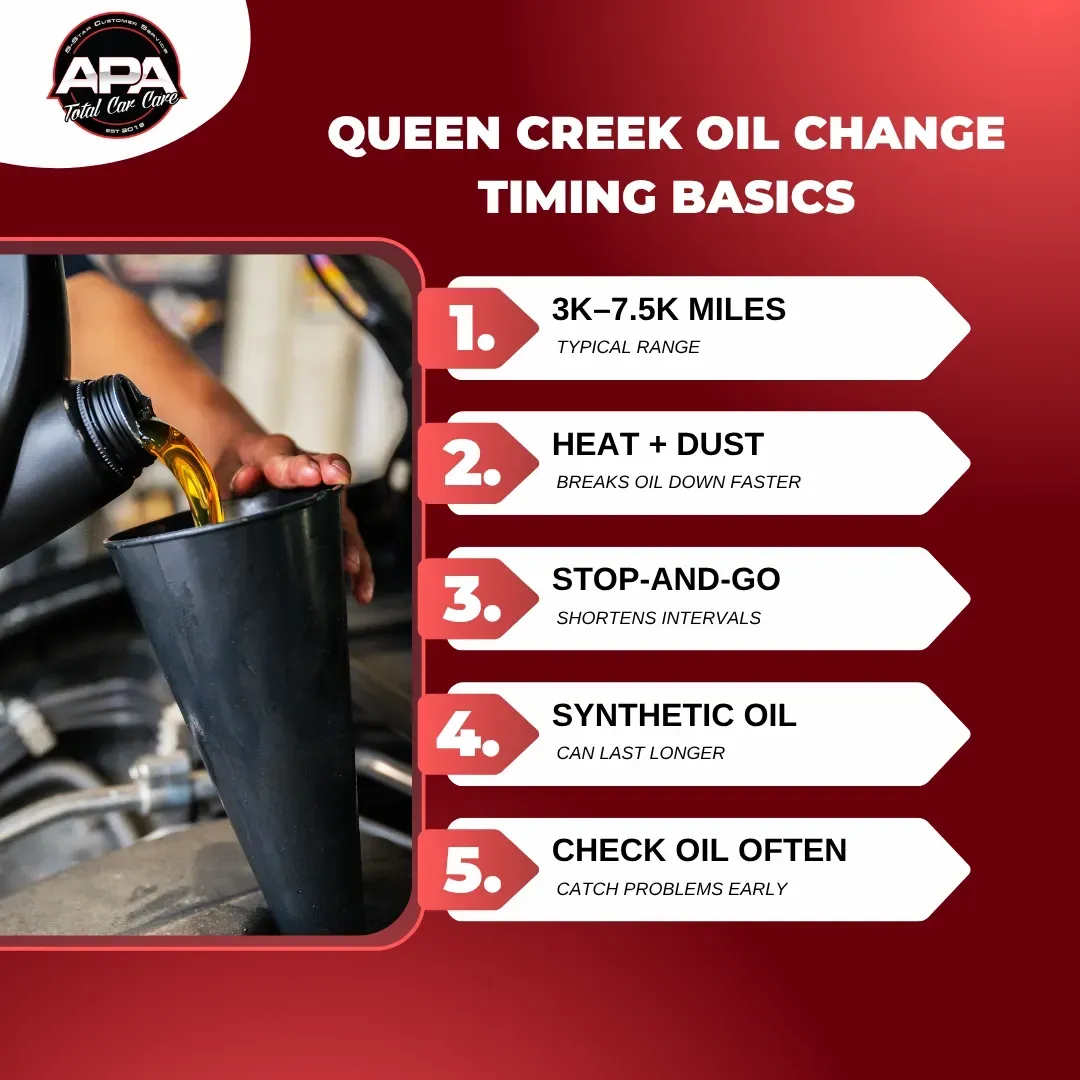
You should change your car’s oil about every 3,000 to 7,500 miles. The exact interval depends on your vehicle, the type of oil it uses, and your driving habits. In Arizona, factors like extreme heat, dusty roads, and heavy stop-and-go traffic can make oil wear out faster, so some drivers may need an oil change in Queen Creek, AZ a little sooner. Staying on top of regular oil changes is one of the best ways to protect your engine and keep your vehicle running the way it should.
Key Takeaways
- Change oil every 3,000 to 5,000 miles for conventional oil; synthetic oil can extend intervals to 7,500 miles or more.
- Consider vehicle type and engine design; high-performance and turbocharged engines may require more frequent changes.
- Driving conditions matter; frequent short trips, stop-and-go traffic, and extreme temperatures shorten oil life.
- Regularly check oil levels and consistency, especially in hot climates like Arizona, to prevent engine damage.
- Pay attention to signs such as warning lights or dark oil; these indicate the need for an oil change.
How Often Should You Change Your Car’s Oil?
When it comes to changing your car’s oil, the timing can vary based on your vehicle, engine type, and even your driving habits. If you live in a hot climate, like the desert, you might notice that the oil breaks down faster than you expect. It’s important to stay on top of these factors to keep your engine running smoothly.
Why oil change intervals vary by vehicle, engine, and driving habits
Oil change intervals can vary considerably based on factors like your vehicle's make and model, engine type, and even your unique driving habits. Here are some key points to evaluate:
- Vehicle Type: Some vehicles, especially high-performance models, may require more frequent changes.
- Engine Design: Turbocharged or larger engines often need oil changes sooner than standard engines.
- Driving Conditions: Frequent short trips or stop-and-go traffic can shorten oil life.
- Climate Factors: In Arizona, desert heat can impact oil performance, leading to a different oil change interval for Arizona drivers.
How desert heat can shorten oil life faster than expected
Living in a desert climate like Arizona can greatly impact your vehicle's oil life. The extreme heat can cause oil to break down more quickly, leading to reduced lubrication and increased engine wear. You might find yourself asking how often you should change your car’s oil, especially in these conditions. Regularly monitoring your oil levels and consistency is essential. If you’re using conventional oil, you may need to change it more frequently compared to synthetic oil. For those in Queen Creek, a synthetic oil change in Queen Creek, AZ, can offer better protection against heat. Don’t ignore the signs; changing your oil sooner can save you from costly repairs down the road and keep your engine running smoothly.
Oil Change Intervals for Arizona Drivers
If you’re driving in Arizona, you’ll want to pay extra attention to your oil change intervals. The extreme temperatures and dusty roads can impact how often you should service your vehicle. Plus, stop-and-go traffic and short trips can lead to quicker oil breakdown, making regular checks essential.
Why extreme temperatures affect oil change timing in Queen Creek
While it’s no secret that Arizona's extreme temperatures can take a toll on your vehicle, many drivers underestimate how these conditions impact oil change intervals. The heat can cause oil to break down faster, leading to less effective lubrication and increased engine wear. Here are four key reasons why you should adjust your oil change schedule:
- High temperatures can thin out oil, reducing its viscosity and protective properties.
- Frequent stop-and-go driving in the heat can exacerbate oil degradation.
- Dust and debris in the air can contaminate oil more, especially in desert conditions.
- Longer trips may lead to overheating, putting additional stress on your oil.
Stay proactive, and consider changing your oil more often in these extreme conditions to keep your engine running smoothly.
How stop-and-go traffic, short trips, and dusty roads change service needs
Maneuvering Arizona's roads often means dealing with stop-and-go traffic, short trips, and dusty conditions, all of which can greatly impact your vehicle's service needs. Frequent idling and quick jaunts increase engine wear and can cause oil to break down faster. If you’re mostly driving short distances, your engine may not reach ideal temperatures, leading to condensation buildup and potential oil contamination. Dusty roads contribute to more dirt entering your engine, which can compromise oil quality. In these scenarios, consider changing your oil more often than the standard interval. By staying on top of your oil changes, you’ll help guarantee your car runs smoothly, ultimately saving you from costly repairs down the road.
Synthetic vs. Conventional Oil for Desert Driving
When you're driving in the harsh Arizona heat, choosing the right oil can make a big difference for your engine. Synthetic oil often outperforms conventional oil, especially when it comes to protecting your engine and maintaining performance in extreme temperatures. Understanding these differences can help you make the best choice for your vehicle's longevity and efficiency.
Why synthetic oil is often better for Arizona heat
As temperatures soar in Arizona, choosing the right engine oil becomes crucial for maintaining your vehicle's performance. Synthetic oil often outperforms conventional oil in extreme heat, and here’s why:
- Higher Resistance: Synthetic oil can withstand higher temperatures without breaking down.
- Better Lubrication: It offers superior lubrication, reducing friction and engine wear.
- Improved Stability: Synthetic oil maintains its viscosity better in extreme conditions, ensuring consistent engine performance.
- Longer Change Intervals: You can go longer between oil changes, saving you time and money.
In the sweltering Arizona heat, using synthetic oil can help extend your engine’s life and keep it running smoothly, giving you peace of mind on the road.
How oil type affects long-term engine protection and performance
Choosing the right oil for your vehicle can markedly impact its long-term engine protection and performance, especially in the harsh desert environment. Synthetic oil generally offers superior protection against heat and volatility, which is essential when temperatures soar. It flows better at high temperatures, reducing engine wear and ensuring smoother operation. In contrast, conventional oil may break down faster, leaving your engine vulnerable to damage over time.
If you’re regularly driving in extreme conditions, opting for synthetic oil can help maintain your engine's health and efficiency. Remember, the right oil type is crucial for peak performance and longevity, so consider your driving environment carefully. Investing in the right oil now can save you costly repairs later.
Signs Your Vehicle May Need an Oil Change Sooner
You might notice some signs that indicate it’s time for an oil change sooner than expected. Warning lights, unusual engine noises, or dark, dirty oil can all signal trouble. Additionally, if you often drive in harsh conditions, your oil may break down faster than usual, making regular checks essential.
Warning lights, engine noise, and dark or dirty oil
Warning lights on your dashboard, unusual engine noise, and the presence of dark or dirty oil are all essential indicators that your vehicle may need an oil change sooner than expected. Ignoring these signs can lead to serious engine issues. Pay attention to the following:
- Dashboard Warning Lights**: If the oil light illuminates, it’s time to check your oil levels.
- Engine Noise: Knocking or grinding sounds can indicate insufficient lubrication.
- Dark or Dirty Oil: If your oil appears black or gritty, it’s overdue for a change.
- Oil Level: Check for low oil levels on the dipstick; topping it off may not be enough.
Stay proactive to keep your engine running smoothly!
How harsh driving conditions can speed up oil breakdown
While routine oil changes are crucial for maintaining your vehicle's health, harsh driving conditions can greatly accelerate oil breakdown, making it essential to stay vigilant. If you frequently drive in stop-and-go traffic, face extreme temperatures, or navigate rough terrain, your oil may degrade faster than normal. Towing heavy loads or driving on unpaved roads can also contribute to quicker oil breakdown. These conditions cause your engine to work harder, generating more heat and contaminants that compromise oil quality. Keep an eye on your oil level and color, and consider changing it more often if you regularly encounter these challenges. Staying proactive can help extend your engine’s life and maintain peak performance.
Why Regular Oil Changes Matter for Engine Health
Regular oil changes are essential for keeping your engine healthy and running smoothly. Fresh oil reduces wear and helps your engine maintain a cooler temperature, which can prolong its life. Plus, staying on top of routine oil service can save you from costly repairs down the line.
How fresh oil reduces wear and helps engines run cooler
When you keep your engine filled with fresh oil, it greatly reduces wear on critical components and helps maintain ideal operating temperatures. Fresh oil lubricates engine parts, preventing friction that can lead to damage. Here are some benefits of using fresh oil:
- Reduced Friction: Fresh oil creates a smooth barrier, minimizing metal-on-metal contact.
- Improved Cooling: It helps dissipate heat effectively, preventing overheating.
- Cleaner Engine: Fresh oil keeps contaminants at bay, ensuring smoother operation.
- Longevity: Regular oil changes contribute to the overall lifespan of your engine.
Why routine oil service helps prevent bigger repair costs later
Neglecting routine oil changes can lead to significant engine problems down the road, ultimately costing you more in repairs. When oil becomes dirty and less effective, it can't lubricate your engine properly. This increases friction, heat, and wear on critical components. Over time, you might face issues like engine overheating or even complete failure. Regular oil changes keep your engine clean and well-lubricated, reducing the risk of major breakdowns. Plus, staying on top of oil maintenance can help you spot other potential issues, saving you money in the long run. By investing in routine oil service, you're not just prolonging your engine's life—you're also protecting your wallet from unexpected repair bills.
Choosing the Right Oil Change Service in Queen Creek, AZ
When choosing an oil change service in Queen Creek, AZ, you’ll want to take into account how local desert conditions affect your vehicle's needs. Look for a shop with experience in handling the unique challenges of Arizona driving, as this can make a big difference in your car's performance. A reliable service will guarantee your oil change is tailored to keep your engine running smoothly in our climate.
What to look for in an oil change service for desert driving conditions
Choosing the right oil change service for desert driving conditions is essential, especially in a place like Queen Creek, where the heat can take a toll on your vehicle. Here are four key factors to take into account:
- High-Quality Oil: Assure they use oil formulated for extreme temperatures, providing better protection.
- Expertise in Desert Conditions**: Look for a service with experience in handling vehicles in hot, arid climates.
- Comprehensive Inspection: Choose a service that includes a thorough vehicle check-up to catch any heat-related issues.
- Flexible Scheduling: Opt for a shop that offers same-day service, so you can get back on the road without compromising on quality.
Why local experience matters for Arizona vehicle maintenance
Local experience plays a significant role in ensuring your vehicle gets the right maintenance in Arizona's unique environment. The desert climate can be tough on your car, affecting everything from oil viscosity to battery performance. When you choose a local service, you benefit from mechanics who understand these specific challenges. They know how heat impacts engine components and can recommend the best oil for peak performance in high temperatures. Plus, they’re familiar with state regulations and common vehicle issues faced by Arizona drivers. By opting for a local shop like APA Total Car Care, you’re not just getting routine maintenance; you’re investing in tailored expertise that keeps your vehicle running smoothly under local conditions.
Schedule Your Next Oil Change at APA Total Car Care in Queen Creek, AZ
If you’re looking to keep your vehicle running smoothly, scheduling your next oil change at APA Total Car Care in Queen Creek, AZ, is a smart choice. Our experienced team is dedicated to providing excellent service that guarantees your car's longevity. Here's what you can expect when you visit us:
- Expert Mechanics: Our certified professionals handle every oil change with precision.
- Convenience: We offer same-day appointments to fit your busy schedule.
- Comprehensive Service: We check your vehicle’s overall health during the oil change.
- Quality Products: We use high-quality oil and filters to protect your engine.
Don’t wait until it’s too late—schedule your appointment today and keep your car in peak condition!
Frequently Asked Questions
Can I Change My Oil Myself Instead of Going to a Shop?
Why not? You can definitely change your oil yourself! Just make sure you have the right tools and follow the proper steps. It’s a great way to save money and learn more about your vehicle.
What Type of Oil Does My Vehicle Require?
Your vehicle typically requires either conventional, synthetic, or a blend of both oils. Check your owner’s manual or consult with a trusted mechanic to verify you're using the right type for peak performance and longevity.
How Do I Check My Oil Level?
Picture your engine as a heart; checking your oil level keeps it healthy. To check, park on level ground, pull the dipstick, wipe it clean, reinsert, and then check for the oil's mark.
What Happens if I Miss an Oil Change?
If you miss an oil change, your engine's oil can become dirty and ineffective, leading to increased wear and tear. This could ultimately result in engine damage, costly repairs, or even complete engine failure over time.
Can Old Oil Affect My Car's Performance?
Imagine running in old, worn-out shoes; it slows you down. Similarly, old oil can hinder your car's performance, causing sluggish acceleration and engine wear. Regular changes keep your vehicle running smoothly, just like fresh kicks.
Conclusion
Just like a gardener regularly tends to their plants to guarantee they thrive, keeping up with your car's oil changes is essential for its health. Think of your engine as a delicate ecosystem; without fresh oil, it can become unbalanced and face serious issues. By changing your oil on schedule, you’re nurturing your vehicle, helping it run smoothly and efficiently for years to come. Don’t wait until it’s too late—schedule your oil change today!
