Brake repair symptoms can appear as a change in pedal feel, a new sound, a warning light, or a difference in how the vehicle slows. Some signs call for an immediate safe stop, while others mean you should arrange an inspection soon. Our brake repair and safety inspection process checks the whole system so the symptom can be traced to the component that needs attention.
Brake Repair Symptoms That Call for an Immediate Stop
The most urgent brake repair symptoms involve lost pedal pressure, reduced stopping ability, leaking fluid, or metal-on-metal noise. If the vehicle does not slow normally, move out of traffic as safely as conditions allow and arrange a tow or roadside help.
The Pedal Sinks or Suddenly Feels Soft
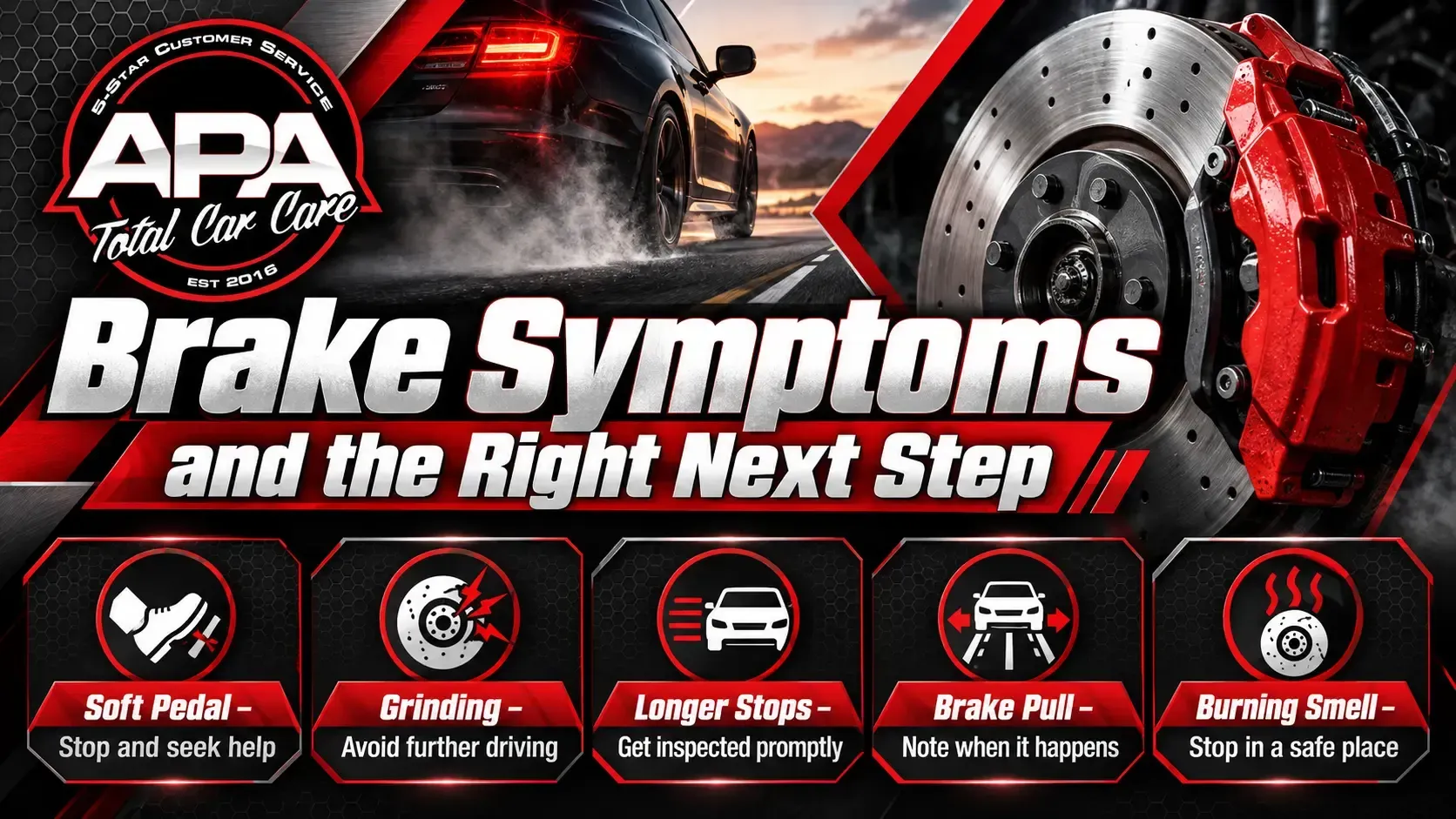
A pedal that suddenly sinks, feels unusually soft, or needs pumping can signal a hydraulic problem. Possible causes include a fluid leak, air in the system, a failing master cylinder, or another fault that reduces pressure. Do not assume repeated pumping has fixed it, because the available braking force can change again without warning.
Grinding, Fluid Leaks, or a Brake Warning Light
Grinding during a stop may mean friction material is badly worn, though debris or damaged hardware can also create harsh noise. A fresh oily leak near a wheel or under the brake master cylinder needs prompt attention. A red brake warning light combined with a low pedal, leak, or weak stopping should be treated as a stop-driving condition.
The Vehicle Takes Longer to Stop
Longer stopping distance is one of the clearest signs you need brake repair or inspection. Brake fade, worn friction parts, contaminated surfaces, a hydraulic fault, or poor tire grip may be involved. The Arizona Driver License Manual notes that stopping distance depends on vehicle speed, pavement, tires, vehicle weight, and brake condition.
Symptoms That Need a Prompt Brake Inspection
Other brake warning signs may not remove stopping power at once, but they can reveal wear, heat, or uneven operation. Scheduling a prompt inspection can show whether the vehicle needs friction parts, hydraulic work, hardware service, or a different repair.
Squealing or Chirping During Braking
A high-pitched squeal can come from a wear indicator, glazed material, vibration between parts, or dust and moisture. Some performance pads also make more noise than standard compounds. If the sound is new, persistent, or getting louder, have the brakes inspected instead of assuming the pads are worn out.
Pedal Pulsation or Steering-Wheel Shake
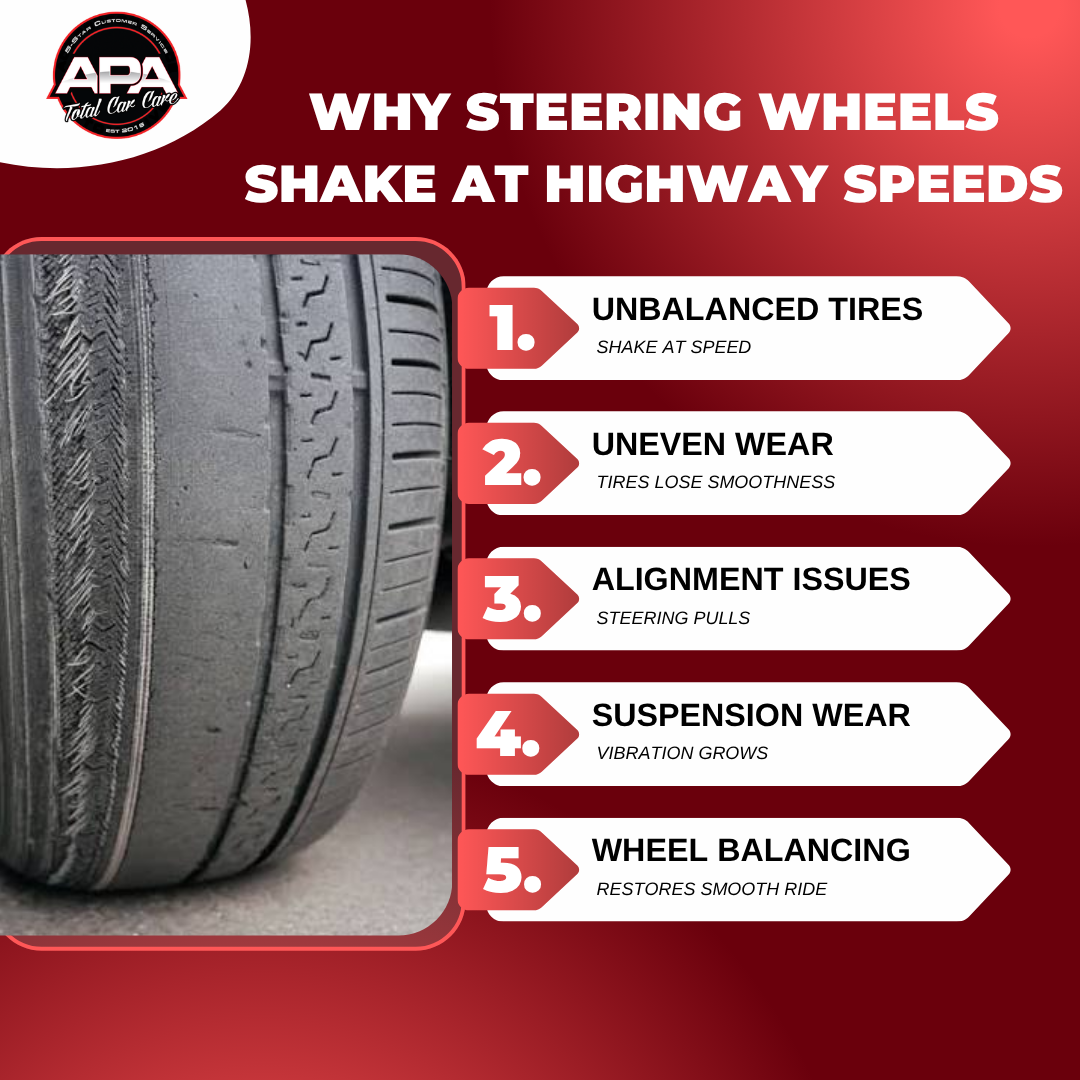
A repeating pulse during braking often points to thickness variation or uneven deposits on a rotor. Steering-wheel shake can be stronger when the front brakes are involved, though wheel, tire, steering, or suspension faults can produce similar vibration. Our suspension and steering repair team helps separate brake-related movement from a chassis or wheel concern.
Pulling, Dragging, or a Burning Smell
A vehicle that pulls during braking may have uneven friction, a sticking caliper, a restricted hose, or a contaminated surface. A hot-wheel smell, smoke, or a vehicle that resists rolling can point to a dragging brake. Stop in a safe place and let the system cool, but do not touch the wheel or brake parts because they may be extremely hot.
What the Symptom Pattern Can Tell You
The timing and combination of symptoms help narrow brake problems while driving. Note whether the issue happens only during braking, after repeated stops, at one speed, or even when your foot is off the pedal.
Noise Alone Does Not Identify the Failed Part
Squealing does not automatically mean pads are due, and grinding does not identify which wheel or part is responsible. A complete inspection checks pads or shoes, rotors or drums, calipers, hardware, hoses, lines, fluid, and warning-system data when needed. Measurements and wear patterns guide the repair instead of one symptom in isolation.
Pulling Only Under Braking Is a Useful Clue
Pulling that starts only when you press the pedal points more strongly toward uneven brake action. Pulling that remains during steady cruising can involve tire pressure, tire wear, road crown, steering, or alignment. If the drift is present outside braking, alignment pull correction may be part of the diagnosis rather than brake work alone.
Heat, Traffic, and Vehicle Load Change Wear
Queen Creek heat, East Valley stop-and-go traffic, and repeated school or errand trips can add frequent heat cycles. Heavy SUVs, work trucks, towing, and downhill travel also increase braking demand. Our Ram repair and maintenance service covers local trucks that may carry or tow more weight.
At APA Total Car Care, we use digital inspections when appropriate to show what is worn, what is still serviceable, and what comes first. That approach helps drivers from Queen Creek, San Tan Valley, and East Mesa make a clear decision based on the vehicle's actual condition.
Takeaways
A sinking pedal, reduced stopping power, a fluid leak, or grinding with weak braking calls for a safe stop and professional help. Squealing, pulsation, pulling, dragging, warning lights, and burning odors also need timely inspection. They can point to friction, hydraulic, caliper, ABS, tire, or suspension faults.
Pay attention to when each symptom happens and whether several signs appear together. Brake repair symptoms are starting points for diagnosis, not proof that one particular part has failed.
Frequently Asked Questions
What brake symptoms mean I should stop driving?
Stop driving when braking ability is reduced, the pedal sinks or suddenly feels soft, fluid is leaking, or grinding is paired with poor stopping. Move out of traffic safely, avoid continuing the trip, and arrange roadside help or towing.
Why do my brakes squeal if the car still stops normally?
Brakes can squeal while the car still stops normally because of a wear indicator, dust, moisture, glazing, or vibration between brake parts. Persistent or changing noise still needs inspection because sound alone cannot show remaining pad thickness or rotor condition.
What causes a soft or spongy brake pedal?
A soft or spongy pedal can result from air in the hydraulic system, contaminated fluid, a leak, flexible-hose expansion, or a master-cylinder fault. Because several causes affect pressure differently, the hydraulic system should be inspected and tested before repair.
Why does my steering wheel shake when I brake?
Steering-wheel shake during braking often comes from rotor thickness variation or uneven friction deposits at the front axle. Wheel, tire, steering, and suspension problems can feel similar. A road test and component inspection can tell them apart.
Can a brake warning light come on because of low fluid?
Yes, a brake warning light can come on when brake fluid is low, depending on the vehicle. Low fluid may reflect pad wear or a leak, while the light can also signal a parking-brake or hydraulic concern. Check the owner's manual and have the cause confirmed.
Schedule a Brake Inspection with APA Total Car Care
If you notice a new noise, pedal change, vibration, pull, odor, or warning light, contact our Queen Creek shop for an inspection. We can evaluate the full system, document the findings, and explain which items need attention now. Call (480) 282-8300 or visit 22325 S Scotland Ct Ste 101, Queen Creek, AZ 85142 to request brake repair in Queen Creek, AZ.
