
Dim headlights while driving can mean the charging system is not supplying steady power, though the alternator is only one possible cause. A weak battery, slipping belt, corroded cable, poor ground, or fault in one lamp circuit can create a similar symptom. Our
alternator repair and replacement process starts with testing to confirm the faulty part before any repair is recommended.
Why Headlights Dim While the Engine Is Running
Headlights depend on stable system voltage whenever the engine is running. The pattern of the dimming can help narrow the likely cause before a technician measures output under different loads.
Low Charging Voltage Can Affect Both Headlights
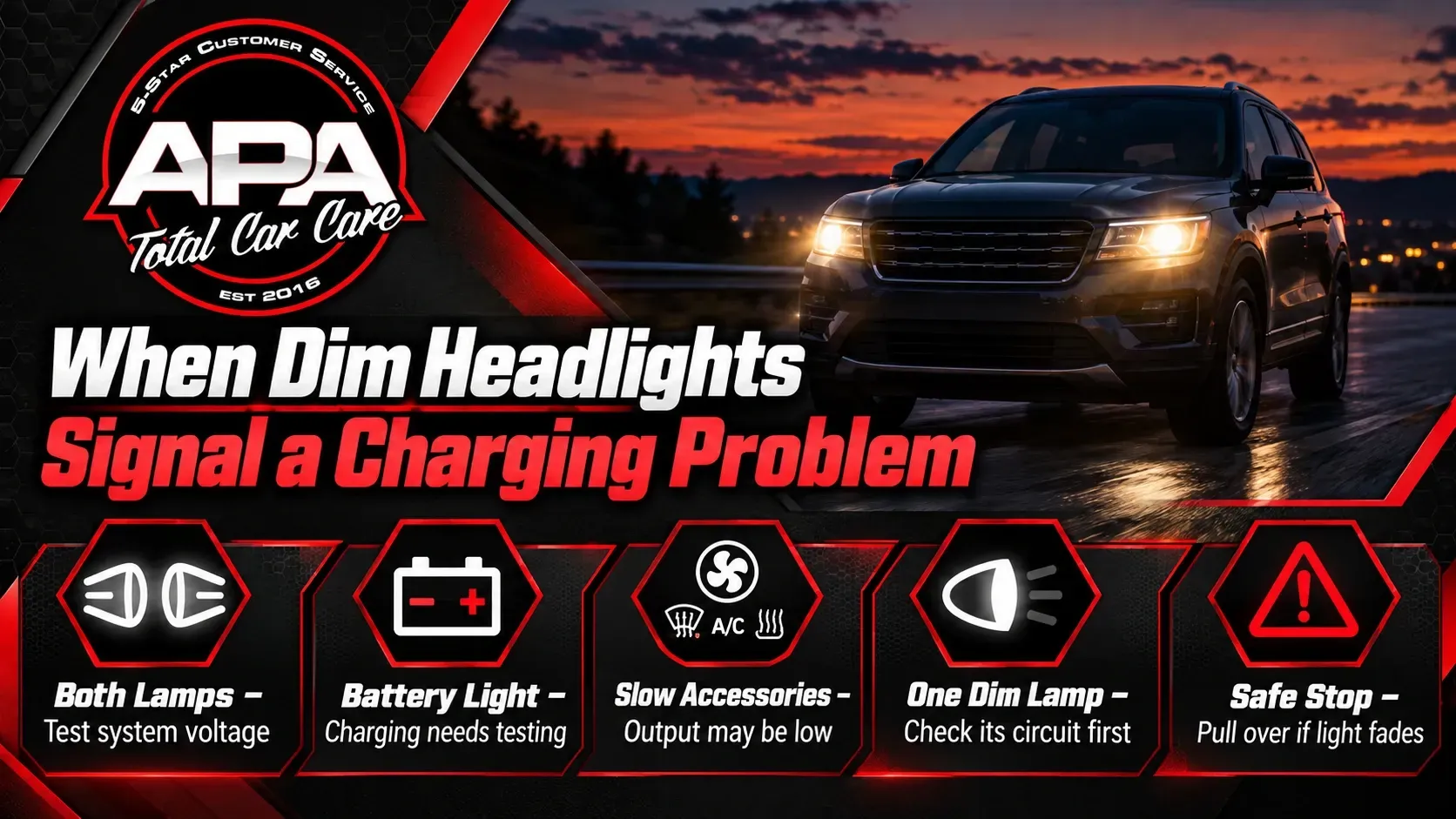
The alternator powers vehicle electronics and replenishes the battery after startup. If its output falls below demand, both headlights may lose brightness, especially at idle with the air conditioner, blower, rear defroster, or audio system operating. Headlights that brighten with engine speed may indicate weak output at idle, although that pattern does not prove the alternator itself has failed.
Belt, Connection, and Ground Problems Can Look Similar
The alternator must be driven by a belt and connected through sound cables and grounds. A loose belt, weak tensioner, dirty terminal, damaged cable, or poor ground can reduce or interrupt current. Because these faults can mimic a bad alternator, our automotive electrical diagnosis and repair checks the circuit rather than relying on the symptom alone.
A Single Dim Headlight Points Elsewhere
One dim headlight usually points to a localized problem instead of low system voltage. A worn bulb, cloudy lens, overheated connector, damaged wire, or poor ground at that lamp can reduce light output on one side. When both lamps pulse together or change with engine speed and electrical load, car charging system problems become more likely.
Alternator Warning Signs That Often Appear Together
Alternator warning signs are more meaningful when several appear at the same time. A change in lighting combined with a charging warning or weak accessories calls for testing before the vehicle depends entirely on stored battery power.
The Battery Light Comes On
The battery-shaped warning light usually reports a charging-system fault, not simply a worn battery. It may appear steadily or intermittently as voltage changes. If it comes on while both headlights fade, cut electrical use and plan a safe stop instead of assuming a new battery will fix it.
Accessories Slow Down or Flicker
Slow power windows, a pulsing blower, flickering dash lights, or screens that reset can show that electrical supply is unstable. These clues can become easier to notice during nighttime East Valley driving, when the headlights and cabin systems create more demand. Because Arizona heat can be hard on batteries, battery testing and replacement may be part of a complete diagnosis.
Starting and Engine Operation Change
A vehicle may crank slowly after a drive if the battery was not recharged. As available voltage drops further, warning lights can multiply, electronic steering assist may change, or the engine may run poorly. We work on most makes and models, including Ram trucks through our Ram repair and maintenance service, which covers charging concerns.
What to Do When Headlights Dim on the Road
Treat a noticeable loss of headlight output as a visibility and reliability concern. Your next step depends on how severe the dimming is and whether warning lights, smells, noises, or other power changes appear.
Reduce Unneeded Electrical Load
Turn off nonessential accessories such as seat heaters, phone chargers, and a high-power audio system. Keep the headlights on when conditions require them. Never disconnect the battery with the engine running, because that outdated test can create voltage spikes and proves nothing about the cause.
Move Off the Road if Visibility or Power Drops
Pull over when safe if visibility drops, the battery light stays on, a burning smell develops, or several systems start failing. Use your signal, move as far from traffic as conditions allow, and call for roadside help if the vehicle may not restart. The Arizona Driver License Manual advises signaling before pulling to the side, which matters on busy Queen Creek, San Tan Valley, and East Mesa routes.
Test the Full Charging System Before Replacing Parts
A proper test checks battery condition, charging voltage, alternator output under load, belt drive, terminals, cables, and grounds. Depending on the vehicle and symptom, a technician may also check voltage drop or alternator ripple for a diode fault. If headlights dim when accelerating, the test should reproduce the condition instead of assuming that higher engine speed always points to one component. At APA Total Car Care, we use digital inspections and explain test findings before approved work begins. This process helps Queen Creek drivers understand the recommended repair before making a decision.
Takeaways
Dim headlights while driving are worth checking, though they do not identify a failed alternator by themselves. Dimming on both sides, brightness that changes with engine speed, a battery warning light, and slow accessories point toward a charging-system test. One dim lamp is more likely to have a local bulb, connector, lens, or ground problem.
Reduce nonessential electrical load and pull over safely if visibility or vehicle power drops. Testing the battery, alternator, belt, cables, and grounds together is the reliable way to separate an alternator fault from other electrical causes.
Frequently Asked Questions
Can a bad alternator cause dim headlights while driving?
Yes, a bad alternator can cause dim headlights while driving when it cannot meet the vehicle's electrical demand. The strongest clues are dimming on both sides, a battery warning light, and other accessories slowing or flickering at the same time.
Why do my headlights brighten when I rev the engine?
Headlights may brighten when you rev the engine because alternator output has increased with engine speed. The cause could be weak output at idle, a belt or tensioner issue, a poor connection, or normal minor variation. Voltage testing is needed to tell them apart.
Can a weak battery make headlights dim while driving?
Yes, a weak battery can contribute to dim or unstable lighting, especially when charging output is low or electrical demand is high. A battery test should be paired with charging-system measurements because replacing the battery alone may leave the cause unresolved.
Does one dim headlight mean the alternator is failing?
No, one dim headlight usually does not mean the alternator is failing. A bulb, lens, socket, connector, wire, or ground on that side is a more likely starting point for diagnosis.
How is an alternator tested?
An alternator is tested by measuring charging voltage and current while the engine runs under controlled electrical load. A complete check also evaluates the battery, belt drive, cables, grounds, and possible diode ripple so the measured fault leads to the right repair.
Schedule Charging-System Testing with APA Total Car Care
If your headlights dim, pulse, or change with engine speed, contact our Queen Creek shop for a charging-system inspection. We can test the electrical system, document what we find, and explain whether the repair involves the alternator or another part of the circuit. Call
(480) 282-8300 or visit
22325 S Scotland Ct Ste 101, Queen Creek, AZ 85142 to request alternator repair in Queen Creek, AZ.
