
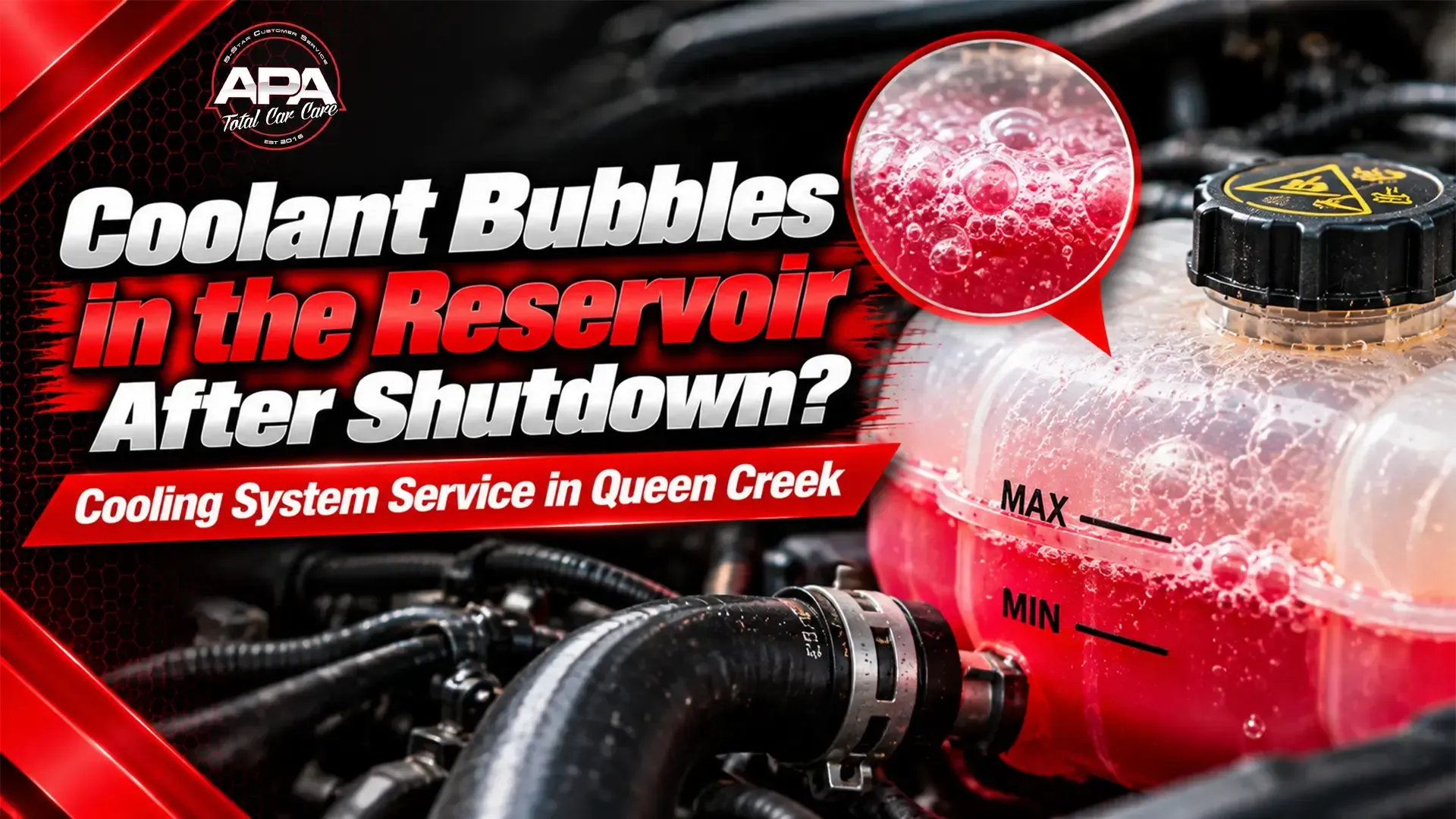
Coolant bubbles in the reservoir after shutdown can come from heat movement, trapped air, low coolant, a pressure fault, or overheating. A brief coolant level change may be normal, but repeated bubbling, overflow, coolant loss, or a rising temperature gauge can indicate a problem.
These related symptoms help determine if the cooling system needs attention. Our
radiator repair and replacement service includes checks for leaks and weak points that may contribute to the issue.
Why Coolant Bubbles After Shutdown
The engine stays hot after shutdown even though coolant circulation and fan operation may change. This heat soak can move fluid between the system and reservoir. A soft gurgle or small level change can occur as pressure and temperature settle.
Queen Creek heat can make the change more noticeable after an East Valley commute. Our guide to
protecting a car from Arizona heat explains why cooling-system checks matter during desert driving.
Heat Soak Can Move Coolant and Vapor
Metal engine parts remain hot after combustion stops, so nearby coolant keeps absorbing heat briefly. The system manages expansion, but a weak cap, trapped air, or restricted flow can make movement louder or more forceful.
Reservoir design also matters. Some vehicles use a pressurized tank, while others use a separate overflow bottle. Follow the owner’s manual for where and when to check the level.
Repeated Bubbling Is Not a Diagnosis
Coolant reservoir bubbling is a symptom, not proof of one failed part. It may reflect moving air, boiling coolant, escaping pressure, or gas entering the system. A technician compares the pattern with level, temperature, leaks, fan operation, and service history.
Note whether bubbles follow a hot drive, begin from a cold start, or continue for several minutes. Overflow, a sweet smell, weak cabin heat, a warning light, or recurring low coolant can guide the next test.
Common Causes of Reservoir Bubbling
Common causes include cooling system air pockets, low coolant, leaks, a weak cap, poor circulation, or excess temperature. Testing starts with basic system conditions before moving to less common internal faults.
Trapped Air After Cooling System Work
Air can remain after a coolant drain, hose replacement, or thermostat repair if filling and bleeding are incomplete. Moving air may cause gurgling, unstable reservoir levels, weak heater output, or temperature swings. Some vehicles require specific bleeding procedures. Do not assume the system will purge itself. If bubbling began after cooling-system work, tell the technician what was serviced and when the symptom started.
Low Coolant, Leaks, and a Weak Pressure Cap
Low coolant can let air enter and reduce heat transfer. Leaks can form at hose connections, radiator seams, the reservoir, thermostat housing, water pump, or seals. Arizona heat may evaporate a small leak before it leaves a puddle.
A radiator cap pressure problem can release pressure too early or disrupt coolant return as the engine cools. Inspect the cap, filler neck, and reservoir hose together. Replacing a cap without testing may miss another fault.
Thermostat, Fan, or Flow Problems
A faulty thermostat can limit coolant flow, while a fan problem reduces airflow when the vehicle is stopped. A restricted radiator or weak pump can also affect heat removal. Symptoms may appear after a slow Queen Creek drive.
Layouts vary by vehicle. Our verified Lexus repair and service in Queen Creek, AZ, includes cooling-system leaks, rising temperatures, and heat warnings. Diagnosis still follows the model’s design.
When Combustion Gas Testing May Be Needed
Combustion gas is one possible cause, but bubbles alone do not confirm it. Concern rises when bubbling starts cold or appears with coolant loss, overheating, warm-engine white exhaust vapor, or unexplained pressure.
A technician may use a chemical gas test, pressure behavior, scan data, or other engine tests when initial checks support that direction. External leaks, coolant level, the cap, fans, thermostat, and circulation still need attention.
What to Do Safely
Let the engine cool fully before touching the system. Hot coolant can be pressurized and cause severe burns. Never remove a hot cap to watch bubbles.
Let the Engine Cool Completely
The Arizona Driver License Manual’s overheating guidance says to pull over, shut off the engine, raise the hood, and keep the radiator cap closed while hot. Wait until full cooldown before checking cold-level marks.
If the gauge reaches the hot zone, a warning appears, or steam escapes, stop safely and shut off the engine. Continuing through San Tan Valley or Mesa traffic can add heat to a struggling system.
Record the Pattern and Warning Signs
A video from a safe distance can show the sound, timing, and reservoir movement. Record trip length, gauge reading, heater behavior, warnings, and cold-level changes. Do not lean over a hot tank or remove its cap.
How Cooling System Service Finds the Cause
Cooling system service in Queen Creek should match tests to the symptom. At our Queen Creek auto repair shop, we inspect the cooling circuit, explain findings, and use digital photos to document visible leaks or residue.
Pressure, Cap, Fan, and Temperature Checks
Testing may include checking the cold coolant level and condition, inspecting for leaks, testing system pressure, and performing a separate cap test. A technician can also check hoses, reservoir flow, thermostat behavior, fan operation, temperature data, and circulation.
If those checks do not explain the bubbles, further testing can look for internal coolant loss or combustion gas. Repair depends on the verified fault. Testing keeps the symptom from being mistaken for a diagnosis.
Takeaways
Coolant bubbles in the reservoir after shutdown may reflect heat soak, but repeated bubbling, overflow, coolant loss, or temperature changes need attention. Causes include trapped air, low coolant, leaks, cap trouble, and flow problems.
Never open a hot cooling system. Let the engine cool, record the pattern, and arrange testing if the symptom returns or appears with overheating warnings.
Frequently Asked Questions
Is it normal for coolant to bubble after shutdown?
Yes, brief coolant bubbling or a small level change after shutdown can be normal as heat and pressure settle. However, repeated bubbling, overflow, coolant loss, or a rising temperature gauge should be inspected.
Can a bad radiator cap cause reservoir bubbles?
Yes, a weak or damaged cap can disrupt system pressure and coolant movement. The cap and sealing surfaces should be tested because bubbles can have other causes.
Can air trapped in the cooling system cause gurgling?
Yes, trapped air can cause gurgling, level changes, weak cabin heat, or temperature swings. Proper filling and bleeding depend on the vehicle’s cooling-system design.
Can I drive if the reservoir bubbles but the engine is not overheating?
Driving may be possible if the reservoir bubbles without overheating, but repeated bubbling, low coolant, or overflow can make it risky. Check the cooling system only when fully cool, and schedule an inspection before a longer hot-weather trip.
Does bubbling coolant always mean a head gasket problem?
No, bubbling coolant does not always mean a head gasket problem. Trapped air, low coolant, leaks, a weak cap, or circulation faults can create similar symptoms.
Schedule Cooling System Diagnosis in Queen Creek
If coolant bubbles after shutdown keep returning,
contact our team or call
(480) 282-8300. At
22325 S Scotland Ct Ste 101, Queen Creek, AZ 85142, we can test the cooling system and explain what the results mean.
