
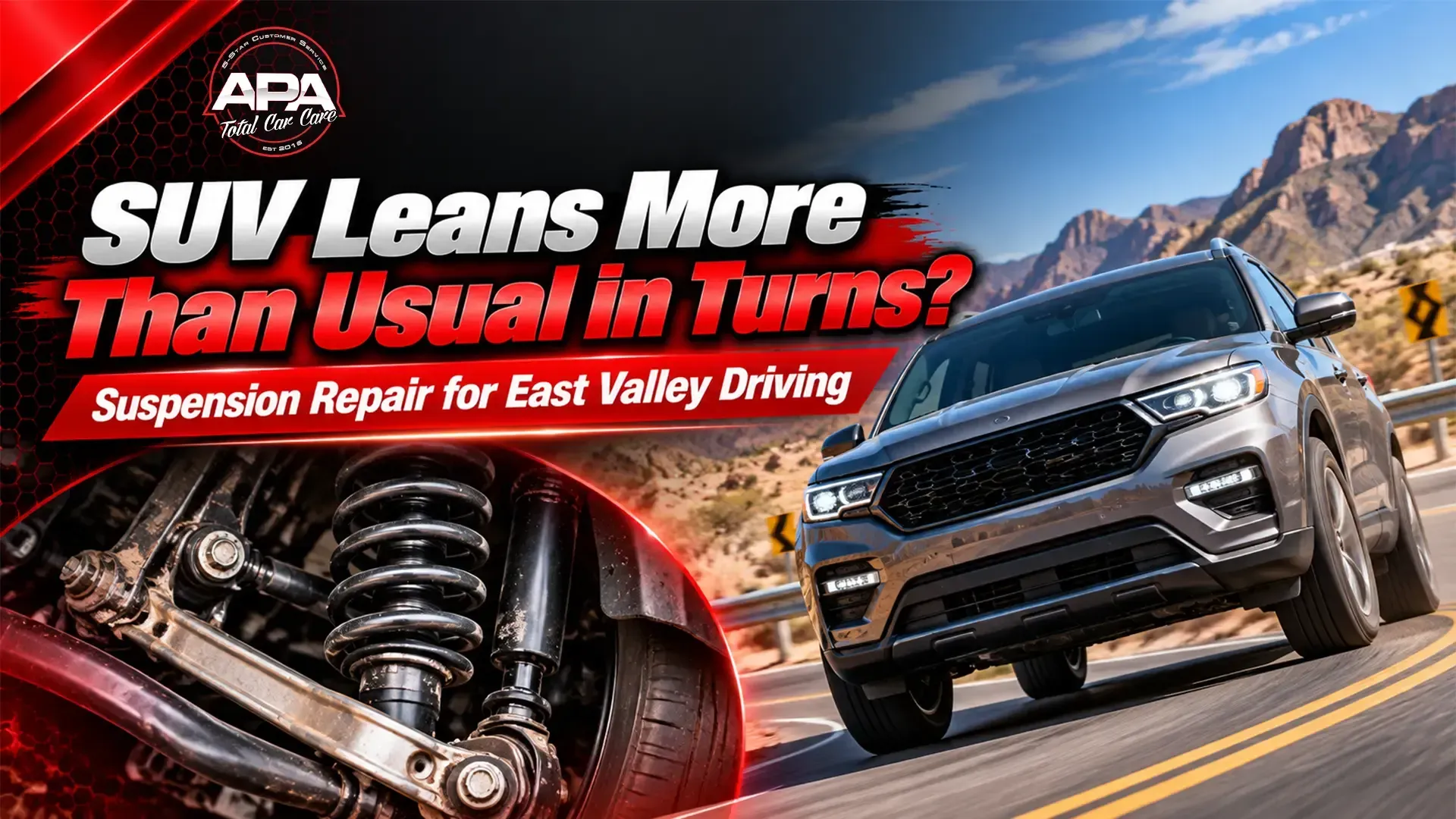
If your SUV leans in turns more than it used to, the suspension may not be controlling weight transfer as well as before. Some body roll is normal in a taller vehicle, but a noticeable change can point to worn parts, tire trouble, or an uneven load.
Our
suspension repair in Queen Creek, AZ, begins with an inspection to identify what is affecting your SUV's handling. Once the cause is verified, we can determine which repairs, if any, are needed.
Why an SUV Leans More in Turns
An SUV leans as its weight shifts toward the outside wheels in a turn. A taller ride height can make that movement more noticeable than it is in a lower car. The suspension manages the motion while helping the tires stay in contact with the road.
You may first notice extra lean on a Queen Creek roundabout or an East Valley freeway ramp. Speed also affects the sensation. The
Arizona Department of Transportation’s guidance for curves and ramps advises drivers to slow before entering and follow advisory speeds for the conditions.
Normal Body Roll Versus a New Handling Change
Normal body roll feels smooth and predictable from one turn to the next. A concern may feel sudden, delayed, excessive, or stronger in one direction. The body may keep rocking after the wheel returns to center.
Compare the feeling with the SUV’s usual behavior. A new load, low tire, road impact, or suspension wear can change handling. If it feels loose or unsettled at familiar speeds, reduce speed and arrange an inspection.
Suspension Parts That Control Body Roll
Several parts work together to limit body movement. Excessive body roll in SUV driving does not identify one failed component by itself. Inspection separates damper trouble from spring, bushing, sway bar, tire, or alignment concerns.
Shocks and Struts
Shocks and struts damp spring movement after steering, braking, and bumps. Worn shocks and struts may allow extra rocking, bouncing, or nose dive. Leaks and damaged mounts are clues, but dry units can still require testing.
APA Total Car Care also supports SUVs that see harder daily or weekend use. Our Jeep repair and service in Queen Creek, AZ, addresses suspension concerns, including bouncy rides, uneven tire wear, pulling, vibration, and a loose steering feel.
Springs, Bushings, and Sway Bar Links
Springs support vehicle weight and set ride height, while bushings cushion suspension joints. A damaged spring can make one corner sit lower. Worn bushings may allow excess movement, clunks, or vague steering.
The sway bar works across the axle to resist side-to-side lean. Worn bushings or damaged links can reduce that control and may clunk on uneven pavement. Noise and body roll still need diagnosis rather than an assumed cause.
Tires, Load, and Ride Height
Tires and load can change how an SUV feels even when the suspension is sound. Low pressure, mismatched tires, sidewall damage, or uneven tread can soften response. Check cold pressure against the vehicle placard, not the tire sidewall maximum.
High cargo can increase the sensation of lean. Follow the manufacturer’s load and roof-rack limits and secure cargo. Lift kits or larger tires can also change geometry, so tell the inspector about modifications.
Signs the Lean Needs an Inspection
A handling change needs inspection when it appears with bouncing, swaying, noise, uneven ride height, loose steering, or tire wear. The SUV may settle slowly after a lane change, pull to one side, or require frequent steering corrections.
Bouncing, Swaying, and Uneven Tire Wear
Repeated bouncing after a bump suggests weak motion control. Cupped tread can develop when tire contact is inconsistent, although wheel imbalance and misalignment can cause similar patterns. Clunks may come from a worn joint, bushing, mount, or link.
If the change began after a hard road impact, see our guide to alignment and suspension damage after a pothole. It explains why the wheel, tire, alignment, steering, and suspension all need consideration. A visual check alone may not reveal every problem.
When to Slow Down and Stop Driving
Slow down and avoid abrupt steering if the SUV feels unstable. Stop safely if a tire is damaged, a wheel rubs, one corner drops, or the steering control changes sharply. A suspension or stability warning also needs prompt attention.
A driveway bounce test cannot prove a specific part is good or bad. Electronic and air suspension systems may behave differently. If the SUV cannot be controlled confidently at low speed, arrange towing.
How a Suspension Inspection Finds the Cause
An SUV suspension inspection combines symptom details, tire checks, ride-height comparison, component checks, and a controlled road test when safe. At our Queen Creek auto repair shop, we check for worn, loose, leaking, or damaged parts and explain what we verify. Digital photos can document visible wear.
Road Test and Component Checks
The technician may confirm when the lean occurs and whether the SUV bounces or wanders. Checks can include shocks, struts, mounts, springs, sway bar parts, control arms, ball joints, tie rods, wheels, tires, ride height, and tire pressure.
Alignment measurements may be appropriate when the SUV pulls, the steering wheel sits off-center, or tire wear points to incorrect angles. Alignment alone cannot repair a loose joint, weak damper, or damaged spring. Worn parts must be addressed before final alignment when they prevent accurate adjustment.
Takeaways
Some body roll is normal in an SUV, but a new increase can signal worn suspension parts, tire trouble, an uneven load, or changed ride geometry. Reduce speed if the vehicle feels loose, delayed, or difficult to settle through East Valley turns.
An inspection can check shocks, struts, springs, sway bar parts, bushings, joints, tires, ride height, and alignment needs. The right repair depends on the verified cause, not the symptom alone.
Frequently Asked Questions
Can worn shocks make an SUV lean in turns?
Yes, worn shocks can allow more body motion during a turn. Springs, sway bar parts, bushings, tires, and vehicle load can cause similar symptoms, so inspection is needed.
Is body roll normal in an SUV?
Some body roll is normal because SUVs are generally taller than cars. A new, uneven, or excessive amount deserves inspection, especially when it comes with bouncing, noise, or loose steering.
Can low tire pressure cause extra body roll?
Yes, low tire pressure can make steering response feel soft and increase sidewall movement. Check cold pressure against the driver-door placard and inspect the tire for damage or leakage.
Does an SUV need an alignment after suspension repair?
An alignment is often needed when repairs affect suspension or steering angles. The technician should base that recommendation on the parts replaced, alignment measurements, and tire-wear pattern.
Can a loaded roof rack make an SUV feel less stable?
Yes, roof cargo raises the vehicle’s center of gravity and can make body movement more noticeable. Follow the vehicle and rack load limits, distribute weight correctly, and secure every item.
Schedule an SUV Suspension Inspection in Queen Creek
If your SUV leans in turns more than usual,
contact our team or call
(480) 282-8300. At
22325 S Scotland Ct Ste 101, Queen Creek, AZ 85142, we can inspect the suspension and explain which findings affect ride and handling.
