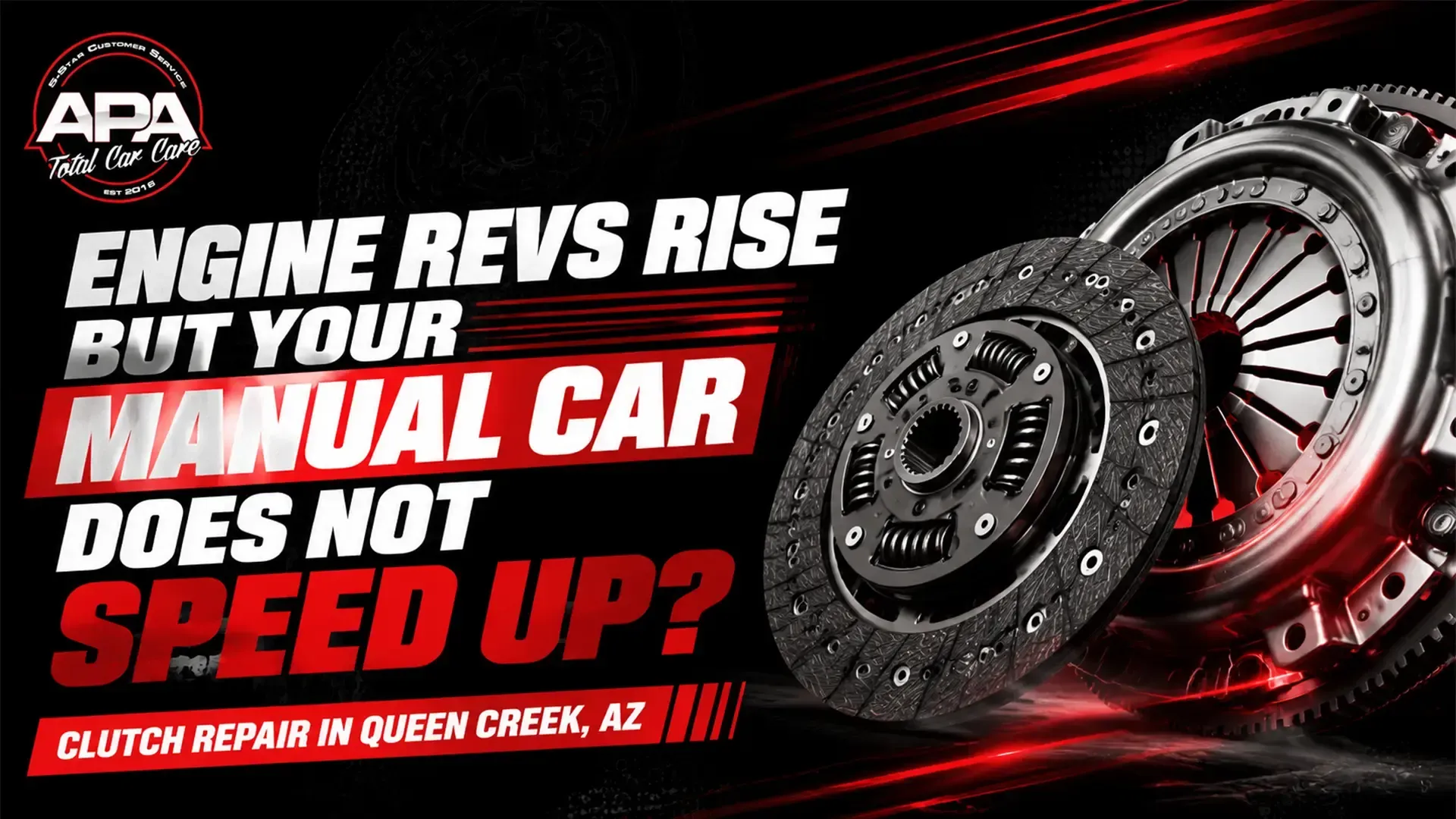
When the tachometer climbs but road speed barely changes, the clutch may be slipping instead of sending full engine power to the wheels. Drivers noticing clutch slipping in Queen Creek, AZ, should arrange an inspection before heat and friction damage nearby parts.
APA Total Car Care offers clutch repair in Queen Creek, AZ, for manual cars with poor engagement, shuddering, burning odors, or hard shifting. These warning signs can point to clutch problems that may need professional inspection.
Why Clutch Slipping in Queen Creek, AZ, Raises Engine Revs
A slipping clutch lets the engine spin faster without transferring the same increase in torque through the transmission. That mismatch explains why the engine revs but the car does not accelerate as expected, especially under load.
How the Clutch Transfers Engine Power
The clutch disc is pressed between the flywheel and pressure plate when your foot is off the pedal. Friction locks those parts together so engine power can pass into the manual transmission and reach the drive wheels.
If the disc cannot grip, it slides against the flywheel and pressure plate. Engine speed rises, but much of that motion becomes heat instead of useful acceleration.
When Clutch Slip Is Most Noticeable
Clutch slip often becomes clearest in a high gear, during strong acceleration, or while climbing an incline. You may first notice it while merging, carrying extra weight, or moving through stop-and-go traffic around Queen Creek and San Tan Valley.
The symptom may seem minor during an easy cruise, then return when the drivetrain needs more torque. That pattern is useful diagnostic information, but it is not a reason to keep testing the clutch on the road.
Signs a Slipping Clutch Is Getting Worse
The main signs of a slipping clutch include rising RPM, weak acceleration, heat, and a changing engagement point. These symptoms often become more frequent as the friction material wears.
Burning Odor or Heat After Acceleration
A sharp, hot odor after a hill, launch, or traffic backup can come from overheated clutch material. Queen Creek summer temperatures do not create friction wear by themselves, but hot conditions and repeated low-speed shifts can leave less room for heat to escape.
Park safely if the odor is strong, smoke appears, or the car struggles to move. Continuing to force acceleration may score the flywheel or damage the pressure plate.
Changes in Pedal Feel and Engagement
A clutch that engages near the top of pedal travel may have a worn disc, though pedal position differs by vehicle. Other worn clutch symptoms include shuddering from a stop, hard shifts, noise during engagement, or a pedal that feels unusually soft or stiff.
Pedal changes can also point to the cable or hydraulic release system. A proper inspection matters because a master cylinder, slave cylinder, release bearing, or adjustment concern can imitate clutch wear.
What Causes a Manual Clutch to Slip?
Clutch slip most often comes from worn friction material, weak clamping force, contamination, or incorrect release operation. The complete assembly should be checked before parts are recommended.
A Worn Disc or Weak Pressure Plate
Every start and shift removes a tiny amount of material from the clutch disc. Frequent crawling on Ellsworth Road, holding the car on an incline with the clutch, or resting a foot on the pedal can speed that wear.
A tired pressure plate can also lose the force needed to hold the disc firmly. The shop's complete auto repair services reflect a broader diagnostic approach that helps separate clutch faults from related drivetrain concerns.
Oil Contamination, Flywheel Wear, or Hydraulic Faults
Engine or transmission oil can reach the clutch disc through a leaking seal and reduce friction. A glazed, cracked, or heat-spotted flywheel may also prevent smooth contact with a new or existing disc.
Hydraulic pressure that does not release fully can leave the clutch partly disengaged. For this reason, manual transmission clutch repair may involve leak checks, pedal testing, flywheel measurement, and inspection of release parts rather than a disc alone.
What Should You Do When the Clutch Slips?
Reduce driving and schedule a professional diagnosis when the engine repeatedly flares without matching speed. The goal is to limit added heat and confirm whether the clutch, its controls, or another drivetrain part is responsible.
Reduce Load and Avoid Repeated Slip Tests
Avoid towing, hard launches, steep routes, and heavy throttle until the car is inspected. Do not hold the vehicle on a slope with the clutch pedal, and do not repeat high-gear acceleration tests.
If a technician says a short drive is reasonable, check Arizona travel conditions and avoid long backups that require constant clutch work. Ask about towing if the car barely moves, the odor returns quickly, or shifting becomes difficult.
Have the Complete Clutch System Tested
A technician can road-test the symptom, check clutch engagement, inspect hydraulics, and look for leaks. The flywheel, pressure plate, release bearing, and related parts can then be evaluated according to the vehicle design.
A fluid service is not a cure for a worn dry clutch. A recent guide to a transmission fluid change versus a flush explains why service choices depend on transmission type and condition.
At this Queen Creek auto repair shop, the team uses inspections and clear explanations to show what needs attention. That process helps you understand whether the repair calls for a clutch kit, flywheel work, hydraulic parts, or another fix.
Takeaways
Rising RPM without matching acceleration is a classic clutch-slip pattern. A burning odor, high engagement point, shudder, or hard shifting can show the problem is progressing.
Limit load and repeated testing, then have the full clutch system checked. Early diagnosis may reduce added heat damage and give you a clear repair plan for East Valley driving.
Frequently Asked Questions
Can a slipping clutch fail suddenly?
Yes, a slipping clutch can reach a point where the car no longer moves reliably. Wear may build gradually, but overheating or a related hydraulic fault can make the loss of drive feel sudden.
How can I tell clutch slip from an engine problem?
Clutch slip usually makes engine RPM rise smoothly while vehicle speed lags, often in higher gears or under load. Engine faults may cause stumbling, misfiring, warning lights, or a weak RPM response, so testing is still needed.
Does Arizona heat cause a clutch to slip?
Arizona heat alone does not usually cause a healthy clutch to slip. However, high ambient heat, traffic, hills, and repeated partial engagement can add heat to an already worn or contaminated clutch.
Will new transmission fluid fix a slipping clutch?
No, new transmission fluid will not restore worn friction material in a typical dry clutch. The correct fluid still matters for the gearbox, but clutch slip requires diagnosis of the clutch assembly and release system.
How long does clutch repair take?
Clutch repair time depends on the vehicle layout, parts availability, and whether the flywheel or hydraulics also need work. After inspection, the shop can provide an estimate and expected completion time for your car.
Schedule Clutch Repair With APA Total Car Care
Schedule an inspection when clutch slipping in Queen Creek, AZ, makes acceleration weak or unpredictable. You can contact the APA Total Car Care team or call (480) 282-8300 to discuss the symptom and request an appointment. The shop is located at 22325 S Scotland Ct Ste 101, Queen Creek, AZ 85142.
