Transmission Fluid Change vs Flush: Which Is Safer for Your Car?
Discover More On:
A transmission fluid change is the safer option for your car, especially if it has been maintained on a regular schedule. A change replaces part of the old fluid and is easier on the system, which makes it a better fit for routine service. A transmission flush can help in some situations, particularly when the fluid is badly contaminated, but it also comes with more risk on neglected or high-mileage vehicles that have not had consistent service. That is why it is smart to have a shop inspect the fluid and overall condition of the transmission before deciding. For drivers looking for Transmission Repair in Queen Creek, AZ, working with a trusted professional can help you choose the service that protects your transmission instead of putting extra stress on it.
Key Takeaways
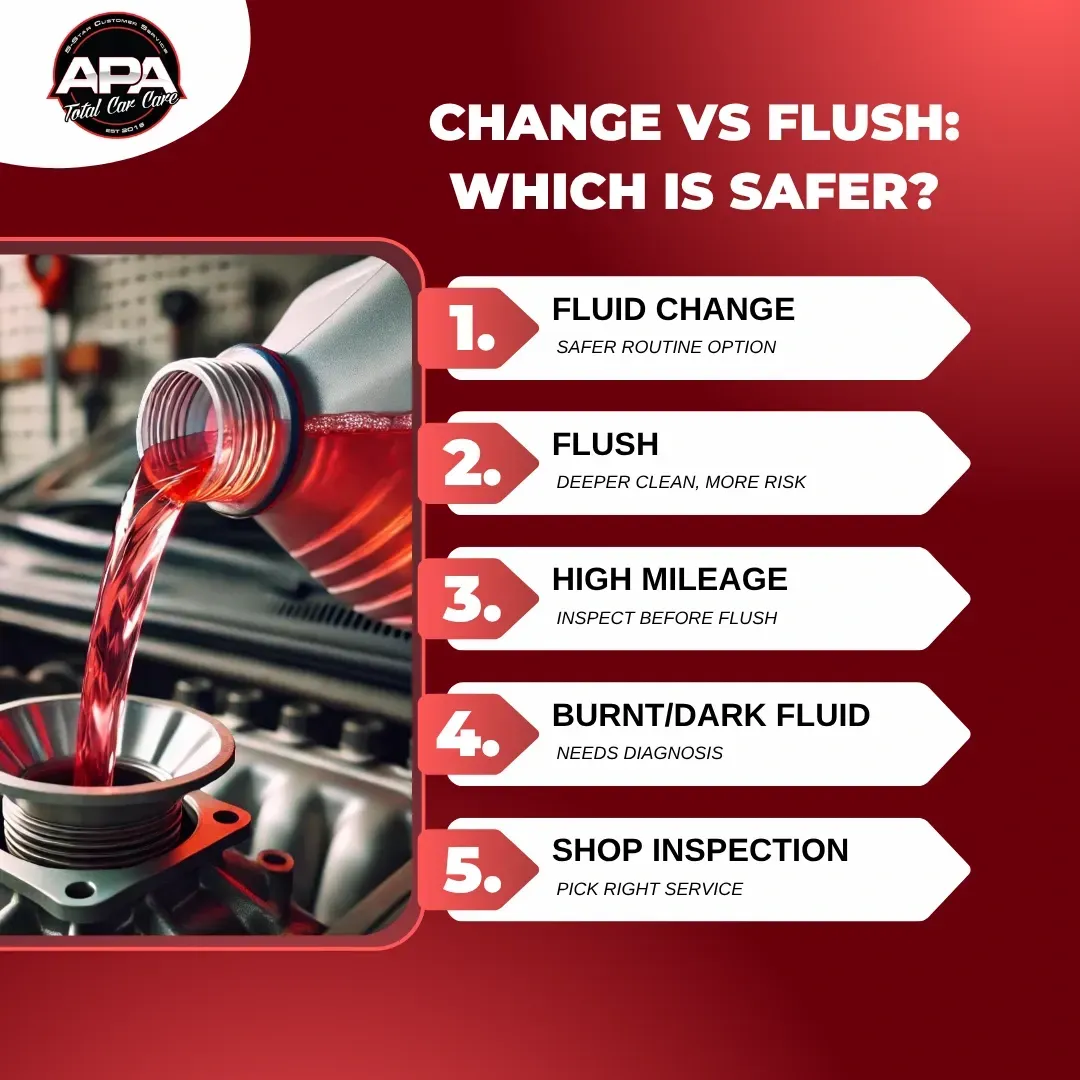
- A fluid change is safer for routine maintenance, ensuring fresh fluid without risking dislodging debris in the transmission system.
- A flush may be beneficial for high-mileage vehicles but can increase risks if the car has never had prior fluid changes.
- Consulting a mechanic before deciding on a flush is crucial to avoid potential blockages caused by dislodged contaminants.
- Regular fluid changes help monitor transmission health, making them a safer option for well-maintained vehicles.
- Signs of transmission issues should prompt professional diagnosis to determine the safest service method for your car.
What’s the Difference Between a Transmission Fluid Change and a Flush?
When it comes to maintaining your transmission, understanding the difference between a fluid change and a flush is essential. A fluid change involves replacing old fluid with new, while a flush cleans out the entire system to remove buildup. Knowing when to use each method can help keep your vehicle running smoothly.
How a fluid change works for routine transmission maintenance
While both a transmission fluid change and a flush are vital for maintaining your vehicle's transmission, they serve different purposes and processes. A fluid change involves draining the old fluid and replacing it with fresh fluid, which is essential for routine transmission maintenance for automatic cars. This process helps maintain peak performance and prolongs the life of your transmission. In Queen Creek, AZ, knowing when to change transmission fluid is key; it’s generally recommended every 30,000 to 60,000 miles, depending on your vehicle's needs. For reliable transmission service in Queen Creek, AZ, consider visiting a trusted shop like APA Total Car Care, where certified mechanics can guide you on proper maintenance and guarantee your vehicle runs smoothly.
What a transmission flush does differently and when it is used
A transmission flush goes beyond a simple fluid change by completely removing old fluid and contaminants from the transmission system. During a flush, a specialized machine is used to force new fluid into the system while simultaneously expelling the old fluid. This process guarantees that debris and sludge are eliminated, promoting better performance. In contrast, a transmission fluid change typically replaces only the fluid in the pan, leaving some old fluid behind. If you're considering whether a transmission fluid change vs flush is necessary for your vehicle, keep in mind that a flush is often recommended for cars with higher mileage. However, you might wonder, is a transmission flush safe for high mileage cars? With proper care, it can be beneficial, but consult your mechanic first.
Is a Transmission Flush Safe for High-Mileage Cars?
If you’ve got a high-mileage car, you might wonder if a transmission flush is a good idea. While it can help in certain situations, it may also pose risks depending on your vehicle's condition. Understanding how your car's overall health plays a more significant role than just mileage can guide your decision.
When a flush may help and when it may create risk
When considering a transmission flush for high-mileage cars, it's important to weigh both the potential benefits and risks involved. A flush can help remove accumulated debris and sludge, improving transmission performance. However, it may also dislodge particles that can cause problems in older systems. Here are some scenarios when a flush may help or create risk:
- Help: If the fluid is dark or has a burnt smell, indicating contamination.
- Help: Regular maintenance history with consistent fluid changes.
- Risk: If the car has never had a fluid change and has high mileage.
- Risk: If there are existing transmission issues, as a flush may exacerbate them.
Always consult a professional mechanic before deciding on a flush for your high-mileage vehicle.
Why vehicle condition matters more than mileage alone
High-mileage cars often raise concerns about the safety of a transmission flush, but vehicle condition plays a more significant role than just mileage. Factors like how well the car's been maintained, the quality of previous fluid changes, and the overall health of the transmission are vital. A well-maintained vehicle might handle a flush better than a neglected one, even if it has higher mileage. Look for signs like slipping gears or odd noises—these indicate potential issues that could make a flush risky. Ultimately, it’s essential to assess your car’s unique situation rather than relying solely on mileage. Consulting a trusted mechanic can help determine the best course of action for your transmission's health.
When Is a Transmission Fluid Change the Safer Option?
When it comes to your automatic car, regular transmission fluid changes are often the safer choice. They allow for gradual maintenance, which can help support long-term health for your transmission. By staying proactive with fluid changes, you can avoid potential issues down the road.
Why regular fluid changes are often best for automatic cars
Although many drivers may consider a transmission flush as a quick fix for fluid issues, regular transmission fluid changes are often the safer option for automatic cars. Here are a few reasons why you should prioritize fluid changes:
- Gradual Maintenance: Regular changes help you monitor fluid condition and catch potential issues.
- Contaminant Removal: Changing fluid removes debris and contaminants that can harm your transmission.
- Fluid Longevity: Fresh fluid maintains peak performance and extends your transmission’s lifespan.
- Consistent Performance: Regular changes guarantee smoother shifting and better overall vehicle operation.
How gradual maintenance can support long-term transmission health
While many drivers might think a transmission flush is the go-to solution for fluid issues, opting for regular fluid changes is often the safer choice for maintaining long-term transmission health. Gradual maintenance helps prevent the buildup of contaminants that can wear down your transmission. By changing the fluid at regular intervals, you guarantee that old, degraded fluid is replaced with fresh transmission fluid, which lubricates and protects the internal components effectively.
This approach not only keeps your transmission clean but also allows you to catch potential problems , avoiding costly repairs down the line. Ultimately, regular fluid changes support your vehicle's performance and longevity, making them a wise investment in your car's overall health. Trust your instincts and prioritize gradual maintenance.
Signs Your Vehicle May Need Transmission Service
You might notice signs that your vehicle needs transmission service if you're experiencing delayed shifting or rough gear changes. Additionally, keep an eye out for dark fluid, a burnt smell, or any overheating issues. Recognizing these warning signs early can help prevent more serious problems down the road.
Delayed shifting, slipping, and rough gear changes to watch for
Delayed shifting, slipping, and rough gear changes can signal that your vehicle needs transmission service. If you notice any of these issues, it’s essential to address them promptly to avoid further damage. Here are some signs to watch for:
- Delayed Shifting: You might feel a noticeable lag when shifting between gears.
- Slipping Gears: If your transmission unexpectedly shifts out of gear while driving, it’s a red flag.
- Rough Gear Changes: You may experience harsh or jerky shifts between gears.
- Unusual Noises: Grinding or clunking sounds during gear changes can indicate serious problems.
If you experience any of these symptoms, consider seeking professional transmission service to keep your vehicle running smoothly.
How dark fluid, burnt smell, or overheating can signal trouble
When it comes to your vehicle's transmission, the condition of the fluid can be a critical indicator of potential problems. If you notice the fluid is dark or has a burnt smell, it’s a sign that it may be overheating or breaking down. Healthy transmission fluid should be a bright red color and have a slightly sweet odor. Dark, burnt fluid can indicate excessive heat, leading to serious transmission issues. Additionally, if your transmission is running hot, it may be struggling to circulate the fluid effectively. Ignoring these signs can lead to costly repairs down the road, so it’s essential to address any concerns promptly. Regular checks can help keep your transmission in good shape.
When to Change Transmission Fluid in Queen Creek, AZ
When you're driving in Queen Creek, AZ, your habits and the heat can greatly impact how often you should change your transmission fluid. It’s essential to keep an eye on your fluid's condition to prevent costly repairs down the line. Regular preventive service tailored to Arizona's conditions can help keep your transmission running smoothly.
How driving habits and heat affect transmission fluid life
As you navigate the roads of Queen Creek, your driving habits and the local climate can considerably impact the life of your transmission fluid. The heat in Arizona can accelerate degradation, while your driving style plays an important role in how long the fluid lasts. Here are some factors to take into account:
- Frequent stop-and-go driving: This can cause the fluid to heat faster and break down more quickly.
- Heavy towing or hauling: Increased strain on the transmission leads to higher temperatures and fluid breakdown.
- High temperatures: Extreme heat can diminish the effectiveness of the fluid, necessitating more frequent changes.
- Aggressive driving: Rapid acceleration and hard braking can create excess heat, stressing your transmission fluid.
Being mindful of these factors will help prolong your transmission fluid's life.
Why preventive service matters in Arizona conditions
With the harsh Arizona climate and specific driving habits common in Queen Creek, staying on top of your transmission fluid maintenance is vital. Extreme heat can cause fluid to break down faster, leading to potential transmission issues. Regularly checking and changing your transmission fluid helps prevent costly repairs down the line. If you often drive in stop-and-go traffic or tow heavy loads, your transmission works harder, so it’s important to follow a preventive maintenance schedule. This proactive approach not only extends the life of your transmission but also enhances your vehicle’s overall performance. Don’t wait until you notice issues; prioritize preventive service to guarantee your car runs smoothly in Arizona’s challenging conditions. Trust APA Total Car Care for expert assistance.
Why Professional Diagnosis Matters Before a Flush or Fluid Change
Before you decide on a transmission fluid change or flush, getting a professional diagnosis is essential. Technicians can pinpoint the right service for your vehicle, ensuring you don't inadvertently shorten your transmission's life. So, don’t skip this step; it could save you from costly repairs down the line.
How technicians determine the right transmission service for your car
When it comes to choosing between a transmission fluid change and a flush, a professional diagnosis plays an important role in determining the best service for your vehicle. Technicians use several key factors to guide their recommendations:
- Fluid Condition: They’ll assess the color and smell of your transmission fluid to identify any contamination or deterioration.
- Transmission Type: Different transmissions may require specific services, so knowing your vehicle's type is essential.
- Mileage and Service History: They’ll consider how long it’s been since your last service and your vehicle’s overall mileage.
- Symptoms: Any signs of shifting issues or unusual noises can indicate the need for a more thorough service.
This tailored approach guarantees your transmission gets the care it needs.
Why the wrong service choice can shorten transmission life
Choosing the wrong transmission service can greatly impact your vehicle’s lifespan, especially if you don’t have a professional diagnose the issue first. A fluid change might seem sufficient, but if your transmission has underlying problems, merely replacing the fluid can cause further damage. On the other hand, a flush might dislodge debris that could block essential passages, leading to more significant issues.
Without proper diagnosis, you risk exacerbating existing problems or wasting money on unnecessary services. It’s important to recognize that your transmission is a complex system; one misstep can shorten its life. Always consult a certified mechanic to determine the best course of action for your vehicle to guarantee its longevity and performance.
Schedule Professional Transmission Service in Queen Creek, AZ at APA Total Car Care
If you're noticing changes in your vehicle's performance or simply haven't had a transmission service in a while, it's time to schedule a professional transmission service at APA Total Car Care in Queen Creek, AZ. Our certified mechanics are committed to ensuring your vehicle runs smoothly and efficiently. Here’s what you can expect from our service:
- Comprehensive Inspection: We'll assess your transmission for any underlying issues.
- Fluid Change or Flush: We'll recommend the best option based on your vehicle's needs.
- Same-Day Service: We value your time and aim to provide quick service.
- Expert Advice: Our team will guide you on maintaining your transmission for longevity.
Trust us to keep your vehicle in top shape!
Frequently Asked Questions
How Often Should I Check My Transmission Fluid Level?
You should check your transmission fluid level every 30,000 to 60,000 miles, or at least once a year. Keeping an eye on it helps prevent potential issues and guarantees your vehicle runs smoothly.
Can I Perform a Transmission Fluid Change Myself?
Imagine sailing smoothly on calm waters; you can perform a transmission fluid change yourself, but it requires care and precision. Just guarantee you’ve got the right tools and knowledge, or consider professional help for peace of mind.
What Are the Risks of Not Changing Transmission Fluid?
If you don’t change your transmission fluid, you risk overheating, gear slipping, and eventual transmission failure. Ignoring it can lead to costly repairs and reduced vehicle performance, so it's best to stay proactive.
Will a Flush Improve My Car's Transmission Performance?
Ever wondered if a flush really helps? It can improve your car's transmission performance by removing sludge and old fluid, enhancing lubrication and shifting. Just remember, it’s crucial to follow your vehicle's specific maintenance guidelines.
How Do I Know if My Transmission Fluid Is Dirty?
You’ll know your transmission fluid is dirty if it appears dark brown or black, has a burnt smell, or contains particles. Regular checks can help you maintain peak performance and avoid costly repairs later.
Conclusion
In the grand tapestry of your car's life, choosing between a transmission fluid change and a flush is like selecting the right brushstroke for a masterpiece. Each method has its own rhythm, and knowing when to dance with one over the other can keep your vehicle humming like a finely tuned orchestra. So, listen to your car’s whispers and consider its needs—after all, a well-maintained transmission is the heartbeat that keeps your journey alive and thriving.
