Brake Pad vs Rotor Replacement: How to Know What You Need?
Discover More On:
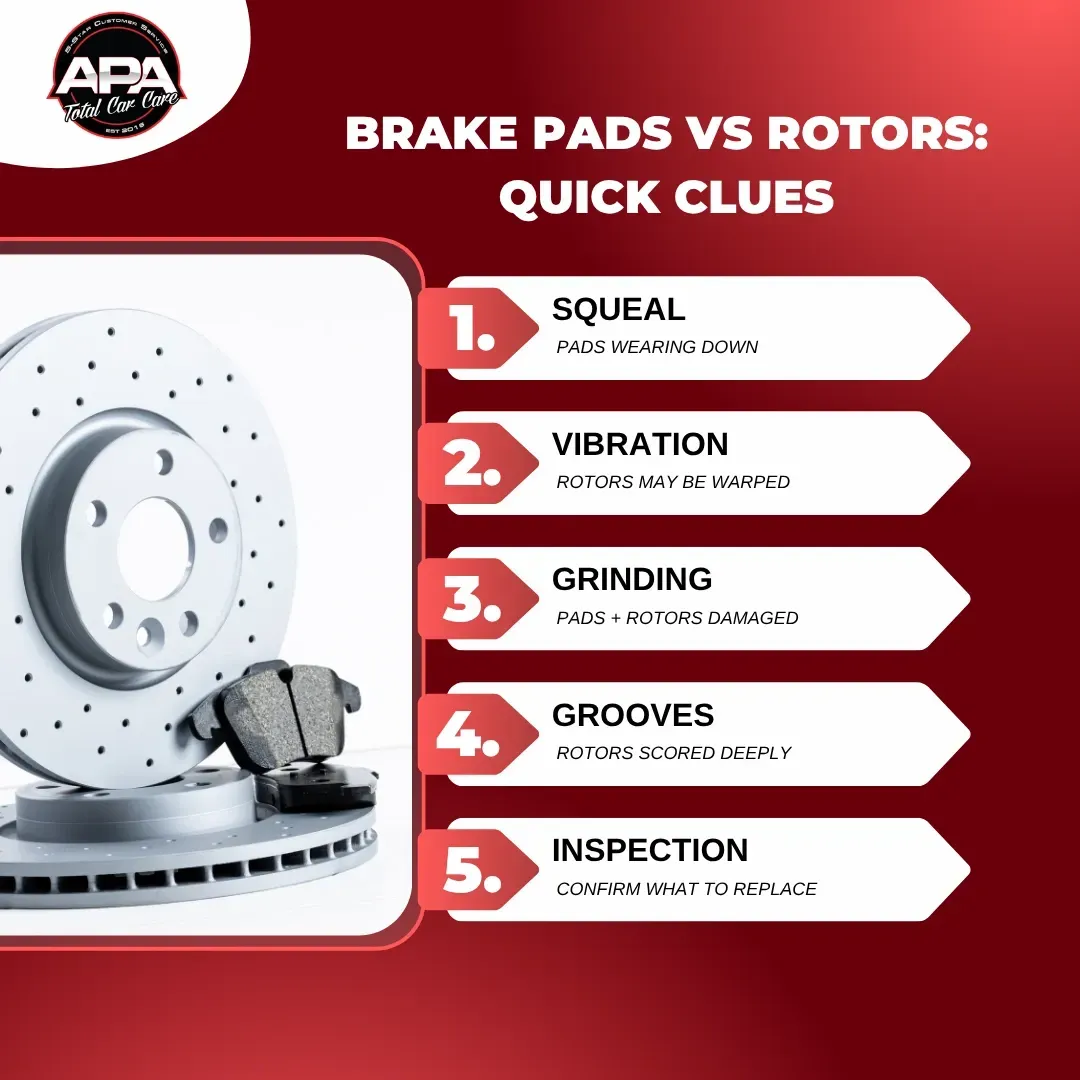
If you’re trying to figure out brake pad vs. rotor replacement, the easiest place to start is with the signs your car is giving you. Squealing usually means your brake pads are wearing down, while shaking or vibration when you brake often points to rotor trouble. If you hear grinding, there’s a good chance the wear is more serious, and both parts may need attention. Staying on top of Brake Repair in Queen Creek, AZ with regular inspections can help you catch the problem and avoid a bigger repair later.
Key Takeaways
- Listen for squealing noises, which typically indicate worn brake pads needing replacement rather than rotors.
- Feel for vibrations during braking, suggesting possible rotor issues rather than just worn pads.
- Inspect for visible grooves or scoring on rotors; deep wear may require rotor replacement along with pads.
- Grinding noises often indicate severe wear, affecting both brake pads and rotors, signaling the need for both replacements.
- Schedule a professional inspection for an accurate assessment of your braking system's condition and necessary repairs.
What’s the Difference Between Brake Pads and Rotors?
When it comes to your vehicle's braking system, understanding the roles of brake pads and rotors is essential. These components work together to bring your car to a stop, but they wear down at different rates due to their distinct functions. Knowing how they interact can help you keep your brakes in top shape and avoid costly repairs.
How brake pads and rotors work together to stop your vehicle
Understanding how brake pads and rotors work together is essential for any vehicle owner. The brake pads clamp down on the rotors when you press the brake pedal, creating friction that slows down your vehicle. This interaction is critical for effective stopping power. If you notice squeaking or grinding noises, these could be signs you need new brake rotors. Additionally, knowing how to tell if you need brake pads or rotors can save you time and money. For those in need, consider brake pad replacement in Queen Creek, AZ, where professional mechanics can assess your system. By maintaining these components, you guarantee your vehicle stops safely and efficiently every time.
Why these two brake components wear differently over time
While both brake pads and rotors play vital roles in your vehicle's braking system, they wear differently due to their distinct materials and functions. Brake pads are typically made of softer materials designed to grip the rotor and create friction, which wears them down faster. In contrast, rotors are usually made of tougher metal, designed to withstand the heat and pressure of braking, leading to slower wear. This difference is significant when considering brake pad vs rotor replacement; often, you'll need to replace pads more frequently than rotors. If you're in need of brake repair in Queen Creek, AZ, it’s important to have both components regularly inspected to guarantee peak performance and safety on the road.
Signs You May Only Need Brake Pad Replacement
If you’re hearing squealing noises when you brake or notice your brake pads are getting thin, it might be time for a replacement. These common signs can often indicate that your brake pads are worn, while your rotors may still be in good shape. Addressing just the pads could save you time and money, especially if you're in Queen Creek, AZ.
Squealing, reduced pad thickness, and other common warning signs
Squealing brakes can be more than just an annoying sound; they're often a telltale sign that your brake pads are nearing the end of their life. It's essential to pay attention to these warning signs to guarantee your safety on the road. Here are some common indicators that you might only need to replace your brake pads:
- Squealing or squeaking noises when braking.
- Reduced pad thickness is visible during inspection.
- Vibration or pulsation in the brake pedal while stopping.
- Grinding sounds indicating metal-on-metal contact.
If you notice any of these signs, it’s a good idea to have your brakes checked. Addressing these issues can save you from more costly repairs down the line.
When brake pad replacement in Queen Creek, AZ may solve the problem
When you're experiencing issues with your brakes, it’s essential to determine whether a simple brake pad replacement can solve the problem. If you notice squeaking or squealing noises when you apply the brakes, this could indicate that your pads are worn but still have some life left. Additionally, if you feel a vibration while braking, it might be due to the pads rather than the rotors. Reduced braking performance without any grinding sounds often signals that the pads need replacing. In these cases, addressing just the brake pads can restore functionality without the added expense of rotor replacement. Always consult a trusted mechanic in Queen Creek, AZ, to guarantee you're making the right choice for your vehicle's braking system.
Signs You Need New Brake Rotors
If you're feeling vibrations when you brake or notice grooves on your rotors, it might be time for a replacement. Warped or damaged rotors can seriously affect your braking performance, making it essential to address these issues promptly. Let’s explore the signs that indicate you need new brake rotors to keep your vehicle safe and running smoothly.
Vibration, grooves, and other signs you need new brake rotors
Noticing vibrations while braking can be concerning, as it often signals that your brake rotors might need replacement. If you’re experiencing any of the following signs, it’s time to take action:
- Vibrations: Feeling pulsing in the brake pedal can indicate uneven rotor surfaces.
- Grooves: Visible grooves or scoring on the rotor surface usually means wear and tear that can impact performance.
- Squeaking or Grinding Noise: Unusual sounds when braking could signal rotor issues, often accompanied by worn pads.
- Brake Warning Light: If your dashboard light comes on, it’s a sign to check your braking system, including rotors.
Pay attention to these signs to guarantee your safety on the road.
How warped or damaged rotors affect braking performance
Vibrations and unusual noises can signal issues with your brake rotors, but the impact of warped or damaged rotors on braking performance goes beyond just discomfort. When rotors are warped, they can cause inconsistent contact with the brake pads, leading to reduced stopping power. You might notice a decline in responsiveness, making it harder to brake smoothly. Additionally, damaged rotors can create uneven wear on your brake pads, forcing you to replace them more frequently. This not only increases costs but can also compromise your safety. If you’re experiencing these symptoms, it’s essential to address the problem promptly. Ignoring it can lead to more severe brake system issues, putting both you and others on the road at risk.
How to Know If You Need Brake Pads or Rotors
When you're hearing strange noises from your brakes, it can be tempting to jump to conclusions about whether you need new pads or rotors. However, noise alone doesn’t always reveal the full picture of your brake system's health. A thorough brake inspection is the best way to determine exactly what needs replacing.
Why noise alone does not always tell the full story
While unusual noises from your brakes can certainly signal a problem, they don’t always provide the complete picture. It’s important to remember that different sounds can indicate various issues, and not all of them relate directly to the pads or rotors. Here are some factors to take into account:
- Vibration: If you feel vibrations while braking, it might suggest warped rotors, not just worn pads.
- Squeaking: This could mean your pads are worn, but it might also be dust or debris caught in the system.
- Grinding: A grinding noise often indicates severe wear, but it might not solely involve the pads.
- Clicking: This sound could be related to loose hardware rather than pad or rotor failure.
Always seek a professional inspection for a thorough diagnosis!
How a brake inspection confirms what should be replaced
A thorough brake inspection is vital for determining whether you need new brake pads, rotors, or both. During this inspection, a certified mechanic will examine the entire braking system, looking for signs of wear and damage. They'll check the thickness of your brake pads and inspect the rotors for grooves or warping. If the pads are worn down beyond the recommended thickness, they’ll need replacing. Similarly, if the rotors show significant wear, it could indicate that they should be replaced too. By evaluating these components together, the mechanic can provide you with a clear recommendation, ensuring your vehicle remains safe and efficient on the road. Don't skip this vital step—regular inspections keep your brakes in top shape.
When Brake Pad vs Rotor Replacement Should Be Done Together
If you ignore worn brake pads, they can cause serious damage to your rotors over time. Replacing both parts together not only saves you money but also enhances your braking safety. It’s essential to address these components simultaneously to guarantee your vehicle performs at its best.
Why worn pads can damage rotors if ignored too long
Ignoring worn brake pads can lead to significant damage to your rotors. When the pads wear down, they can’t effectively grip the rotor's surface, causing excessive friction. This can result in:
- Scoring: Metal-on-metal contact can create deep grooves in the rotor.
- Warping: Overheating can warp the rotors, affecting braking performance.
- Reduced Lifespan: Damaged rotors need to be replaced sooner, increasing costs.
- Brake Noise: You might hear grinding or squealing sounds, indicating serious wear.
How replacing both parts at the right time protects braking safety
Replacing brake pads and rotors together is crucial for maintaining ideal braking safety, especially since worn components can compromise your vehicle's performance. When you wait too long to replace either part, you risk uneven wear and potential damage to the other. If your brake pads are worn down, they may not effectively grip the rotors, leading to longer stopping distances and decreased control. Furthermore, damaged rotors can create vibrations or noise, indicating further issues that could affect your braking system's integrity. By replacing both at the right time, you guarantee the best contact and efficiency, enhancing your safety on the road. Regular inspections can help you determine the best time for both replacements, keeping your braking system in top shape.
Why Professional Brake Repair Matters
When it comes to your vehicle's brakes, professional repair is essential for restoring smooth and reliable stopping power. An accurate diagnosis can save you from costly mistakes and guarantee your brakes are in top shape. Trusting experts in Queen Creek, AZ, means you're prioritizing your safety on the road.
How proper brake service helps restore smooth, reliable stopping
Proper brake service is essential for ensuring your vehicle stops smoothly and reliably, as worn or damaged components can greatly compromise your safety on the road. Regular maintenance not only enhances performance but also extends the life of your braking system. Here are four key benefits of proper brake service:
- Improved Safety: Reliable brakes reduce the risk of accidents.
- Enhanced Performance: Smooth stopping minimizes vibrations and noise.
- Cost-Effectiveness: Preventative care can save you from costly repairs down the line.
- Increased Longevity: Regular checks help prevent premature wear on pads and rotors.
Why accurate diagnosis matters for brake repair in Queen Creek, AZ
Accurate diagnosis is essential for effective brake repair in Queen Creek, AZ, as it guarantees that the underlying issues are identified and addressed promptly. When you notice any signs of brake problems, such as squeaking or reduced responsiveness, a thorough inspection is vital. If the mechanic misdiagnoses the issue, you might end up replacing parts unnecessarily, which can cost you time and money. By ensuring an accurate diagnosis, you not only save on potential repairs but also enhance your vehicle's safety. Trusting a professional like those at APA Total Car Care means you'll receive reliable service that focuses on your specific needs. Ultimately, a correct diagnosis leads to better performance and longevity for your braking system, keeping you safe on the road.
Schedule Brake Pad and Rotor Inspection at APA Total Car Care in Queen Creek, AZ
If you're experiencing squeaking, grinding, or a decrease in braking performance, it’s time to schedule a brake pad and rotor inspection at APA Total Car Care in Queen Creek, AZ. Our certified mechanics are ready to diagnose and address any issues, ensuring your vehicle runs smoothly and safely. Here’s what you can expect during your inspection:
- Thorough Brake System Check: We examine all components to identify wear and tear.
- Quality Replacement Options: If necessary, we offer high-quality brake pads and rotors.
- Same-Day Service: Enjoy the convenience of quick turnarounds.
- Expert Advice: Receive tailored recommendations based on your vehicle’s needs.
Trust APA Total Car Care for reliable service that prioritizes your safety on the road!
Frequently Asked Questions
How Often Should I Replace My Brake Pads and Rotors?
You should replace your brake pads every 30,000 to 70,000 miles, depending on driving habits. Rotors typically last longer, but if you hear grinding, it’s time to inspect and possibly replace them as well.
Can I Replace Just One Side's Brake Pads or Rotors?
You shouldn’t replace just one side's brake pads or rotors. It’s best to replace them in pairs for balanced braking performance. This helps maintain safety and prolongs the overall lifespan of your vehicle's braking system.
What Materials Are Brake Pads and Rotors Made From?
You can’t make an omelet without breaking eggs. Brake pads are typically made from materials like rubber, metal, or ceramics, while rotors are usually composed of cast iron or carbon composite for durability and heat resistance.
How Do Driving Habits Affect Brake Pad and Rotor Lifespan?
Your driving habits considerably impact brake pad and rotor lifespan. Frequent hard braking, stop-and-go traffic, and aggressive driving wear them out faster, while smooth acceleration and gentle braking can help extend their longevity.
Are Aftermarket Brake Pads and Rotors as Good as OEM Parts?
Think of aftermarket brake pads and rotors like a trusty sidekick; they can perform well, but quality varies. If you choose wisely, they can match OEM parts in performance, but do your research first.
Conclusion
To sum up, knowing when to replace your brake pads or rotors is key to keeping your ride smooth and safe. If you hear squeaks or feel vibrations, it’s time to check. Think of it like tuning a guitar; a little maintenance goes a long way in hitting the right notes on the road. So, don’t hesitate—schedule an inspection at APA Total Car Care and keep your vehicle in top shape for every drive ahead!
