If your car jerks while driving, your vehicle may be trying to tell you something is off. Worn spark plugs, fuel delivery problems, or transmission issues can all cause that sudden lurch during acceleration or even while cruising at a steady speed. You might also notice rough idling, misfires, or gear changes that do not feel smooth. Scheduling a Car Tune-Up in Queen Creek, AZ can help catch these issues, pinpoint the real cause, and keep a small problem from turning into a much bigger repair.
Why Your Car Jerks When Accelerating
If your car jerks when you accelerate, it could be frustrating and concerning. Common culprits include worn spark plugs or ignition issues, as well as fuel delivery problems that cause hesitation. Sometimes, this jerking can signal a deeper issue that needs immediate attention.
Worn Spark Plugs or Ignition Problems
Worn spark plugs or ignition problems can cause your car to jerk while accelerating, leading to a frustrating driving experience. If you are noticing engine misfire symptoms, like rough idling or stalling, it is crucial to check your spark plugs. When the ignition system's components wear out, they can disrupt the spark needed for smooth engine performance, resulting in that unsettling jerk. You might feel your car jerks when accelerating, especially under load. It is vital to address these issues promptly to avoid further damage. If you are in need of expert help, consider car diagnostics in Queen Creek, AZ. A qualified technician can identify the problem and get your vehicle running smoothly again.
Fuel Delivery Issues That Cause Hesitation
Another common reason your car might jerk while accelerating is fuel delivery issues. If your fuel pump is not supplying sufficient fuel, or if there is a clogged fuel filter, you may experience car jerking while driving at steady speed. This inconsistency can create a frustrating driving experience, making it hard to maintain smooth acceleration. Additionally, issues with fuel injectors can lead to uneven fuel flow, causing hesitation and jerking. If you notice these symptoms, it is essential to get them checked out. Ignoring fuel delivery problems can lead to more significant issues down the line, including the need for transmission jerking repair in Queen Creek. Don’t wait; address these issues right away to keep your vehicle running smoothly.
When Acceleration Jerking Points to a Deeper Problem
While it might seem like a minor annoyance, jerking during acceleration can signal deeper mechanical issues in your vehicle. Ignoring this problem could lead to more significant damage down the road. Here are a few common culprits you should consider:
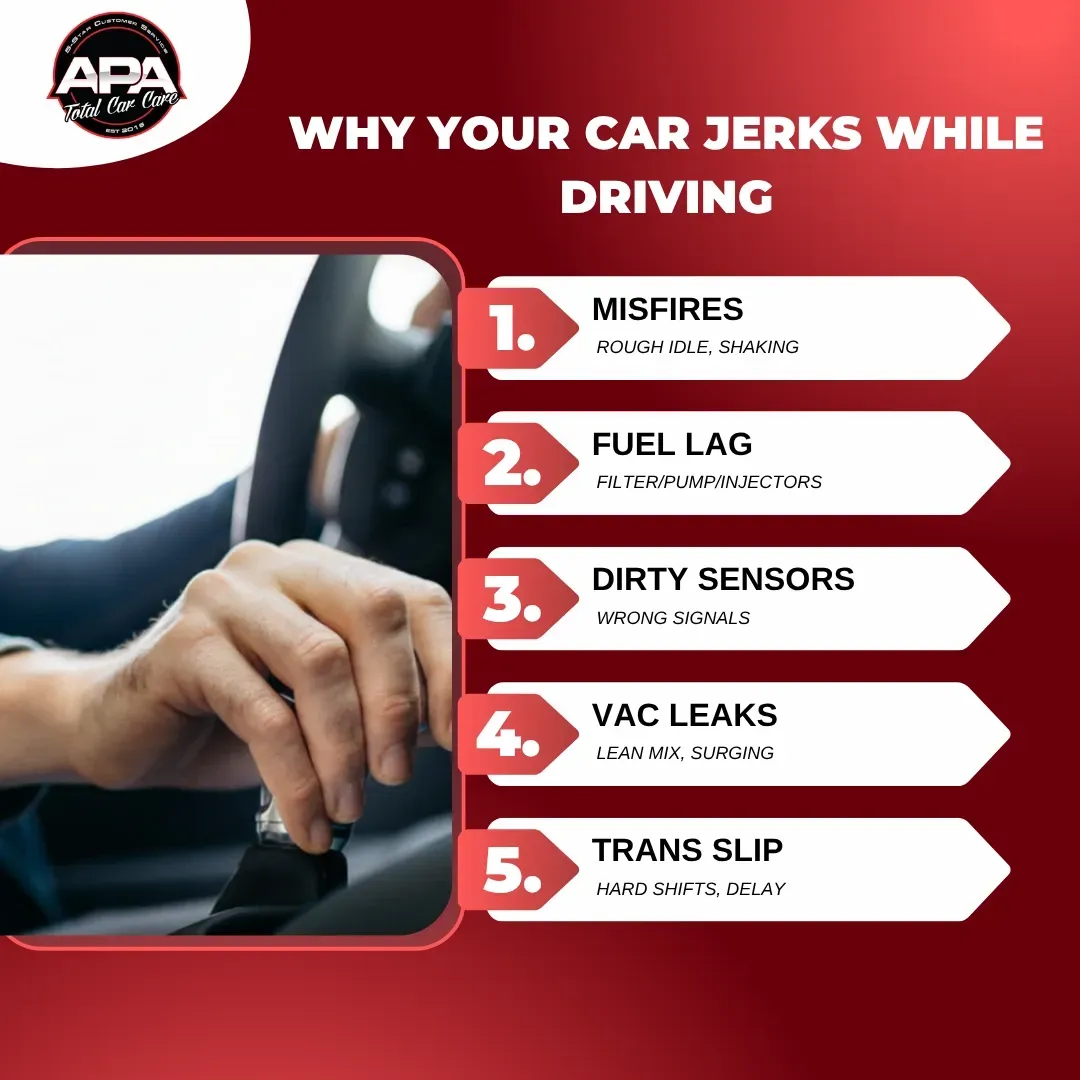
- Transmission Problems: A failing transmission can cause erratic shifts, making your car jerk when you accelerate.
- Fuel System Issues: Clogged fuel filters or failing fuel pumps can disrupt fuel delivery, resulting in hesitation and jerking.
- Ignition System Failures: Worn spark plugs or ignition coils can lead to misfires, causing your vehicle to jerk when you press the gas.
If you are experiencing these issues, it is best to consult a trusted mechanic for a thorough diagnosis.
What Causes Car Jerking While Driving at Steady Speed?
If your car jerks while driving at a steady speed, it could be due to dirty sensors or airflow problems. Vacuum leaks can also play a part, causing small drivability issues that may worsen over time. Understanding these factors can help you pinpoint the problem and get back to smooth driving.
Dirty Sensors, Airflow Problems, or Vacuum Leaks
What could be causing your car to jerk while driving at a steady speed? Several issues might be at play, and they often relate to your engine's performance.
- Dirty Sensors: If your mass airflow sensor or throttle position sensor is dirty, it can send incorrect signals, leading to jerking.
- Airflow Problems: Blocked air filters or issues in the intake system can disrupt the airflow, affecting engine efficiency.
- Vacuum Leaks: Any leaks in the vacuum system can cause an imbalance in the air-fuel mixture, resulting in rough engine performance.
Addressing these problems promptly can improve your driving experience, so do not hesitate to have a professional take a look.
Why Small Drivability Issues Can Feel Worse Over Time
As you drive, small drivability issues can gradually escalate, making your car feel less stable and more difficult to control. What starts as a minor hesitation or a slight jerk can develop into a more pronounced problem, often due to neglect or underlying mechanical failures. Small issues like dirty fuel injectors or worn spark plugs can worsen over time, affecting performance and safety. If you ignore these symptoms, they may lead to more severe complications, like engine misfires or transmission problems. Regular maintenance is vital; it helps catch these problems before they escalate. Don’t wait until you feel major disruptions as addressing small drivability issues promptly guarantees a smoother, safer driving experience.
Engine Misfire Symptoms That Can Make Your Car Jerk
If your car's jerking, it might be a sign of an engine misfire. You could notice symptoms like a rough idle, shaking, or even a loss of power while driving. Plus, don’t ignore that check engine light since it is an essential clue that something’s not right.
Rough Idle, Shaking, and Loss of Power
When your car experiences a rough idle, shakes, or shows a loss of power, it can be a clear sign of engine misfires. These symptoms not only affect your driving experience but can also indicate underlying issues that need attention. Here are three common causes to contemplate:
- Faulty Spark Plugs: Worn or damaged spark plugs can fail to ignite the fuel-air mixture properly, leading to misfires.
- Fuel System Issues: Clogged fuel injectors or a failing fuel pump can disrupt the fuel supply, causing rough engine performance.
- Vacuum Leaks: Leaks in the vacuum system can result in an imbalanced air-fuel mixture, leading to shaking and power loss.
Addressing these issues promptly can help restore your car’s performance.
Check Engine Light Clues You Should Not Ignore
Engine misfires can often lead to noticeable jerking while driving, adding to the frustration of an already rough ride. One of the first signs you might notice is the check engine light illuminating on your dashboard. Don’t ignore this warning; it is an essential clue. If your car starts to shake or stutter during acceleration, that is another indicator of a potential misfire. You might also experience a decrease in fuel efficiency or a rough idle when the car is stationary. These symptoms can stem from issues like faulty spark plugs, ignition coils, or fuel injectors. If you notice these signs, it is important to seek professional help to diagnose and resolve the problem before it worsens.
Could You Need Transmission Jerking Repair in Queen Creek, AZ?
If your car's been jerking, it might be a sign of transmission issues like slipping or hard shifting. You could also be dealing with problems related to fluid levels, solenoids, or internal wear. Understanding these symptoms is key to determining if you need transmission jerking repair in Queen Creek, AZ.
How Transmission Slipping or Hard Shifting Feels
Experiencing a sudden jolt or a delay in acceleration can be unsettling, particularly when it indicates potential transmission issues. You might notice a few specific symptoms:
- Unexplained RPM Fluctuations**: Your engine's RPM may suddenly rise or drop without any change in speed.
- Hard Shifting: You could feel a rough change between gears, as if the car is struggling to shift properly.
- Delayed Engagement: When you shift from park to drive, there may be a noticeable lag before your car moves.
These sensations can signal that your transmission is slipping or having trouble shifting, which requires immediate attention. Ignoring these signs could lead to more severe problems down the line.
When Jerking May Be Linked to Fluid, Solenoids, or Internal Wear
When your car starts jerking during drives, it could signal deeper issues with the transmission that need urgent attention. Often, this jerking can be linked to low transmission fluid, which lubricates and cools the system. If the fluid's dirty or burnt, it might not function properly, leading to erratic shifting. Additionally, solenoids, responsible for controlling fluid flow, can malfunction, causing inconsistent gear changes. Internal wear and tear on transmission components can also contribute to this jerking sensation. If you notice these symptoms, it is best to seek professional help. At APA Total Car Care in Queen Creek, AZ, our certified mechanics can diagnose the issue and provide reliable transmission jerking repair to keep your vehicle running smoothly.
Schedule Car Diagnostics in Queen Creek, AZ at APA Total Car Care
Scheduling car diagnostics at APA Total Car Care in Queen Creek, AZ, is a smart move for anyone noticing their vehicle jerk while driving. Our certified mechanics are ready to diagnose the issue and get you back on the road safely. Here’s why you should choose us:
- Expertise: Our team specializes in various services, ensuring your car gets the attention it needs.
- Same-Day Appointments: We recognize your time is valuable, so we offer convenient, same-day service.
- Family-Owned Values: As a trusted local shop, we prioritize your vehicle's needs and your peace of mind.
Don’t ignore those jerks—schedule your diagnostics today at APA Total Car Care for reliable and professional service.
Frequently Asked Questions
Can Low Fuel Levels Cause My Car to Jerk?
When the fuel level gets too low, your car may not get a steady supply of fuel. Yes, low fuel levels can cause your vehicle to jerk as the engine struggles to run smoothly.
How Does Weather Affect My Car's Performance?
Weather can greatly affect your car's performance. Cold temperatures might thicken fluids, while heat can impact engine efficiency. Rain and snow can reduce traction, making it essential to adjust your driving habits accordingly.
Is Jerking a Sign of a Serious Issue?
Jerking can be a sign of a serious issue, especially if it often happens or feels stronger over time. It may point to problems with the transmission, fuel system, or ignition. Do not ignore it. Have the car checked to ensure it is safe to drive.
Can Tire Pressure Impact Car Jerking?
Yes, low tire pressure can impact your car's performance, causing it to jerk. Keeping your tires properly inflated guarantees better traction and handling, reducing the chances of jerking while you are driving. Check your tire pressure regularly.
Should I Ignore Minor Jerking Symptoms?
You should not ignore minor jerking symptoms. They can indicate underlying issues that might worsen over time. It is best to have your vehicle checked by a professional to guarantee safety and prevent costly repairs later.
Conclusion
Preventive maintenance plays a big role in keeping your vehicle reliable and helping you avoid bigger problems later. If your vehicle’s jerking has you worried, don’t ignore it. Addressing the issue can save you from costly repairs down the line. Whether it is an engine misfire or transmission trouble, getting a professional diagnosis is key to ensuring your car runs smoothly. Stay proactive, and keep your driving experience safe and enjoyable.
