
If your car keeps needing a jump, the battery may not be the only thing causing trouble. A weak battery, failing alternator, corroded connections, or a small electrical drain can all leave you stuck when you least expect it. Arizona heat and frequent short drives can make the problem even worse by preventing your battery from fully recharging. Scheduling Battery Replacement in Queen Creek, AZ or a full electrical inspection can help you find the real issue and keep your car starting reliably.
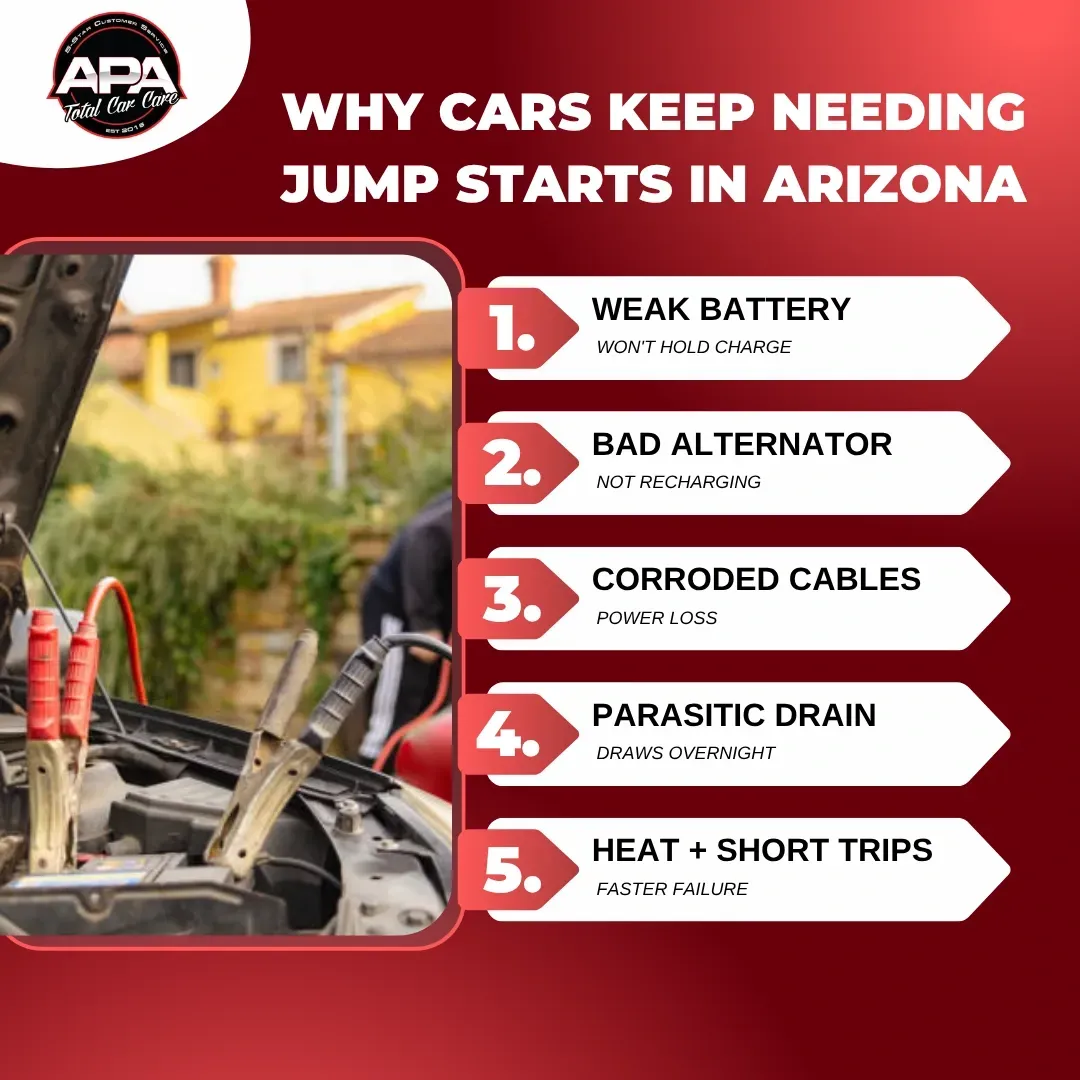
Why Does My Car Need a Jump Start More Than Once?
If your car keeps needing a jump start, it might be a sign of a weak battery that is not holding a charge. Short drives and the intense Arizona heat can exacerbate battery issues, leaving you stranded more often than you would like. Understanding these factors can help you address the root of the problem and keep your vehicle reliable.
A Weak Battery May Not Be Holding a Charge
When your car needs a jump start more than once, it often signals a weak battery that is not holding a charge. Here are a few signs that your car battery keeps dying:
- Dimming headlights: If your headlights dim when you rev the engine, it could indicate a failing battery.
- Slow engine crank: A sluggish start when you turn the key, often associated with bad alternator symptoms, means your battery may not have sufficient power.
- Corrosion buildup: White, powdery substance around battery terminals can prevent proper charging.
If you are in Queen Creek, AZ, consider battery testing to diagnose the issue. Don’t let a weak battery leave you stranded—get it checked!
Short Drives and Arizona Heat Can Make Battery Problems Worse
While short drives might seem convenient, they can actually exacerbate battery problems, especially in Arizona's intense heat. Frequent short trips prevent your car's battery from fully recharging, leading to a drained battery. You might find yourself asking, "why does my car need a jump start?" The high temperatures further accelerate battery wear, making it even more susceptible to failure. If you are experiencing this issue regularly, it might be time to consult a professional for car electrical repair in Queen Creek. They can diagnose the underlying problems and recommend solutions, ensuring your battery operates efficiently. Regular maintenance and longer drives can help, but do not hesitate to seek expert help if your battery continues to struggle.
When Your Car Battery Keeps Dying, Look Beyond the Battery
If your car battery keeps dying, it is time to look beyond just the battery itself. You might have loose or corroded connections, or even a parasitic draw from lights or accessories that you did not notice. Plus, issues with the charging system can drain power while you are driving, so it is worth investigating those areas too.
Loose or Corroded Battery Connections
Loose or corroded battery connections can be a sneaky culprit behind your car's starting troubles. If you keep needing a jump, it might be time to inspect those connections. Here’s what to look for:
- Visual Inspection: Check for any obvious signs of corrosion, like a white, powdery substance on the terminals.
- Tightness: Verify that the battery cables are securely fastened. Loose connections can prevent proper electrical flow.
- Cleanliness: Clean any corrosion you find using a mixture of baking soda and water. This can help improve conductivity.
Parasitic Draw From Lights, Modules, or Accessories
Battery connections are not the only reason your car might keep needing a jump. Parasitic draw can drain your battery when your vehicle's off. This happens when lights, modules, or accessories do not turn off properly. For example, a dome light left on or an interior module that malfunctions can quietly sap power. Even aftermarket accessories like alarms or stereo systems can be culprits if they draw more current than expected. To pinpoint the issue, you can perform a parasitic draw test, which involves checking the battery's current draw while the car's off. If you find a significant draw, it is time to investigate further or consult a professional to prevent future jump-starts.
Charging System Problems That Drain Power While You Drive
When your car's battery keeps dying, it is essential to dig deeper than just the battery itself. Your vehicle’s charging system plays an important role in keeping everything powered while you drive. Here are three common issues that might be draining your power:
- Faulty Alternator: If the alternator is not generating sufficient power, your battery will not recharge properly.
- Worn-Out Serpentine Belt: A loose or damaged belt can prevent the alternator from functioning effectively, leading to battery drain.
- Corroded Connections: Poor connections at the battery terminals can limit charging efficiency, causing your battery to struggle.
If you suspect any of these issues, it is wise to consult a professional to ensure your car runs smoothly and reliably.
Bad Alternator Symptoms Drivers Should Not Ignore
If you are noticing dim lights or strange electrical glitches in your car, it might be time to pay attention. These symptoms, along with clicking sounds or slow cranking after a jump, could signal a failing alternator. Ignoring these signs could lead to bigger issues down the road, so it is best to get them checked out.
> Dim Lights, Warning Lights, or Electrical Glitches
A failing alternator can lead to dim lights, warning indicators, and various electrical glitches that can disrupt your driving experience. If you notice these symptoms, it is essential to address them promptly:
- Dim or Flickering Lights: Your headlights or dashboard lights may appear weaker than usual, especially when idling.
- Warning Lights: The battery light or other warning indicators might illuminate on your dashboard, signaling a problem.
- Electrical Issues: You may experience glitches with power windows, radio, or other electronic features, indicating insufficient power supply.
Ignoring these signs can lead to more significant issues down the line. If you suspect your alternator is failing, it is best to get it checked out at a trusted auto repair shop.
Clicking, Slow Cranking, or Stalling After a Jump
Experiencing clicking sounds, slow cranking, or stalling after a jump can signal a failing alternator, which is a problem you should not ignore. Your alternator's job is to charge the battery while the engine runs, and if it is malfunctioning, your battery may not get the power it needs. This can lead to repeated jump starts, leaving you stranded. If you notice these symptoms, check your battery connections; they might just be loose. However, if everything looks fine, it’s wise to have a mechanic inspect the alternator. Ignoring these signs can lead to more significant issues down the line, so addressing them can save you time and money. Stay proactive to keep your vehicle running smoothly.
Battery Testing in Queen Creek, AZ Can Pinpoint the Real Problem
If your car needs a jump, it is essential to understand what is really going on under the hood. A proper battery and charging system test can identify the exact issue instead of leaving you guessing and the possibility of replacing the wrong part. In [Queen Creek, AZ(https://www.queencreekaz.gov/), having your battery tested can save you time and money while ensuring your vehicle runs smoothly.
What a Proper Battery and Charging System Test Checks
When your car struggles to start, you might wonder if the battery or the charging system is at fault. A proper battery and charging system test can help pinpoint the issue. Here’s what it checks:
- Battery Voltage: It measures the voltage to see if your battery is holding a sufficient charge.
- Charging System Output: This checks the alternator's performance to confirm it is effectively charging the battery while the engine runs.
- Load Testing: This simulates the battery's performance under load, verifying if it can handle the demands of starting your car.
Why Guessing Can Lead to Replacing the Wrong Part
Battery testing in Queen Creek, AZ, can save you from unnecessary repairs and costs. When your car keeps needing a jump, it is tempting to guess what is wrong. However, that can lead to replacing the wrong part, such as a battery that is fine or a faulty alternator. Without proper testing, you might spend money on components that will not solve the issue. Certified mechanics at local shops can diagnose the problem accurately, ensuring you only replace what is needed. This not only saves you cash but also time spent on repeat repairs. Trusting professionals for battery testing means you get a clear understanding of your vehicle’s needs, helping you avoid the costly cycle of guesswork.
Schedule Car Electrical Repair in Queen Creek, AZ With APA Total Car Care
Scheduling car electrical repair at APA Total Car Care in Queen Creek, AZ, is a smart choice for keeping your vehicle running smoothly. Our certified mechanics are ready to diagnose and fix issues that could be causing your car to need frequent jumps. Here’s what you can expect when you choose us:
Choosing APA Total Car Care in Queen Creek ensures expert diagnostics and quick solutions for your vehicle's electrical issues.
- Thorough Diagnostics: We will identify the root of your electrical problems, making sure no detail is overlooked.
- Same-Day Service: We understand your time is valuable, so we will work to get you back on the road as soon as possible.
- Quality Parts: We use only high-quality parts to guarantee lasting repairs and peace of mind.
Don’t let electrical issues disrupt your day; trust APA Total Car Care for reliable service!
Frequently Asked Questions
Can Extreme Temperatures Affect My Car Battery's Performance?
Yes, extreme temperatures can definitely affect your car battery's performance. In cold weather, batteries lose charge faster, while heat can cause fluids to evaporate, weakening the battery. It is important to monitor your battery in extreme conditions.
How Often Should I Replace My Car Battery?
You should replace your car battery every three to five years, depending on usage and climate. Regular checks can help you catch issues right away, ensuring your vehicle runs smoothly and reliably without unexpected surprises.
What Are Common Signs of a Failing Alternator?
You will notice dimming headlights, electrical issues, a dead battery, or strange noises when your alternator’s failing. If you are experiencing these signs, it is time to have a professional check it before further damage occurs.
Do I Need a Special Tool to Test My Battery?
No, you do not need a special tool to test your battery. A multimeter or simple battery tester will do the job. Just check the voltage to see if it is holding a proper charge.
Can Leaving My Lights on Drain the Battery Quickly?
Yes, leaving your lights on can drain the battery fast. Even a short time can deplete its charge, especially if the battery's already weak. Always check your lights before leaving your car to avoid issues.
Conclusion
If your car keeps asking for a jump start, it is time to dig a little deeper. Think of it as your vehicle's way of asking you to pay attention to its needs. Whether it is a tired battery or a misbehaving alternator, addressing these issues can save you from those unexpected roadside rendezvous. So, don’t let your car’s little cries for help go unheard; get it checked out and enjoy smoother, worry-free drives ahead.
