
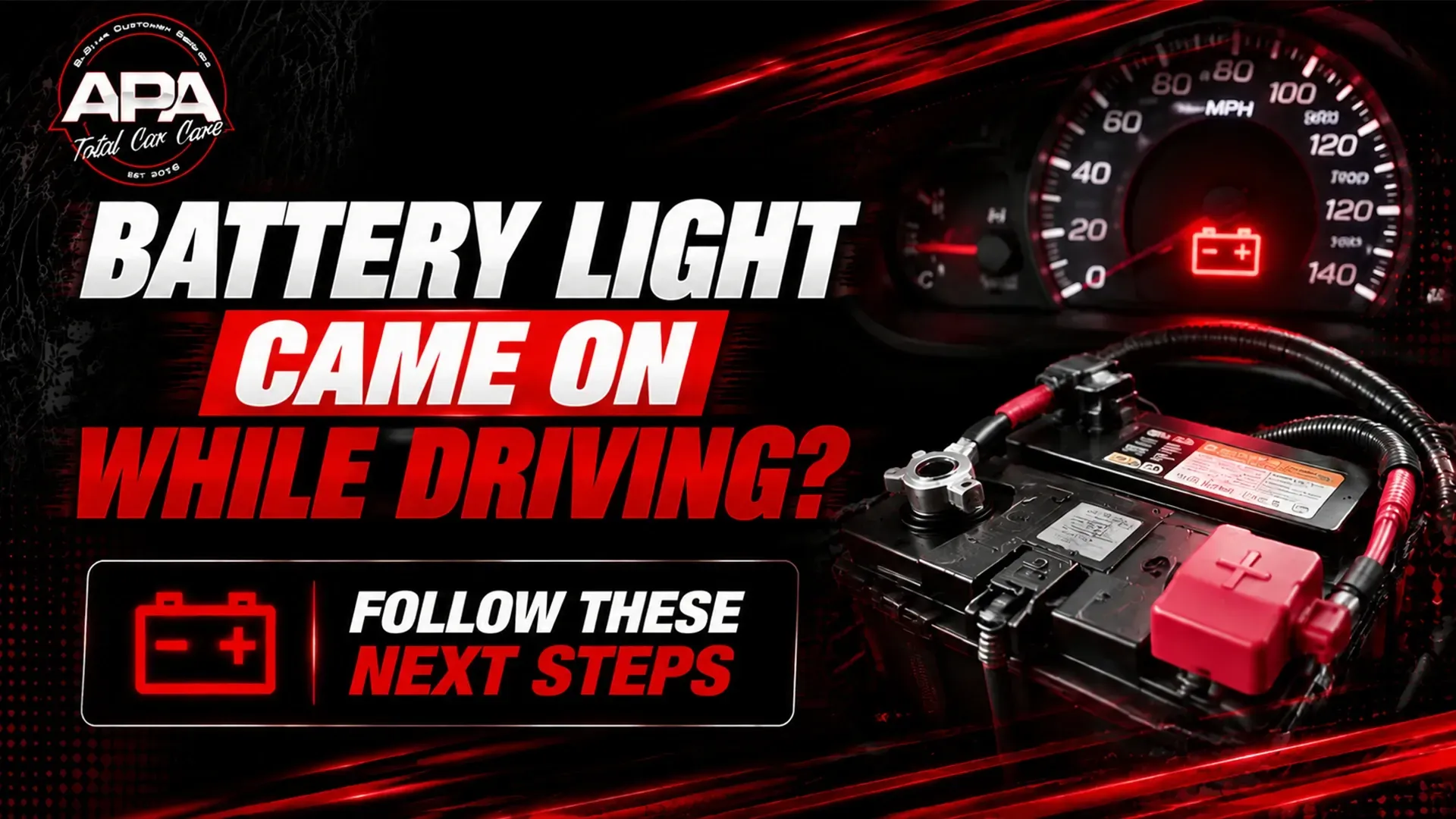

If the battery light came on while driving, the charging system may no longer be supplying normal power. The vehicle may continue running on stored battery energy, but it can stall after that reserve drops. APA Total Car Care provides alternator repair in Queen Creek, AZ, including battery, belt, cable, and charging-output testing.
Battery Light Came On While Driving: What It Means
A battery-shaped warning light usually means the charging voltage is outside the expected range. It does not prove that the battery itself has failed.
The Warning Covers the Charging System
The alternator normally powers electrical systems and replenishes the battery while the engine runs. A voltage regulator controls output, while cables, grounds, fuses, and the drive belt help the system work.
The battery warning light's meaning is therefore broader than 'replace the battery.' A low or high system voltage, lost alternator output, poor connection, or belt problem may all trigger the warning.
Common Causes Behind the Light
Common causes include a failing alternator, loose or broken belt, faulty regulator, weak battery, corroded terminals, and damaged wiring. A blown charging fuse or poor engine ground can also interrupt current flow.
Queen Creek heat can speed battery wear and increase demand from air conditioning and cooling fans. The recent guide to why car batteries die faster in Arizona heat explains how high temperatures affect battery life. Because the symptoms can overlap, testing is needed to distinguish battery wear from a charging fault.
What to Do When the Battery Light Comes On
Reduce electrical demand, watch the gauges, and move toward a safe stopping place when the warning appears. These steps may preserve limited battery energy while you assess other symptoms.
Reduce Nonessential Electrical Loads
Turn off nonessential items such as seat heaters, phone chargers, rear defroster, and high-volume audio. Keep headlights, hazard lights, windshield wipers, and other safety equipment on when conditions require them.
Avoid repeated stops and restarts during an East Valley commute because the engine may not restart. Do not assume that reaching a destination means the system has recovered, even if the light turns off briefly.
Watch the Temperature Gauge and Steering
Check the temperature gauge and notice any sudden change in steering effort. On some engines, one serpentine belt drives the alternator, water pump, and power-steering pump.
A broken belt may turn on the battery light while also reducing coolant circulation or steering assist. Stop promptly if the temperature rises, steering becomes much heavier, or belt debris appears.
When Should You Stop Driving?
Stop as soon as it is safe when the warning is joined by overheating, smoke, a burning odor, dimming lights, or major power loss. A tow is safer than trying to stretch the remaining battery charge.
Pull Over for Heat, Smoke, or Power Loss
Signal, move away from traffic, and shut off the engine after reaching a safe location. Get passengers away from the vehicle and call 911 if smoke or fire is present.
The Arizona Driver License Manual provides guidance for equipment failures and vehicle emergencies. If you are on Loop 202 or another high-speed road, remain clear of travel lanes while waiting for help.
Do Not Test the Alternator by Disconnecting the Battery
Never disconnect a battery cable while the engine is running to test alternator output. That old method can create voltage spikes, damage electronics, cause arcing, or shut the engine off unexpectedly.
Visual checks should also stay within your comfort level. Keep hands and clothing away from belts and fans, and do not touch a swollen, leaking, or unusually hot battery.
How a Shop Diagnoses a Battery Warning Light
A shop diagnoses the full charging circuit before recommending an alternator or battery. The goal is to confirm the failed part and rule out connections or belt faults that can produce the same warning.
Test Battery and Alternator Performance
A car charging system diagnosis may include battery state-of-charge and health tests, starting voltage, alternator output, and voltage regulation. The technician may also check for unstable output or excessive alternating-current ripple from failed alternator diodes.
A weak battery can load the charging system, while an undercharging alternator can leave a healthy battery discharged. Verified battery testing and replacement help prevent replacing one part while missing the actual cause.
Inspect Belts, Cables, Grounds, and Connections
The drive belt and tensioner should be checked for damage, slip, and proper tension. Battery terminals, alternator connections, fuses, grounds, and wiring are inspected for looseness, heat, corrosion, or voltage loss.
At this Queen Creek auto repair shop, test findings can be documented and explained before repairs begin. The correct fix may involve the alternator, battery, belt, tensioner, cable, ground, fuse, or connector.
Takeaways
If the battery light came on while driving, reduce unnecessary electrical use and watch the temperature gauge, steering, lights, and engine behavior. Stop safely for heat, smoke, a burning odor, heavy steering, or fading electrical power.
Knowing what to do when the battery light comes on can protect you while the vehicle still has limited power. Professional testing is still needed because the battery symbol can point to several charging-system faults.
Frequently Asked Questions
Can the battery light mean the battery is bad?
Yes, a weak or internally damaged battery can contribute to a charging warning. However, the alternator, regulator, belt, cables, grounds, and wiring should also be tested before the battery is blamed.
How long can I drive with the battery light on?
There is no reliable driving-time estimate because remaining battery capacity and electrical demand vary. Treat the warning as a limited-power situation and move toward a safe stop instead of planning a longer trip.
Will the car shut off when the battery light is on?
Yes, the engine can shut off after the battery loses enough stored energy to run ignition, fuel, and control systems. Lights, gauges, and accessories may weaken first, but a stall can also occur with little added warning.
Can a broken belt turn on the battery light?
Yes, a broken or slipping belt can stop the alternator from producing normal power. Because the belt may drive other parts on some engines, watch for overheating and heavier steering at the same time.
Will a jump-start fix a battery warning light?
No, a jump-start only supplies temporary power to start a vehicle with a discharged battery. It will not repair a failed alternator, loose belt, damaged cable, or other charging-system fault.
Schedule Charging-System Service With APA Total Car Care
Schedule charging-system testing when the battery light appears during a Queen Creek or San Tan Valley drive. Contact the APA Total Car Care team or call (480) 282-8300 to request an inspection. Visit 22325 S Scotland Ct Ste 101, Queen Creek, AZ 85142.
