
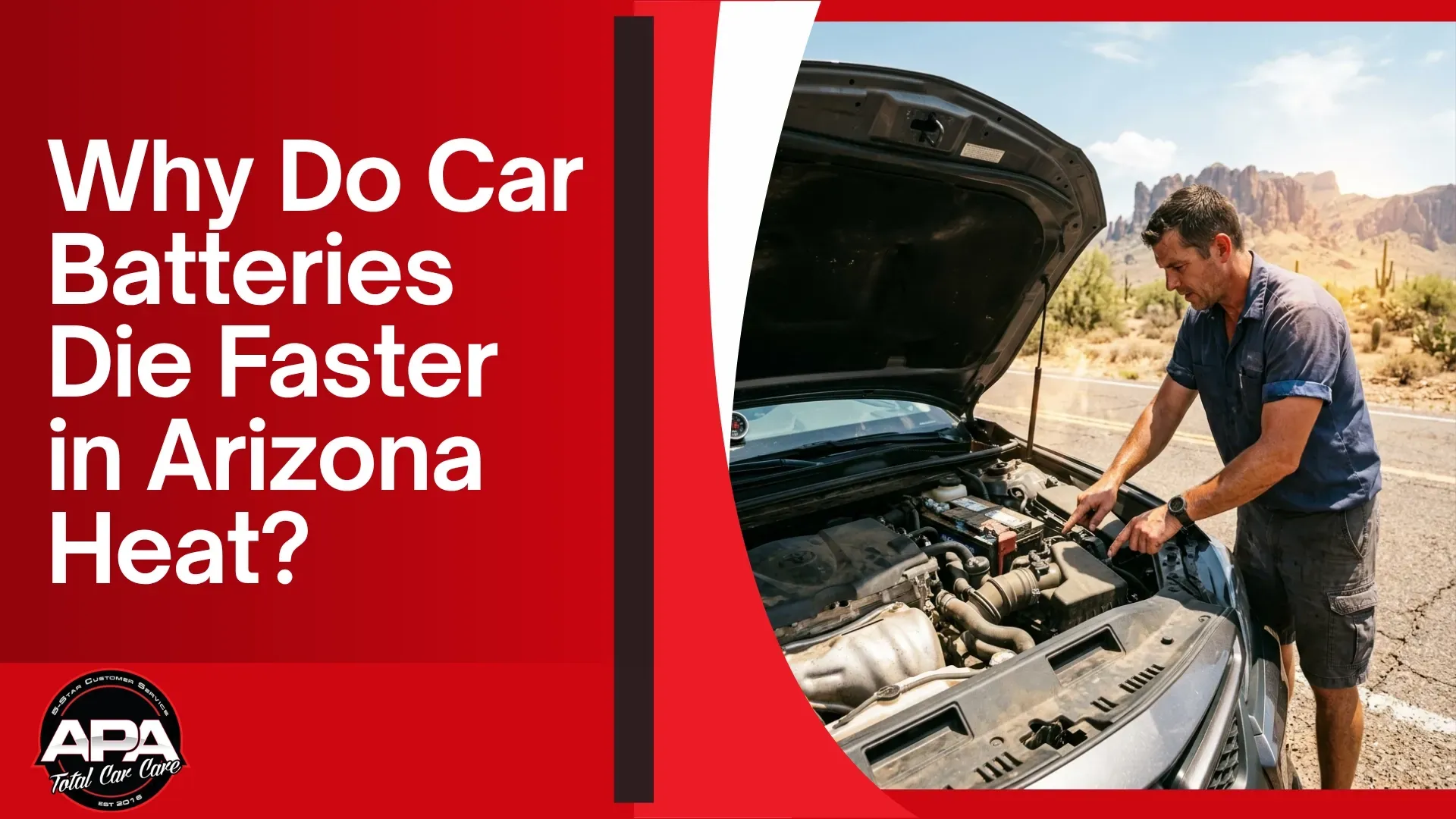
Car batteries can wear out much faster in Arizona heat because high temperatures speed up the chemical reactions inside the battery and cause electrolyte fluid to evaporate faster. As the battery weakens, it has to work harder to start your car, especially after short trips or during extreme weather. If you’re noticing slow starts, dim lights, or repeated battery problems, scheduling Battery Replacement in Queen Creek, AZ can help you avoid getting stranded and keep your vehicle starting reliably.
Why Your Car Battery Dies in Hot Weather
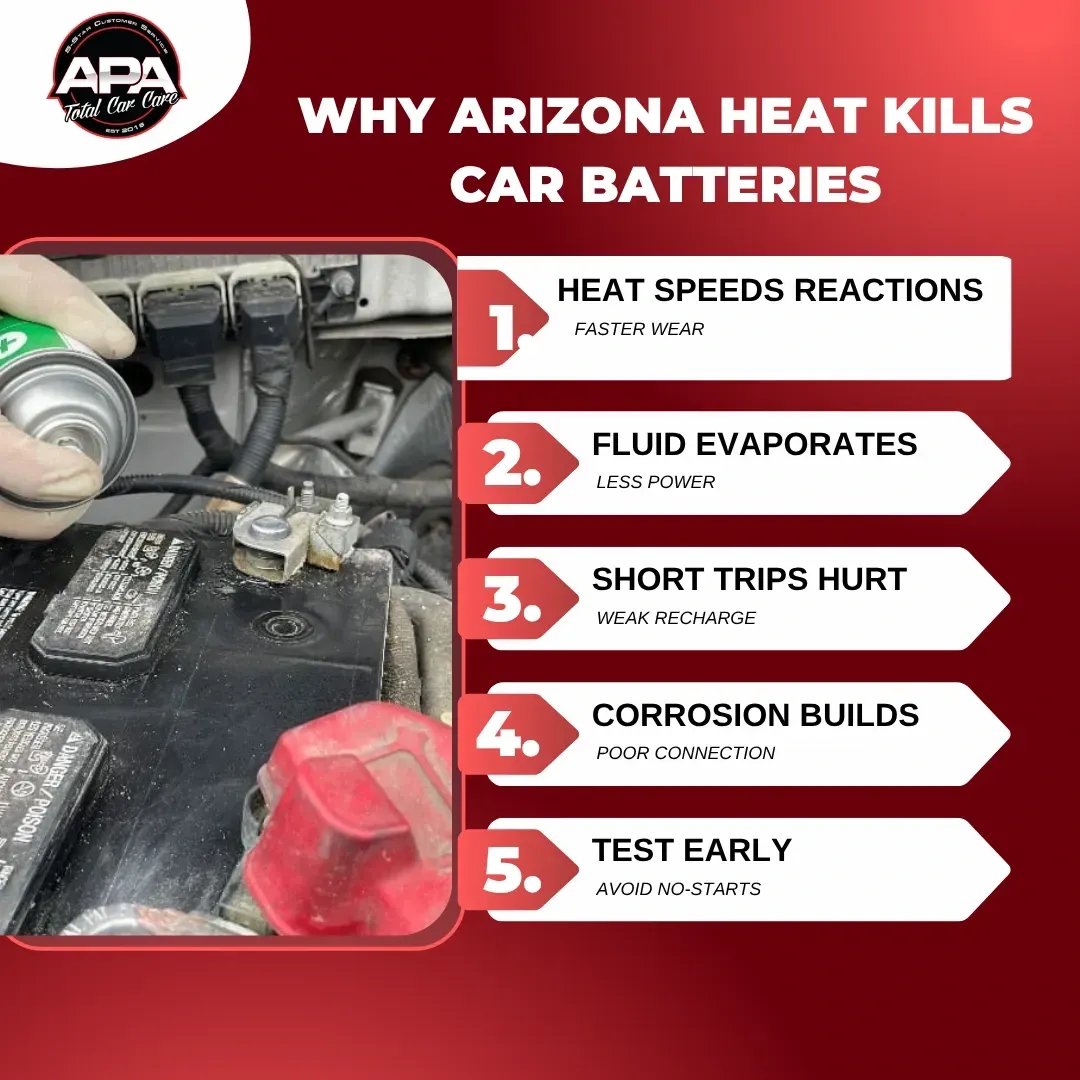
When the Arizona heat kicks in, your car battery can take a serious hit. The high temperatures speed up chemical wear inside the battery, making it more prone to failure. Plus, if you are only taking short trips, a weak battery can struggle even more, leaving you stranded when you least expect it.
Heat Speeds Up the Chemical Wear Inside the Battery
Although you might enjoy the Arizona sun, your car battery does not share that enthusiasm. The heat speeds up chemical reactions inside the battery, causing it to wear out faster. Here’s how heat damage to car batteries plays out:
- Increased evaporation of electrolyte fluid, leading to reduced battery life.
- Accelerated corrosion of battery plates, weakening their performance.
- Higher internal resistance, causing the battery to work harder than necessary.
- Shorter lifespan—batteries can fail much sooner in extreme heat.
As a result, it is no surprise that your car battery dies in hot weather. If your battery shows signs of wear, you might need to take into account battery replacement for cars to guarantee reliability on the road.
Short Trips Can Make a Weak Battery Worse
Short trips can exacerbate the problems of a weak battery, especially in the sweltering Arizona heat. When you make short drives, your car does not have enough time to recharge the battery fully. This can drain a weak battery fast, leading to potential failure. In Queen Creek, AZ, where the heat puts extra stress on batteries, it is essential to monitor their health. Regular car battery testing can help identify issues before they escalate into bigger problems. If you are experiencing car battery problems in Queen Creek, don’t wait until it is too late. Visit a trusted service like APA Total Car Care to confirm your battery is in peak condition and ready to handle those hot summer days.
What Heat Damage to a Car Battery Looks Like
When the Arizona heat takes a toll on your car battery, you will notice signs like slow starts, clicking sounds, or even complete failure to start. You might also see corrosion, swelling, or leaks around the battery terminals. If warning lights pop up or electrical issues arise after you start your car, it is time to pay attention to potential heat damage.
Slow Starts, Clicking, or No-Start Problems
If you have noticed slow starts, clicking sounds, or even complete no-start situations with your vehicle, the intense Arizona heat could be to blame. High temperatures can greatly impact your battery's performance, leading to frustrating issues. Here are some signs that heat damage might be affecting your battery:
- Slow Starts: The engine struggles to turn over, causing delays.
- Clicking Sounds: A rapid clicking noise indicates insufficient power to start the engine.
- No-Start: The engine will not crank or respond at all.
- Dim Lights: Your headlights and dashboard lights may appear weak or flicker.
If you experience any of these symptoms, it is wise to have your battery checked. Keeping it in good condition is essential for reliable vehicle performance.
Battery Corrosion, Swelling, or Leaks
Experiencing slow starts or clicking sounds can be frustrating, and the heat in Arizona can lead to additional problems beyond just performance issues. High temperatures can cause battery corrosion, which shows up as a white, chalky substance around the terminals. This buildup can hinder electrical connections, making it harder for your car to start. You might also notice swelling in the battery case, a sign that heat is damaging the internal components. In severe cases, leaks can occur, releasing harmful fluids that can damage other parts of your vehicle. Regularly inspecting your battery for these signs can help you catch issues, ensuring your car remains reliable in the face of Arizona's extreme heat.
Warning Lights or Electrical Issues After Startup
Noticing warning lights on your dashboard or experiencing electrical issues after startup can be alarming, especially in Arizona's extreme heat. This heat can severely impact your car battery, leading to frustrating problems. Here are some common signs to watch for:
- Battery Light: This may indicate a charging issue or battery failure.
- Dim Headlights: If your headlights flicker or dim, your battery might not be supplying sufficient power.
- Slow Start: If your engine struggles to turn over, it could signal battery weakness.
- Electrical Failures: Malfunctioning electronics, like power windows or locks, can suggest battery strain.
If you encounter any of these issues, it’s wise to get your battery checked at a reliable shop like APA Total Car Care.
Common Car Battery Problems Queen Creek, AZ Drivers Face
Living in Queen Creek, AZ, you might face a few common car battery issues. Extreme heat, dust, and stop-and-go driving can all take a toll on your battery's performance. Plus, older batteries often fail without much warning, leaving you stranded when you least expect it.
Extreme Heat, Dust, and Stop-and-Go Driving
When the scorching Arizona sun beats down, your car battery faces a unique set of challenges. The extreme heat, combined with dust and stop-and-go driving, can take a toll on its lifespan. Here are four factors to examine:
- Heat Acceleration: High temperatures can cause battery fluid to evaporate, leading to reduced capacity.
- Dust Accumulation: Dust can create a conductive path on battery terminals, leading to corrosion and poor connections.
- Frequent Short Trips: Stop-and-go driving does not allow the battery to recharge fully, draining it faster.
- Increased Demand: Air conditioning and electronic systems draw more power, straining the battery further.
Being aware of these issues can help you take proactive steps to extend your battery's life.
Older Batteries That Fail Without Much Warning
As the Arizona heat takes its toll, older batteries can fail unexpectedly, leaving you stranded. When temperatures soar, the chemical reactions inside your battery speed up, which can accelerate wear and tear. If your battery's already showing signs of age, like slow engine cranking or dimming headlights, it is a ticking time bomb. You might not notice any issues until you turn the key and nothing happens. Regular checks can help you catch problems, but even then, the heat can take its toll without warning. Don’t wait for a breakdown; consider replacing your battery if it is over three years old. Staying proactive can save you from inconvenient surprises in the sweltering Arizona sun.
When Battery Replacement for Cars Becomes the Smart Move
In Arizona's intense heat, car batteries usually last around three to five years, but that can vary. If you notice signs of a weakening battery, replacing it right away can save you from unexpected breakdowns. Staying proactive not only keeps your car running smoothly but also gives you peace of mind on the road.
How Long Car Batteries Usually Last in Arizona
Car batteries typically last around three to five years in Arizona's extreme heat, but several factors can influence their lifespan. Here are some key elements to examine:
- Temperature: High heat accelerates chemical reactions in batteries, leading to faster degradation.
- Driving Habits: Frequent short trips can prevent batteries from fully charging, shortening their life.
- Maintenance: Regular checks for corrosion and ensuring terminals are clean can extend battery life.
- Quality: Investing in a high-quality battery designed for extreme conditions can provide better longevity.
Why Replacing a Weak Battery Early Can Help Prevent Breakdowns
While you might be tempted to wait until your battery completely dies, replacing a weak battery as soon as possible can save you from unexpected breakdowns and costly repairs. In Arizona's intense heat, your battery's life can diminish fast, leading to sudden failures. If you notice signs of weakness, such as slow starts or dimming lights, it's time to act. Replacing it before it fails not only guarantees your vehicle's reliability but also gives you peace of mind. No one wants to be stranded in the heat waiting for a tow. Plus, proactive battery replacement can be more economical in the long run, sparing you from emergency service fees. Trust your instincts; it is better to be safe than sorry when it comes to battery health.
Schedule Car Battery Testing in Queen Creek, AZ at APA Total Car Care
When the Arizona heat takes a toll on your vehicle, scheduling car battery testing at APA Total Car Care can help prevent unexpected breakdowns. Here’s what you can expect when you visit us:
- Comprehensive Testing: Our certified mechanics will perform thorough checks to assess your battery's health.
- Same-Day Appointments: We offer convenient, quick service to fit your busy schedule.
- Expert Advice: You will receive professional recommendations tailored to your vehicle's needs.
- Quality Assurance: We use top-tier products and techniques to guarantee your battery performs at its best.
Don’t wait for a failure to occur. Protect your vehicle and guarantee reliable performance by scheduling your car battery testing at APA Total Car Care in Queen Creek, AZ.
Frequently Asked Questions
How Often Should I Check My Car Battery in Hot Weather?
You should check your car battery every month during hot weather. Look for corrosion and guarantee connections are tight. If it is over three years old, consider testing it regularly to avoid unexpected failures.
Can Extreme Heat Affect Battery Lifespan and Performance?
Yes. Extreme heat can significantly impact your battery’s lifespan and performance. High temperatures can cause the battery to work harder, accelerate internal wear, and reduce its ability to hold a charge over time. As a result, your battery may fail sooner than expected, especially in consistently hot climates.
What Signs Indicate My Battery Is Failing Due to Heat?
If your car's struggling to start, headlights dim, or you notice a bloated battery case, those are signs your battery might be failing due to heat. Don't wait and get it checked out as soon as possible.
Is It Safe to Park My Car in Direct Sunlight?
Parking your car in direct sunlight is not ideal; the heat can damage your interior and battery. Imagine sizzling seats and fading upholstery. Whenever possible, find shade or use a sunshade to protect your vehicle.
How Can I Protect My Battery From Arizona's Heat?
To protect your battery from Arizona's heat, park in the shade, use a reflective sunshade, and regularly check the battery's fluid levels. Consider investing in a battery insulation wrap for extra protection during extreme temperatures.
Conclusion
Arizona's scorching heat can be hard on your car battery, causing it to wear down faster than you might expect. Over time, those high temperatures can feel like they’re draining its life force and leaving you at risk of a dead battery when you need your car most. Stay ahead of the heat by checking your battery’s health early and schedule that testing at APA Total Car Care.
