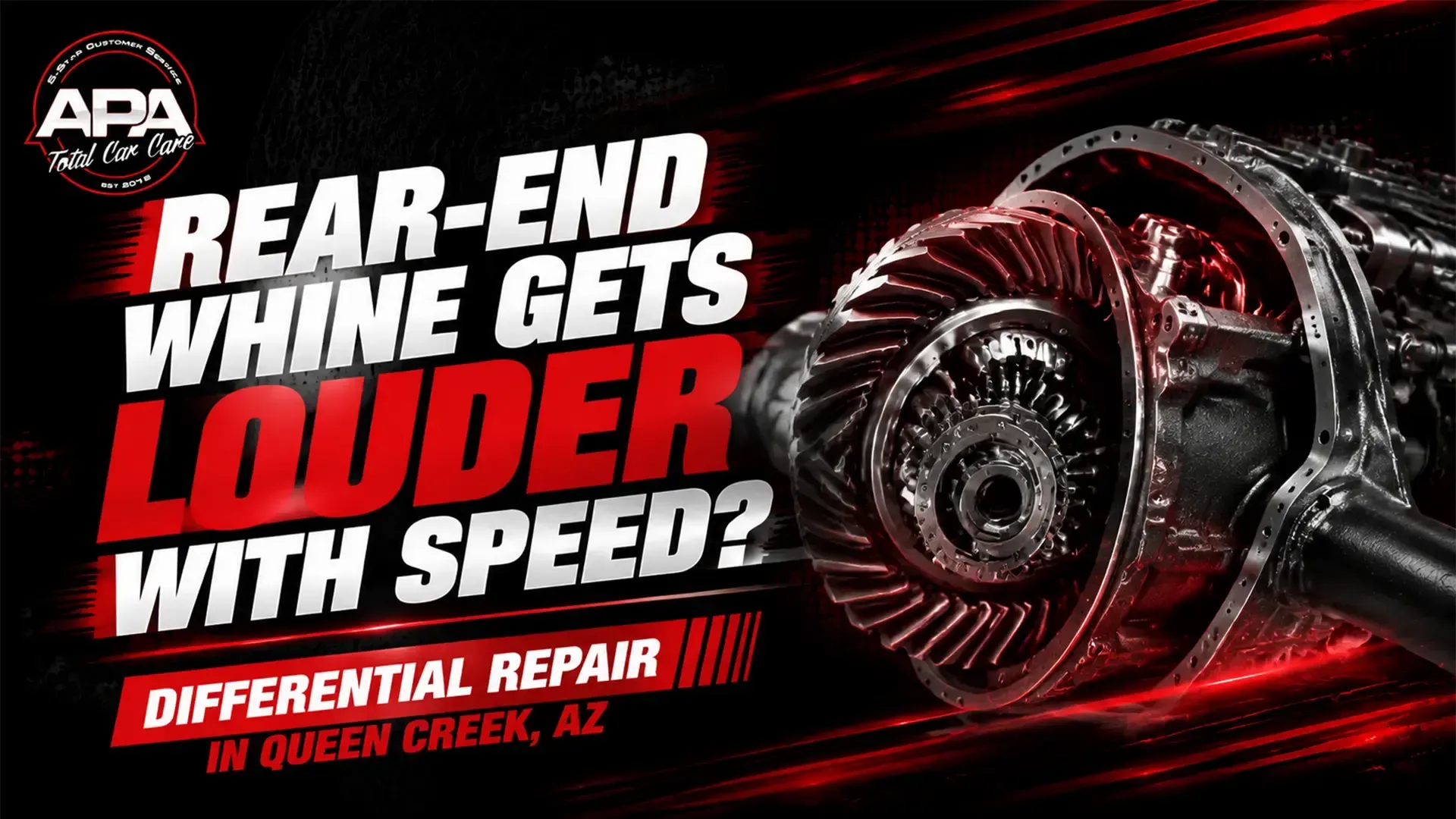
A rear-end whine that rises with road speed may come from worn differential bearings, damaged gears, or low gear oil. Drivers seeking differential repair in Queen Creek, AZ, should arrange an inspection before the sound becomes grinding, clunking, or vibration. APA Total Car Care provides differential diagnosis and repair for noises, leaks, and other drivetrain concerns.
Why Differential Repair in Queen Creek, AZ, Starts With the Sound
Differential whine often gets louder with speed because the gears and bearings rotate faster as the vehicle moves faster. The sound may change with the throttle even when engine RPM is not the main factor.
How Vehicle Speed Changes the Sound
The differential transfers torque to the drive wheels while allowing the left and right wheels to turn at different speeds. Its ring gear, pinion gear, and bearings rotate whenever the driven wheels move.
A rear differential whining noise may begin as a faint hum and develop a higher pitch on faster East Valley roads. If the sound follows vehicle speed through several gears, the source may be farther back in the drivetrain rather than inside the engine.
Why Throttle and Coast Conditions Matter
Noise under acceleration can differ from noise heard while coasting because the load moves across different gear-tooth surfaces. A sound that appears only on throttle, only after lifting, or in both conditions gives the technician a useful clue.
Do not repeatedly accelerate and coast just to reproduce the noise. Note the speed, road surface, gear, throttle position, and whether the sound changes during gentle turns.
Common Causes of Rear Differential Whining Noise
The most common causes include low or degraded gear oil, bearing wear, damaged gear teeth, and an incorrect gear contact pattern. A leak or earlier repair can also affect lubrication, preload, or alignment inside the assembly.
Low, Contaminated, or Incorrect Gear Oil
Gear oil forms a protective film between moving metal parts and carries heat away from the contact surfaces. Low fluid from an axle seal or housing leak can reduce that protection and allow bearings or gears to wear.
Queen Creek heat, towing, hauling, and long Loop 202 drives can add operating load to the differential. The correct fluid type and service interval depend on the vehicle, axle design, and how it is used.
Differential lubricant is not automatically the same as automatic transmission fluid. The shop’s guide to a transmission fluid change versus a flush covers a separate service decision and should not replace axle-specific information.
Worn Bearings or Ring-and-Pinion Damage
Pinion, carrier, and axle bearings can hum or whine when their surfaces wear or their preload changes. Ring-and-pinion teeth may also make noise if the contact pattern is damaged or no longer aligned correctly.
These problems require measurement and inspection, not a diagnosis based on sound alone. One of the signs of a failing differential may be metal in the lubricant, but some wear cannot be confirmed until the assembly is checked.
Could the Whine Come From Something Else?
Yes, tires, wheel bearings, the transmission, driveshaft parts, and axle components can create similar noises. A road test and targeted inspection help separate sources that change with speed.
Wheel Bearings and Tire Noise
A wheel bearing hum may change when the vehicle turns and weight shifts from side to side. Tire noise may vary with pavement type and often follows a cupped or uneven tread pattern.
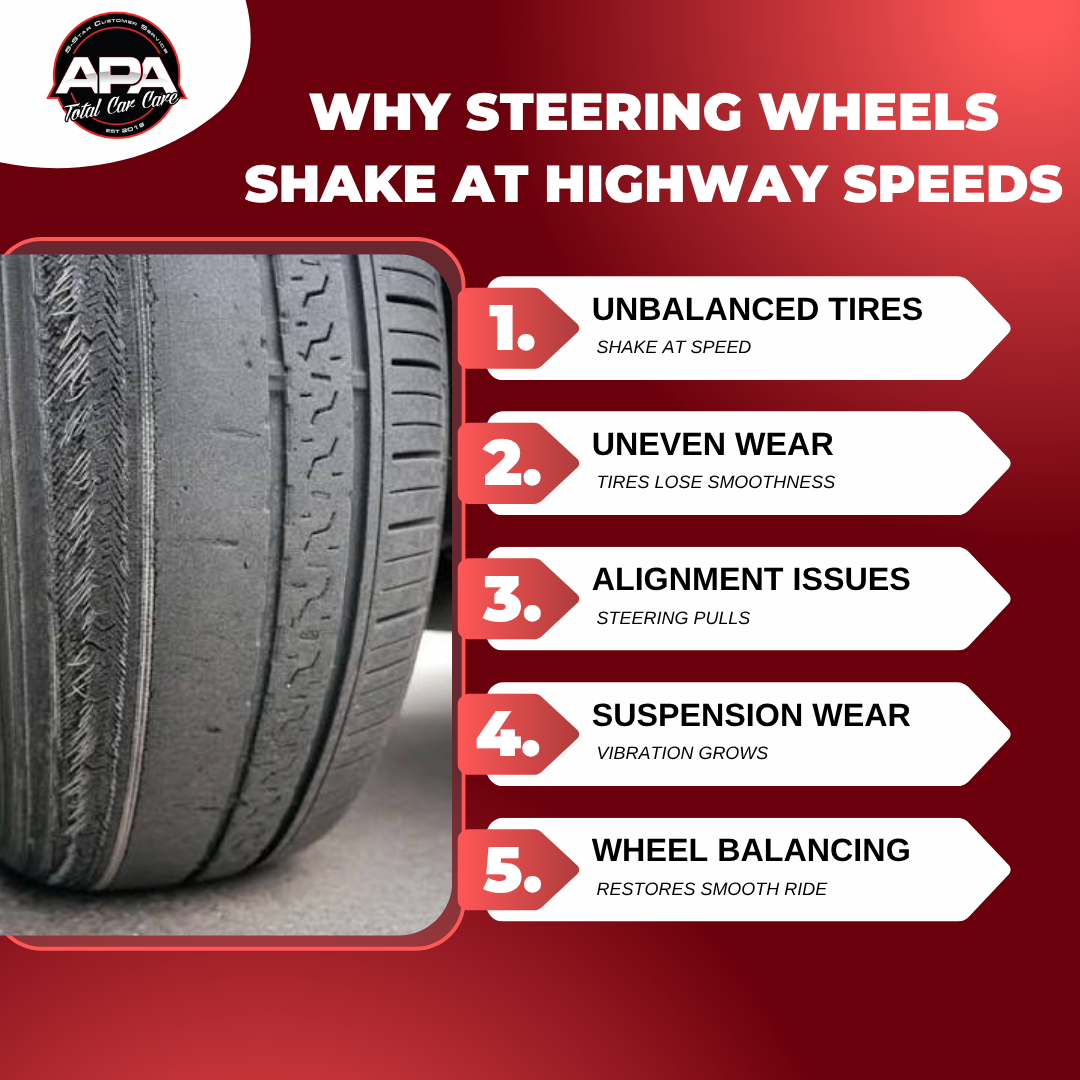
Wheel imbalance usually causes a shake or vibration rather than a steady gear whine. Drivers who feel speed-related shaking can review wheel balancing in Queen Creek, AZ, as a distinct service with a different repair goal.
Transmission, Driveshaft, and Axle Noise
Transmission whine may follow a certain gear or operating range, while a driveshaft concern often creates vibration under load. U-joints, CV joints, axle bearings, and transfer-case parts can also send sound through the body.
Because sound travels through metal, the loudest spot inside the cabin may not be the failed part. A complete drivetrain noise diagnosis compares road-test behavior with lift inspection, fluid condition, leaks, and component play.
What Should You Do When Rear-End Whine Starts?
Limit unnecessary driving and arrange an inspection when a new whine consistently follows road speed. Prompt testing can identify a leak or worn part before the drivetrain loses smooth operation.
Watch for Leaks and Stronger Symptoms
Look for dark, oily spots near the center of the rear axle or around axle ends after parking. Do not crawl beneath a vehicle unless it is properly supported, and do not touch hot drivetrain parts after driving.
Stop and request towing if the whine becomes grinding, heavy clunking, binding, or strong vibration. If a short drive has been judged reasonable, Arizona travel conditions can help you avoid closures or long backups on the way to service.
Schedule Drivetrain Noise Diagnosis
A technician can compare the sound during acceleration, steady speed, coasting, and turning. The inspection may include checking fluid level and condition, seals, bearings, driveshaft parts, and wheel-end components.
At this Queen Creek auto repair shop, findings can be documented and explained before a repair plan is approved. The next step may be a leak repair, fluid service, bearing work, gear repair, or attention to a different noise source.
Takeaways
A differential whine gets louder with speed when rotating gears or bearings create more noticeable noise as road speed rises. Changes between acceleration and coasting can help narrow the source, but they do not confirm the failed part.
Watch for leaks, vibration, grinding, or clunks, and avoid repeated road testing. Accurate inspection separates differential wear from tire, wheel bearing, transmission, driveshaft, and axle concerns.
Frequently Asked Questions
Can I drive with a whining differential?
A short drive may be possible in some cases, but a whining differential can worsen without warning. Limit driving and ask about towing if the noise is loud or accompanied by a leak, grinding, clunking, binding, or vibration.
Does differential whine always mean gear damage?
No, differential whine does not always mean damaged gear teeth. Low fluid, bearing wear, incorrect setup, tires, wheel bearings, or other drivetrain parts can create a similar sound.
Will changing differential fluid stop the whine?
Fresh fluid may help when the existing lubricant is low, wrong, or degraded, but it cannot restore worn bearings or gears. The leak and noise source should be diagnosed before treating fluid service as the repair.
How is differential noise diagnosed?
Differential noise is diagnosed through a road test, fluid and leak checks, and inspection of related drivetrain parts. Further measurement or internal inspection may be needed when bearing or gear wear is suspected.
How long does differential repair take?
Repair time depends on the vehicle, parts availability, and whether the problem involves a seal, bearing, gear set, or complete assembly. The shop can provide an estimate after inspection confirms the needed work.
Schedule Differential Repair With APA Total Car Care
Schedule differential repair in Queen Creek, AZ, when the rear-end whine grows louder. Contact the APA Total Car Care team or call (480) 282-8300 to request an inspection. Visit 22325 S Scotland Ct Ste 101, Queen Creek, AZ 85142.
