If your car is losing power while you drive, it may be struggling to get the fuel, air, or sensor input it needs to run properly. Clogged fuel filters, blocked air intakes, and faulty sensors can all cause hesitation, weak acceleration, stalling, or unusual engine noises. These symptoms can get worse over time, so scheduling a Car Tune-Up in Queen Creek, AZ can help identify the issue fast and restore smoother, more reliable performance.
Why Your Car Loses Power While Driving
When your car loses power while driving, it could be due to issues with fuel, air, spark, or sensors. You might notice the problem feels worse at higher speeds or when the vehicle is under load. Understanding these factors can help you pinpoint what is going wrong with your ride.
Power Loss Can Come From Fuel, Air, Spark, or Sensor Problems
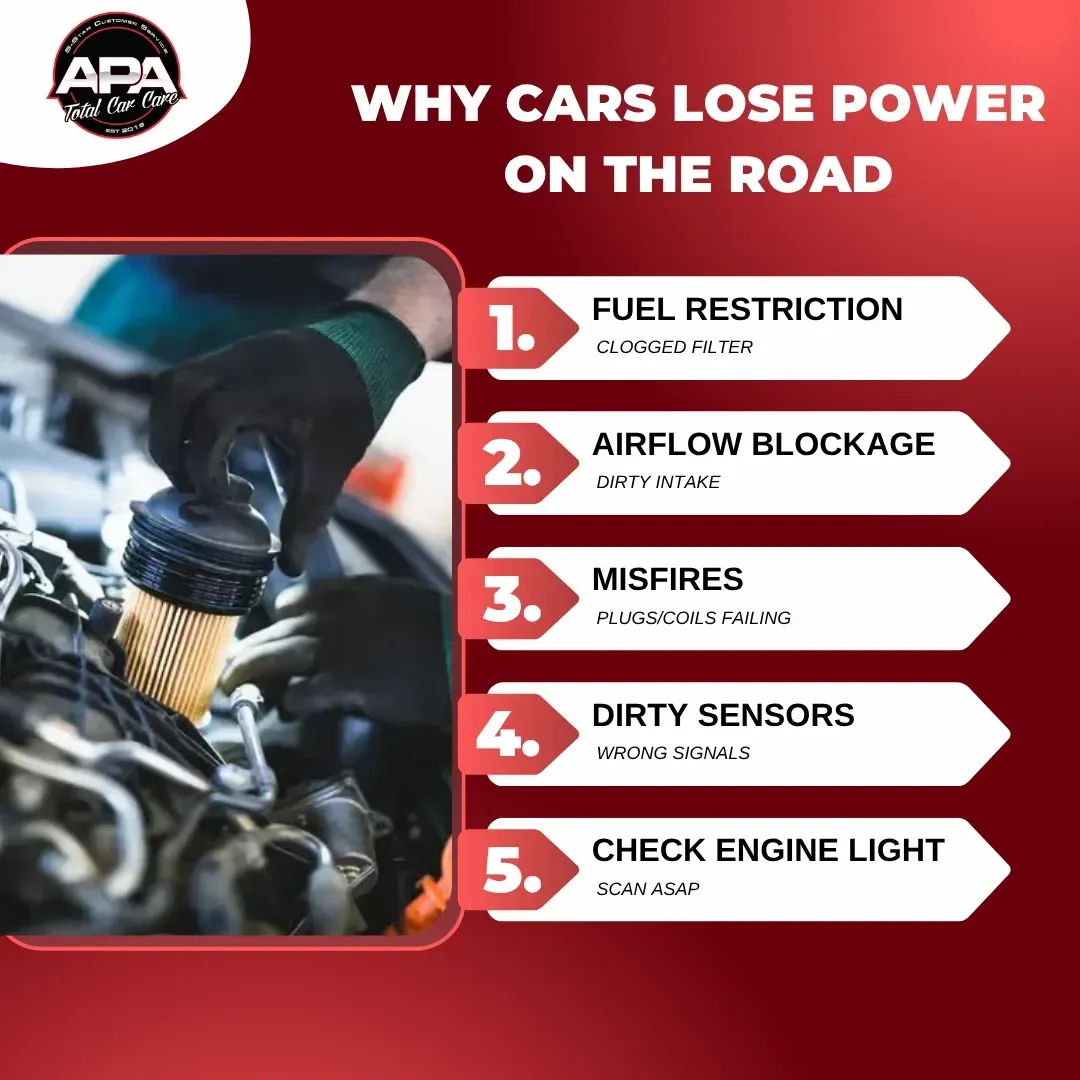
Experiencing power loss while driving can be frustrating, especially when you rely on your vehicle for daily tasks. Your car loses power while driving due to several issues, primarily related to fuel, air, spark, or sensors. A clogged fuel filter can restrict fuel flow, leading to noticeable symptoms like engine hesitation when accelerating. If the air intake system is blocked, it can prevent your engine from getting the air it needs to perform effectively. Spark plug issues may also cause misfires, further diminishing power. Additionally, faulty sensors can send incorrect signals to your engine control unit, disrupting performance. Addressing these problems promptly can help restore your vehicle's power and guarantee a smoother driving experience.
Why the Problem May Feel Worse at Higher Speeds or Under Load
Power loss in your car can feel particularly pronounced at higher speeds or when you are carrying a heavy load. This is because your engine has to work harder to maintain speed and acceleration, making any underlying issues more noticeable. Problems with fuel delivery, air intake, or ignition can all contribute to this sensation. If you are feeling a loss of power, it is essential to get engine diagnostics in Queen Creek to identify the root cause. Furthermore, if your check engine light is on, don’t ignore it; it can indicate serious issues that worsen under strain. Trust professionals in Queen Creek, AZ, to perform thorough check engine light diagnostics, ensuring your vehicle stays reliable and safe on the road.
Engine Hesitation When Accelerating: What It Usually Means
If your engine hesitates when you accelerate, it could signal a few underlying issues. You might experience delayed throttle response or even jerking, which often points to misfires or dirty sensors. Addressing these problems as soon as possible can help restore your car's performance and keep you safe on the road.
Delayed Throttle Response or Jerking During Acceleration
When you notice a delayed throttle response or jerking during acceleration, it can be frustrating and concerning. This issue often signals underlying problems in your vehicle's performance. It might be due to a malfunctioning throttle position sensor, which affects how your engine responds to your gas pedal input. Alternatively, there could be issues with your fuel delivery system, such as a clogged fuel filter that restricts flow. Another possibility is a problem with your transmission, which can cause hesitation when shifting gears. Ignoring these symptoms can lead to more severe complications, so it is essential to address them promptly. Consulting a trusted mechanic can help diagnose the issue and restore your car’s smooth acceleration.
Misfires, Dirty Sensors, and Airflow Problems
Experiencing engine hesitation during acceleration can be just as frustrating as having a delayed throttle response. This issue often stems from engine misfires, dirty sensors, or airflow problems. Misfires occur when the combustion process is not smooth, usually due to faulty spark plugs or ignition coils. Dirty sensors, like the mass airflow sensor, can fail to provide accurate data, causing the engine to struggle when you press the gas pedal. Additionally, blocked air filters or intake issues can limit airflow, leading to poor engine performance. If you are facing these symptoms, it is essential to address them promptly. Ignoring these problems could lead to more significant issues down the road, affecting your vehicle's efficiency and safety.
Clogged Fuel Filter Symptoms That Can Cause Power Loss
If your car's struggling uphill or during hard acceleration, a clogged fuel filter might be to blame. You could also notice rough idling, stalling, or even trouble starting your vehicle. These symptoms can seriously impact your driving experience and indicate it is time for a check-up.
Struggling Uphill or During Hard Acceleration
As you go uphill or accelerate hard, you might notice your car struggling to maintain power, which can be a sign of a clogged fuel filter. This blockage prevents the necessary fuel from reaching the engine, leading to sluggish performance. You may feel a lack of responsiveness, or your engine might sputter during acceleration. If your vehicle hesitates or stalls when you push the gas, that is another indicator. Additionally, you might notice decreased fuel efficiency, as the engine works harder to compensate for the restricted fuel flow. Ignoring these symptoms could lead to more significant engine problems down the road. It is wise to have your fuel system checked promptly by a professional to avoid further complications.
Rough Idling, Stalling, or Trouble Starting
Rough idling, stalling, or trouble starting can also point to a clogged fuel filter, which restricts fuel flow to the engine. When your fuel filter's blocked, your engine struggles to get the fuel it needs, leading to erratic performance. You might notice your car shaking or vibrating while idling, or it may stall unexpectedly. If starting becomes a challenge, it is often a sign that fuel is not reaching the engine properly. Ignoring these symptoms can lead to more severe engine issues down the road. Regular maintenance, including fuel filter replacement, is essential for peak performance. If you are experiencing these problems, it is best to have your fuel system checked by a professional to avoid further complications.
When to Get Check Engine Light Diagnostics in Queen Creek, AZ
If your check engine light comes on, it is a signal you should not ignore. Warning lights can indicate serious engine performance issues that need immediate attention. Remember, a code scan is just the first step; a thorough diagnostic is essential for accurate problem-solving.
Warning Lights That Point to Engine Performance Issues
When the check engine light illuminates on your dashboard, it is often your vehicle's way of signaling that something's amiss under the hood. This warning can indicate various engine performance issues, from a loose gas cap to more serious problems like a failing catalytic converter. Ignoring this light can lead to decreased power and efficiency, making your driving experience frustrating. Other warning lights, such as the oil pressure or temperature light, can also point to critical issues that need immediate attention. If you notice any of these lights, it is essential to get diagnostics as soon as possible. Trust a reliable shop like APA Total Car Care in Queen Creek to pinpoint the issue and restore your vehicle’s performance.
Why Code Scans Are Only the First Step
Although code scans can provide valuable insights into your vehicle’s issues, they are just the beginning of the diagnostic process. These scans identify fault codes, but they do not tell the whole story. You might still experience power loss or other symptoms that need further investigation. That’s where thorough diagnostics come in. It is essential to have a qualified mechanic examine potential underlying problems, like fuel delivery issues or electrical system faults. In Queen Creek, AZ, getting a complete diagnostic check can save you time and money in the long run. Don’t ignore that check engine light; it is your car signaling for help. Trust the experts at APA Total Car Care to dive deeper into your vehicle’s health and get you back on the road safely.
Schedule Engine Diagnostics in Queen Creek, AZ With APA Total Car Care
Scheduling engine diagnostics with APA Total Car Care in Queen Creek, AZ, is essential for maintaining your vehicle's performance and preventing further issues. When you notice your car losing power, it is vital to address the problem promptly. Our experienced mechanics use modern equipment to pinpoint the cause of your vehicle's troubles, whether it is a faulty sensor or a more significant engine issue. With our family-owned business's reputation, you can trust that your car's needs will be prioritized. We offer same-day appointments for your convenience, ensuring you are back on the road right away. Don’t let power loss compromise your safety; schedule your engine diagnostics today and experience reliable service that keeps your vehicle running smoothly.
Frequently Asked Questions
Can Low Tire Pressure Cause My Car to Lose Power?
Yes, low tire pressure can cause your car to lose power. Under-inflated tires increase rolling resistance, making your engine work harder. Keeping your tires properly inflated guarantees better performance and fuel efficiency. Make sure to check them regularly.
What Role Does the Battery Play in Engine Performance?
Your battery supplies electrical power to essential engine components. If it is weak or failing, you might experience poor engine performance, leading to difficulties in starting and overall reduced power while driving. Remember that regular checks are important for your car's health.
How Often Should I Replace My Fuel Filter?
You should replace your fuel filter every 30,000 to 40,000 miles, or as recommended in your owner's manual, to keep your engine running smoothly.
Could Bad Weather Affect My Car's Power?
Yes, bad weather can affect your car's power. Rain, snow, or ice can lead to slippery roads, reducing traction, while extreme temperatures may impact battery performance and engine efficiency. Always stay cautious in adverse weather.
Is It Safe to Drive if My Car Is Losing Power?
Driving a car losing power is not safe. You risk further damage and accidents. Pull over, assess the situation, and consider contacting a mechanic for immediate assistance.
Conclusion
In the world of driving, losing power can feel like your car’s way of relaying potential trouble ahead. Don’t ignore those signs; they are your vehicle’s way of asking for help. By addressing issues promptly, you can steer clear of more significant problems in the future. So, keep your car in peak condition and give it the attention it deserves, ensuring smooth journeys on the road ahead.
